
How to prove your immunity status for international travel fast
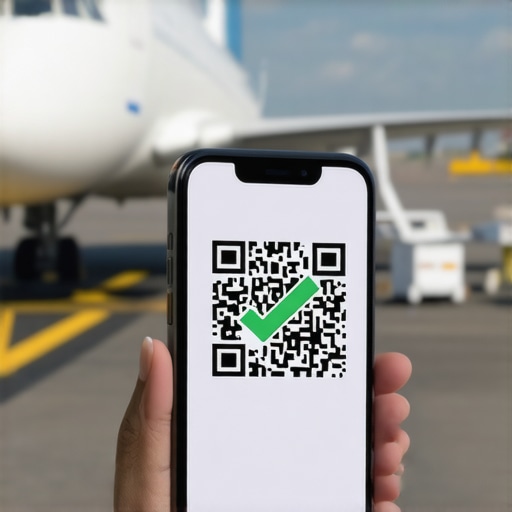
I was standing at the check-in counter, sweat pooling under my collar, as the gate agent stared at me with that ‘you’re-not-getting-on-this-plane’ look. I had my passport. I had my tickets. But my proof of immunity? It was sitting in a dusty folder in my home office three states away. That sinking feeling in my gut was the moment I realized that being ‘pretty sure’ about my records wasn’t going to cut it for a trip across the Atlantic. We’ve all been there—juggling a million logistics and assuming our health history will just ‘be there’ when we need it. But international travel has changed, and if you don’t know how to proof your immunity records for international travel effectively, you might find yourself stuck at the border while your luggage flies on without you.
My Nightmare at Terminal 4 and the Better Way
I learned the hard way that waiting until the last minute is a recipe for disaster. I once spent four hours on hold with a pediatrician’s office from 1994 trying to find a record that didn’t exist digitally. Today, I’m going to show you how to streamline this entire process. We’re talking about moving from frantic phone calls to having a verified, digital shield in your pocket. Whether you need to get your family’s vaccine records for a last-minute trip or you’re trying to figure out the faster way to update your yellow fever card before your flight, there is a path that doesn’t involve a panic attack.
Is a Digital App Really Secure Enough for Customs?
I get it. You’re worried that some border official in a remote airport is going to laugh at your smartphone screen. I had that same skepticism until I realized that global standards like the SMART Health Card are becoming the norm. The real risk isn’t the technology; it’s the lack of preparation. For example, did you know that according to the Centers for Disease Control and Prevention (CDC), the International Certificate of Vaccination or Prophylaxis (ICVP) must be signed by an authorized health care provider to be legally valid in many nations? If yours is a photocopy or a blurry scan, you’re asking for trouble. My biggest mistake early on was thinking a photo of my old paper card was enough. It isn’t. You need a strategy that involves understanding the role of lab tests for titer checks and knowing how to get a travel health consultation from your couch. Have you ever been denied boarding or delayed because of a missing health document? It’s more common than you think. I’m here to make sure your next trip starts with a cocktail in your hand, not a frantic call to your doctor’s office.First, you need to conduct a brutal audit of what you actually have. Most of us assume our primary care doctor has everything on a master server, but health data is often fragmented across different clinics and decades. If you’re moving or traveling long-term, you should know how to verify your child’s MMR status without a paper trail before you reach the check-in desk. I spent an entire Tuesday afternoon calling three different counties just to find a record of a single tetanus shot. Don’t be like me. Start by listing your destinations and cross-referencing them with the CDC’s specific requirements for those regions.
Use Titer Tests When Your History Is a Mystery
If your paper trail has gone cold, don’t panic and start getting every shot again from scratch. This is where titer tests come in. Think of a titer test as a credit report for your immune system; it proves exactly which antibodies you’re ‘rich’ in and where you’re ‘bankrupt.’ I had to do this before a last-minute flight to Rio when I realized my old records were lost in a basement flood. A simple blood draw showed I was still immune to Hepatitis B but needed a refresher for others. You can even find the essential lab tests you need for accurate vaccination planning online to see what your body specifically requires. #IMAGE_PLACE_HOLDER_B#
Know When to Get a Refresher
Even if you find your records, those decades-old shots might be fading. Science shows that immunity isn’t always ‘one and done.’ Understanding why you might need a booster even if you’re fully vaccinated is the difference between a smooth entry and a mandatory quarantine. For instance, many travelers forget that adult boosters for things like Tdap or even certain viral shots are often scrutinized at high-risk borders.
Skip the Clinic Queue With Virtual Travel Prep
The biggest hurdle is often the ‘where’ and ‘when.’ You don’t need to spend half a day in a waiting room full of sneezing toddlers just to get a travel signature. Virtual care has flipped the script. By learning how to get a travel health consultation from your couch, you can have a provider review your lab results, sign off on your digital certificates, and even order any missing doses to a pharmacy near you. These telehealth insights show that virtual platforms are now the fastest way to bridge the gap between your old paper files and the digital requirements of modern customs.
Build a Digital Vault That Customs Actually Trusts
Once you have your lab results and your provider’s signature, you need a way to present them that doesn’t look like you printed it in your garage. Most countries now prefer a QR-code-based system or a recognized app like CommonPass. Take your scanned records, your titer results, and your digital signatures, and upload them into a single, encrypted folder on your phone. This isn’t just about passing through a gate; it’s about the peace of mind that comes from knowing that even if you lose your physical wallet, your health identity is safely backed up in the cloud.But having a vault is only half the battle; the quality of the data inside it is what actually keeps you safe. I’ve seen too many people carry a digital folder full of data that is, frankly, misleading. There’s a common misconception that as long as your lab report doesn’t have a red ‘H’ or ‘L’ next to the numbers, you’re in the clear. But here’s the contrarian truth: standard reference ranges are based on the ‘average’ person, and the average person in the general population isn’t necessarily thriving. This is exactly why your lab results come back normal while you still feel like trash. If you’re preparing for a grueling international move or a month in a tropical climate, you need to look at functional ranges, not just the lab’s generic benchmarks. For instance, there is the specific liver enzyme test your doctor probably skipped because it’s not part of a basic metabolic panel, yet it’s a primary indicator of how your body handles the oxidative stress of travel.
Stop trusting the ‘Normal’ label on your blood work
I’ve learned that true travel readiness requires you to maximize your health by combining vaccinations and lab testing strategies rather than treating them as separate chores. The ‘Oops’ factor usually hits when travelers realize they’ve optimized for cost rather than comprehensive data. I’ve seen this happen specifically with expats moving to South America; they find why the cheapest Rio health plan quotes often exclude essential diagnostic tests that are mandatory for certain residency health clearances. They save a few dollars on the monthly premium but spend hundreds on out-of-pocket titer tests later. It’s a classic trap: assuming all ‘comprehensive’ plans are created equal when, in reality, they often strip out the very diagnostic tools you need to prove immunity. #IMAGE_PLACE_HOLDER_C#
Does a positive titer test really mean you’re immune forever?
This is the nuance that catches even the most prepared travelers off guard. We often treat antibodies like a permanent status, but they are more like a signal that can fade over time. According to research published in The Journal of Infectious Diseases, vaccine-induced antibody levels for certain pathogens can decline significantly over a decade, meaning that ‘positive’ result you’re holding from five years ago might not be the robust shield you think it is. You might show a positive titer today, but why you might need a booster even if you’re fully vaccinated becomes a critical conversation when you’re entering a region with an active outbreak. This level of expert detail is exactly why I’ve shifted toward modern platforms; telehealth innovations allow you to consult with specialists who have the time to explain these immunological nuances. Have you ever fallen into this trap of assuming a ‘normal’ lab result meant you were 100% ready to go? Let me know in the comments.
Keep your health records from expiring while you sleep
The set-it-and-forget-it mentality is exactly how people end up stuck at customs with a yellow fever card that expired three weeks prior. Maintenance isn’t just about getting the shot; it’s about the data architecture behind it. I personally use a dedicated, encrypted cloud folder where every single lab report is saved as a searchable PDF. Why? Because when a border agent asks for proof of a specific titer, I don’t want to be scrolling through 4,000 photos of my cat. You need to unlock the power of telehealth for fast convenient wellness access to ensure that as soon as a test result is ready, it’s signed, sealed, and delivered to your digital vault.
How do I maintain my immunity profile for the long haul?
Consistency beats intensity every time. Instead of a mad dash every five years, I schedule a data refresh every eighteen months. This involves a quick check-in to maximize your health by combining vaccinations and lab testing strategies. By doing this, you’re not just reacting to travel requirements; you’re building a longitudinal record of your wellness. If you’re managing specific needs, like knowing how to manage your ADHD medication refills via telehealth, these regular check-ins become the backbone of your lifestyle stability. The International Society of Travel Medicine (ISTM) notes in their latest technical guides that the integration of digital health passes with national registries is the only way to ensure border-agnostic health verification in the coming decade. I predict that within five years, we won’t even carry physical records; our biometric IDs will simply ping a secure health node as we walk through the gate.
The tech stack I actually use for global readiness
I don’t rely on my doctor’s patient portal because they rarely talk to each other. I use a combination of a secure PDF scanner and a centralized health aggregator app. This allows me to see the essential lab tests you need for accurate vaccination planning alongside my actual results in real-time. If I notice a dip in a specific marker, I don’t wait for my annual physical. I use telehealth insights to adjust my plan immediately. This proactive stance is what separates the travelers who breeze through security from those who spend their vacation in a secondary screening room. My advanced tip for you: Set a calendar reminder right now for exactly one year from today labeled Health Audit. Use that day to ensure your digital vault is actually up to date before you even think about booking your next flight.
Why a ‘Safe’ Paper Trail Often Fails at the Border
I’ve seen seasoned travelers crumble when a customs agent questions a blurry signature. The biggest lesson I’ve learned is that your doctor’s filing cabinet is not a backup plan. You have to be the curator of your own history. When I started to maximize my health by combining vaccinations and lab testing strategies, I realized that a digital titer report is far more persuasive than a handwritten note from a decade ago. It’s also vital to realize that telehealth innovations mean you no longer have to beg for these records in person. My biggest lightbulb moment was realizing that border agents don’t just want to see that you had a shot; they want to see that you are currently protected, and a fresh lab report does exactly that.
The Tools I Use to Stay Border-Ready
I rely on a specific digital stack to ensure I never get stuck. First, I use a high-resolution mobile scanner for every physical document I receive—a photo is rarely enough for official use. Second, I keep a live link to the essential lab tests you need for accurate vaccination planning so I can order my own titers if a record feels shaky. Lastly, I use a dedicated encrypted cloud folder that syncs for offline use. This is crucial because airport Wi-Fi is notoriously unreliable when you’re standing in front of an immigration officer. I trust these methods because they move the control from a clinic’s hands into my own pocket.
Don’t Let a Folder Stand Between You and the World
Travel is about the freedom of the open road and the clear blue sky, not the weight of a manila folder. By taking these proactive steps today, you ensure that your health status is a permanent asset rather than a last-minute liability. Mastering how to proof your immunity records for international travel isn’t just another item on your to-do list; it’s the ultimate insurance policy for your adventures. Go explore the world with the confidence that your digital shield is ready for any inspector at any gate. What’s the one document you always worry about losing while you’re traveling abroad? Let me know in the comments!