
Why your liver enzymes might be high even if you don’t drink
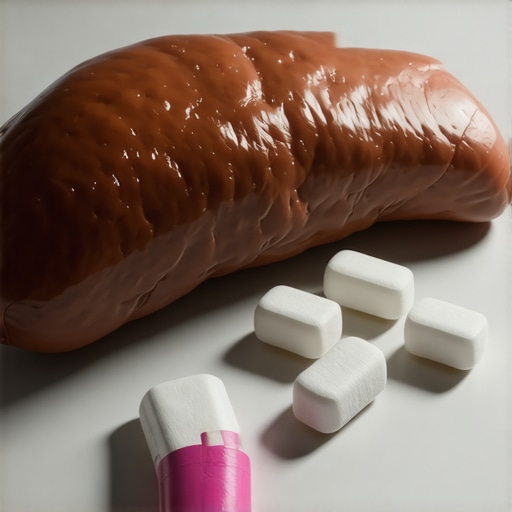
I still remember the day I opened my lab results and saw those bright red markers staring back at me. My ALT and AST levels were through the roof. I felt a surge of defensiveness; I am the person who orders sparkling water with lime while everyone else is on their second round of IPAs. The doctor’s office didn’t say it outright, but I could feel the skepticism through the phone. It felt like a false accusation. If you’ve been searching for why your liver enzymes might be high even if you don’t drink, I’ve been in your shoes, and I know exactly how frustrating that clean lifestyle feels when the data says otherwise. Today, I am going to share the culprits I discovered—the ones that have nothing to do with a bottle of whiskey—and how we can actually start to lower those numbers. [image_placeholder]
My lab results felt like a false accusation
Early in my wellness journey, I made a huge mistake: I assumed that as long as I was not drinking, my liver was invincible. I actually ignored my slightly elevated results for months, thinking they were just a fluke from a tough workout or a heavy meal the night before. That was a massive oversight on my part. Your liver is a workhorse that filters everything from the Tylenol you take for a headache to the pesticides on your spinach. I learned the hard way that the specific liver enzyme test your doctor probably skipped could have given me the full picture much sooner than the standard panel did.
Could the lab just be wrong?
It is the first question everyone asks when they see bad news on paper. We want to believe there was a mix-up or that the machines were uncalibrated that day. While the truth about fasting and your liver enzyme results shows that your preparation matters significantly, the lab is rarely just wrong. Usually, those numbers are waving a red flag about a stressor you haven’t considered yet.
The real reasons your liver is stressed out
Did you know that according to the American Liver Foundation, nearly 100 million individuals in the United States have Non-Alcoholic Fatty Liver Disease (NAFLD)? That is a staggering number for a condition many people still associate solely with bars and hangovers. I eventually realized my healthy high-protein diet and occasional over-the-counter anti-inflammatories were actually the culprits taxing my system. We often focus on the big no-nos and forget that understanding the role of lab tests in preventive wellness is about catching these small, daily insults to our organs before they become permanent issues. If you’ve ever felt like your lab results come back normal while you still feel like trash, you know that the standard range provided by the lab isn’t always your optimal range. Have you ever felt like you had to defend your lifestyle to a healthcare provider just because of one high number? It is time we look at what is actually happening under the hood.
Audit Your Daily Inputs Like a Forensic Accountant
The biggest mistake I made was thinking my ‘healthy’ routine was safe. I was swallowing a handful of supplements every morning, assuming they were building me up, but my liver was treating them like a toxic waste spill. Think of your liver as a high-end dishwasher; if you keep adding soap even when the dishes are clean, the suds eventually overflow and cause a mess. I decided to go on a ‘supplement strike’ for three weeks, removing every herbal extract and ‘wellness’ gummy. To my shock, when I did my follow-up, my numbers had already begun to stabilize. This is why why regular lab tests are critical for your wellness journey; you need to see how your body reacts to what you think is helping.
The OTC Trap No One Warns You About
We treat over-the-counter anti-inflammatories like candy. I used to pop an ibuprofen every time my back felt slightly tight from sitting at my desk. I didn’t realize that even ‘safe’ doses can keep your enzymes in a state of perpetual irritation. If you are struggling with high numbers, you must look at your medicine cabinet first. Often, the one liver enzyme most doctors ignore until it’s too late (GGT) is the smoking gun that reveals this chemical stress. If you can’t go without pain management, it is time to pivot your strategy and look for root causes rather than just masking the inflammation.
Ask for the Tests That Actually Tell the Truth
Standard blood panels are often too broad to give you the real story. When I finally got serious, I didn’t just ask for a general check-up; I requested a deep dive. You need to know your fasting insulin and your GGT levels to see if metabolic stress is the real driver of your high ALT. Learning how to order your own blood work without a doctors note was a game-changer for me. It allowed me to track my progress every four weeks without waiting for a scheduled annual physical. This proactive approach is how you catch NAFLD before it progresses to something irreversible.
Use Virtual Care to Get Immediate Feedback
Waiting six weeks for a specialist to tell you ‘it’s probably fine’ is a recipe for anxiety. When my results were wonky, I used a virtual provider to get a second opinion within 24 hours. Because telehealth innovations how virtual care is changing wellness, you no longer have to beg for a referral. A remote health coach can help you implement 3 moves to stabilize your blood sugar before your next wellness check, which is often the missing piece in lowering liver markers. I remember the relief of talking to a provider from my living room who actually looked at my diet trends instead of just my alcohol consumption. It shifted the conversation from ‘what are you doing wrong’ to ‘how do we optimize your environment.’
Moving from a reactive mindset to a proactive one requires acknowledging that the current medical system is built on ‘averages.’ Everyone tells you to stay within the lines, but in my experience, the lines themselves are often flawed. Most patients assume a ‘normal’ lab result means they are thriving. However, research in the Journal of Clinical Medicine suggests that reference ranges are often calculated from a population that already includes undiagnosed metabolic dysfunction. This is exactly why your lab results come back normal while you still feel like trash. If you aren’t optimizing for your own baseline, you are just comparing yourself to a potentially unhealthy crowd.
Stop Settling for ‘Normal’ on Your Lab Reports
I used to celebrate when my results stayed within the black ink, but I eventually realized that ‘normal’ is just a range designed to catch acute organ failure, not to measure peak performance. This is why your annual physical is missing your real health risks. You could be on the verge of a health crisis while still sitting comfortably at the edge of ‘normal.’ To truly improve, you have to track your own historical data through why regular lab tests are critical for your wellness journey.
Avoid the Workout Trap That Spikes Liver Enzymes
There is a massive ‘oops’ factor that most doctors forget to mention: the timing of your test. Did you hit a personal record at the gym 24 hours before your blood draw? That intense muscle breakdown can send your AST and ALT levels skyrocketing, mimicking liver damage when it is actually just muscle repair. This is why your lab results change based on when you woke up and what your physical activity looked like. Furthermore, even the sneaky factor that ruins your cholesterol panel accuracy, such as taking a biotin supplement before a hormone test, is often overlooked in standard 15-minute appointments.
Are We Measuring True Wellness or Just Avoiding the Hospital?
It is the question that changed how I view my health markers. Are we looking at these numbers to ensure we aren’t dying, or to ensure we are living at our highest capacity? When you start combining vaccinations and lab testing strategies, you begin to see how metabolic health dictates how well your body handles external stressors. For example, how to interpret your c-reactive protein levels for heart health becomes a much more useful skill when you realize it is a proxy for your overall systemic inflammation.
Sync Your Lab Data for a Stronger Immune Response
The synergy between your internal markers and your preventive care is where the real magic happens. By using telehealth innovations how virtual care is changing wellness, you can have a specialist review your panels in real-time and adjust your lifestyle before a minor deviation becomes a chronic problem. Have you ever fallen into this trap where a ‘clean’ result didn’t match how you felt? Let me know in the comments.
Build a Dashboard Instead of a Filing Cabinet
I stopped treating my health data like a stack of papers to be filed away and started treating it like a real-time dashboard. The biggest shift for me was realizing that data without a roadmap is just noise. I started using a dedicated health-tracking app to log every blood marker alongside my sleep quality and daily stressors. This allows me to see the direct correlation between a high-stress month and a spike in my inflammatory markers. This level of granularity is exactly how lab tests can detect hidden health risks early before they manifest as physical symptoms. If you aren’t looking at the trends, you’re essentially driving a car with the windows blacked out, relying only on the occasional beep of a warning light.
How can I maintain my health markers for the long haul?
Maintenance is where most people fail because they stop searching for answers once the immediate crisis is over. I follow a strict ‘quarterly check-in’ rule. Every three months, I use unlocking the power of telehealth for fast convenient wellness access to review my data with a professional. We don’t just look for what is wrong; we look for what can be better. This is especially true for managing chronic issues. I’ve found that exploring the benefits of telehealth in managing chronic wellness provides the consistency that local clinics often lack. By having a digital record that is always accessible, I can ensure that my personalized vaccination schedules are perfectly timed with my current immune status, rather than just following a generic calendar.
The Tools That Keep Me from Guessing
Specific equipment has transformed my approach from reactive to surgical. I use a Continuous Glucose Monitor (CGM) twice a year to see how my ‘healthy’ meals are actually impacting my insulin sensitivity. Even if you aren’t diabetic, seeing how a simple bowl of oatmeal spikes your blood sugar can explain why your liver enzymes are struggling. As Dr. Peter Attia emphasizes in his technical documentation on ‘Medicine 3.0,’ the goal is to shift the marginal decade of your life into the vibrant decade. This is why why wellness checks are your first step to better health is a philosophy I live by. I also make sure to check the essential lab tests you need for accurate vaccination planning to ensure my body is actually capable of building a strong response when I get a booster. If your inflammation is too high, your body might not even register the vaccine properly.
The Future is Proactive and Virtual
I predict that within the next five years, the idea of a ‘once-a-year’ physical will seem as outdated as a rotary phone. We are moving toward a model where telehealth innovations how virtual care is changing wellness will include wearable-integrated labs that alert your doctor the moment your cortisol levels stay elevated for more than 48 hours. This real-time feedback loop is the only way to truly stay ahead of the curve. If you want to start this today, my best tip is this: go through your last three years of labs and highlight any number that is moving toward the ‘edge’ of the normal range, even if it hasn’t crossed it yet. Take that data to a provider who understands how telehealth transforms personal care and demand a plan that optimizes for the center of the range, not the sidelines.
What I Finally Figured Out About My ‘Perfect’ Diet
The hardest truth I had to swallow was that my body doesn’t care about my intentions; it only cares about its biochemical capacity. I realized that consistency beats intensity every single time. Checking your markers once a year is like looking at a single frame of a movie and trying to guess the plot. This is why regular lab tests are critical for your wellness journey because they reveal the trends that a single data point misses. I also learned that even ‘liver-friendly’ supplements can actually be the very thing causing your enzymes to spike if you aren’t understanding the role of lab tests in preventive wellness properly. Sometimes, the best thing you can do for your liver is to give it less to do.
The Arsenal That Keeps My Numbers in Check
If you want to move beyond guesswork, you need tools that offer real-time feedback. I swear by my Continuous Glucose Monitor (CGM) because it taught me that my ‘healthy’ morning smoothie was actually a sugar bomb that my liver was struggling to process. I also rely on unlocking the power of telehealth for fast convenient wellness access to get my questions answered without the three-week wait for a traditional office visit. For deeper reading, I highly recommend Dr. Peter Attia’s work on Medicine 3.0; it completely reframed my view on preventative medicine. Finally, make sure you are looking at the essential lab tests you need for accurate vaccination planning to ensure your immune system isn’t bogged down by systemic inflammation before you add more to its plate.
Stop Waiting for Your Annual Physical to Save You
You are the only person who is 100% invested in your long-term vitality. The standard healthcare model is designed to fix you once you’re already broken, but how telehealth transforms personal care means you now have the power to stay ahead of the curve. Don’t let a ‘normal’ lab result trick you into complacency if you still feel off. Take charge, demand deeper data, and start viewing your health as a long-game strategy rather than a series of disconnected emergencies. Proactive wellness is about thriving, not just surviving. Have you ever had a lab result that completely contradicted your healthy habits? Let me know in the comments below.