
Why a thyroid ultrasound tells more than just a TSH test
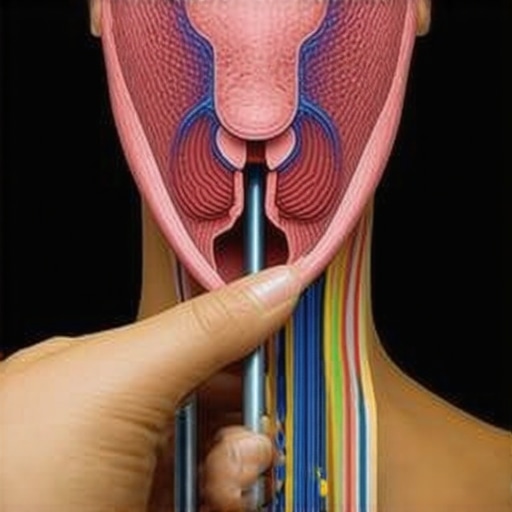
I remember sitting in my doctor’s office three years ago, clutching a lab report that said I was perfectly healthy while I felt like I was dragging a bag of bricks through wet cement. My skin was dry, my hair was thinning, and the brain fog was so thick I could barely remember my own zip code. My doctor just patted my hand and said my TSH was in the normal range. It was a classic case of why your lab results come back normal while you still feel like trash. I felt defeated, but more than that, I felt ignored. It wasn’t until I finally pushed for an ultrasound that I discovered I had several nodules and structural changes that a simple blood draw could never have caught.
Why an Image Beats a Number Every Time
The TSH test is a messenger. It is a hormone produced by your pituitary gland to tell your thyroid to get to work. But measuring the messenger is not the same thing as checking the factory. You can have a perfectly fine TSH level and still have physical issues within the gland itself, such as inflammation or nodules. This is often why your thyroid meds arent clearing your brain fog; the blood work says one thing, but your physical anatomy is screaming another. Today, I want to show you why looking at the physical structure of your thyroid is the missing piece of your health puzzle. We are going to break down how to advocate for better imaging and what those grainy black-and-white photos actually reveal about your energy levels. Have you ever been told your labs were fine even though you felt terrible?
Is a TSH test actually worth the hype?
Many people treat the TSH as the ultimate authority, but it is really just the tip of the iceberg. I made the mistake of trusting only that single number for far too long, ignoring the physical discomfort in my neck because a piece of paper told me I was fine. According to researchers at the Mayo Clinic, structural abnormalities like nodules are found in up to 50% of the population when using ultrasound, many of which never show up on a standard blood panel. This is a primary reason why your annual physical is missing your real health risks. If you are struggling with persistent symptoms, you need to know 3 thyroid markers your doctor probably ignored last time, but more importantly, you need to see what is actually happening under the skin. Knowing how to read your thyroid panel like a specialist is great, but it is only the first step toward getting your life back.When I finally decided to stop taking “normal” for an answer, I realized I needed a strategy. Doctors follow protocols, and if your TSH is fine, their protocol often stops. To get that ultrasound, I had to stop talking about my “fatigue” (which is vague) and start talking about “localized pressure.” I told my GP, “I feel a distinct fullness when I swallow, and I can feel a physical lump when I tilt my head.” This shifted the conversation from a metabolic issue to a structural one. It is the difference between telling a mechanic your car “feels weird” and telling them “there is a clunking sound in the front left tire.” They have to look.
Stop Asking and Start Showing Your Symptoms
To get the imaging you need, you have to speak the language of physical findings. If you simply say you are tired, you will get another TSH test. Instead, focus on the physical sensations in your neck. Are you hoarse? Do you have trouble swallowing? Does your neck feel “tight” even when you are not wearing a tie? I once spent twenty minutes in an exam room refusing to leave until the doctor performed a manual palpation. When he finally did, his eyes widened—he felt the nodule that the blood work missed. This is how to find a telehealth provider who actually listens to your symptoms if your local clinic keeps brushing you off.
Spotting the Hidden Culprits in Your Ultrasound
An ultrasound is essentially a sonar for your throat. It uses sound waves to map out the landscape of your thyroid gland. What you are looking for is not just “lumps.” You want to know about the “echogenicity”—the way the tissue reflects sound. If the tissue looks “mottled” or like “Swiss cheese,” it is a sign of chronic inflammation, often seen in Hashimoto’s disease, even if your antibodies are not sky-high yet. This is a crucial part of understanding lab tests as your roadmap to clearer diagnosis. 
Match Your Scan with a Modern Blood Panel
Once you have the image, you need to sync it with high-level data. You cannot just look at the factory; you need to see what it is shipping out. This means looking at Free T3 and Reverse T3, not just the basic TSH. When I got my scan back showing “heterogeneous texture,” it finally explained why I could not lose weight despite a “normal” TSH. My body was in a state of constant structural stress. You should check out these 7 lab markers that prove your metabolism is stalling to see the full picture. Combining these two data points—the physical and the chemical—is the only way to stop the guesswork.
Get a Faster Referral Without the Waiting Room
If your primary doctor is still dragging their feet, do not wait six months for a local endocrinologist. Digital health has changed the game. You can take your “normal” lab results and your symptoms to a virtual specialist who can order the imaging for you at a local radiology center. This is the faster way to get a specialist referral using telehealth. I used a virtual consult to get my second opinion, and I had my ultrasound script in my inbox within two hours. It bypasses the gatekeeping that often keeps patients sick for years. Knowing why regular lab tests are critical for your wellness journey helps, but knowing how to bypass the red tape is what actually gets you healed.
The hidden trap in your “fasting” blood work
Everyone tells you to fast for 12 hours before a metabolic panel. It is the standard advice, right? But here is where most people get it wrong: they think fasting only means “no calories.” In my experience, and as many metabolic specialists now agree, what you do besides eating can skew your results more than a midnight snack. For example, why your morning coffee is sabotaging your anxiety labs is one of the most overlooked nuances in modern diagnostics. Even black coffee triggers a cortisol response that can artificially inflate your blood sugar and alter your lipid profile. If you are trying to find 5 blood markers that reveal why you cant lose weight, that 6 AM espresso might be masking the very insulin resistance you are trying to detect. 
Why does your “fasting” lab look like you just ran a marathon?
It is often called the “dawn phenomenon,” but it is exacerbated by poor sleep and stress. A study published in the Journal of Clinical Endocrinology & Metabolism highlighted that even a single night of partial sleep deprivation can induce acute insulin resistance in otherwise healthy subjects. This is exactly why your lab results change based on when you woke up and how much rest you actually got before the needle hit your arm. If you show up to the lab stressed and underslept, your “fasting” glucose might be high simply because your body is in survival mode, not because you have a chronic metabolic issue. Understanding these variables is how lab tests can detect hidden health risks early in your wellness pathway without leading to a misdiagnosis.
Stop treating your telehealth visit like a drive-thru
Another common mistake is assuming virtual care is only for minor sniffles or quick refills. I used to think that way until I realized that exploring the benefits of telehealth in managing chronic wellness requires a proactive mindset. You have to be your own medical assistant. If you are not prepared with your own data—like blood pressure logs or recent weight trends—the provider is working with one hand tied behind their back. You need to know how to spot a better telehealth provider in 3 specific questions to ensure you are receiving comprehensive care rather than a high-speed prescription.
The truth about timing your immunity boosters
We often hear “just get your shots,” but the timing is a sophisticated nuance most people ignore. For instance, why you shouldnt wait until october for your flu shot is not just about avoiding the pharmacy rush; it is about matching your peak antibody window with the peak of the viral season. Furthermore, why high stress levels make your tetanus shot more painful is a real physiological phenomenon. High systemic cortisol increases local inflammation, which can amplify the soreness at the injection site. Have you ever fallen into this trap where a “normal” lab or a rushed appointment left you with more questions than answers? Let me know in the comments.I stopped relying on my doctor’s portal as my only source of truth about eighteen months ago. Portals are where data goes to die—they are clunky, hard to search, and they don’t show you the most important thing: the trend line. To truly scale your health, you need to treat your body like a high-performance machine. I personally use a simple, encrypted spreadsheet to track my biomarkers alongside my wearable data. It sounds tedious, but seeing how my HRV (Heart Rate Variability) drops 48 hours before my TSH spikes has been the single most empowering discovery of my life. This level of self-knowledge is why wellness checks are your first step to better health; they provide the raw material for your own personal health dashboard.
Stop letting your medical records sit in a dusty portal
To maintain this over the long haul, I recommend using tools like Apple Health for basic integration, but I swear by InsideTracker or similar platforms that allow you to upload old PDFs for longitudinal analysis. When you see your ferritin dropping over three years, rather than just seeing a single ‘low-normal’ result, you can intervene before you hit a wall of exhaustion. This longitudinal view is the essence of understanding the role of lab tests in preventive wellness. You aren’t just looking for what’s broken today; you are looking for what might break in 2026. 
How do I keep my wellness plan on track without burning out?
The secret is not more testing; it is smarter scheduling. I follow a ‘Seasonal Health Audit’ framework. Every March and September, I book my blood work and a telehealth follow-up. This creates a rhythm that prevents ‘health anxiety’ from taking over the rest of the year. By combining vaccinations and lab testing strategies into these two windows, I spend less time in waiting rooms and more time actually living.
The future of your living room as a clinical hub
We are rapidly moving toward a world where ‘hospital-at-home’ is the standard. I predict that within the next five years, we will see clinical-grade mass spectrometry devices for home use, allowing us to check hormone levels as easily as we check our weight. As Dr. Eric Topol, a leader in digital medicine, emphasizes in his research, the shift toward individualized medicine means the patient must become the primary data manager. This shift is already visible in telehealth insights and the future of accessible healthcare services. You no longer need to beg for a referral; you just need the data to prove you need one. My challenge for you this week: Download your last three years of lab results and plot your two most important markers on a simple graph. Seeing that visual trend will change how you talk to your doctor forever.
The Three Hardest Truths About Living with Normal Labs
Looking back at my journey from exhaustion to clarity, I realized that the medical system isn’t designed to find subtle thyroid issues; it’s designed to find catastrophic failures. Here are the most valuable insights I gathered while navigating the gap between feeling sick and being ‘clinically’ fine. First, your symptoms are data, even if the lab machine can’t read them yet. If you feel localized pressure in your neck, don’t let a TSH score talk you out of that reality. Second, the ‘normal’ range is a statistical average of the population, not a blueprint for your personal peak performance. Finally, I learned that telehealth innovations how virtual care is changing wellness have made it possible to find doctors who specialize in these nuances rather than just following a 40-year-old protocol. Always remember that a manual exam and a physical scan tell the story that chemicals in your blood sometimes hide. #IMAGE_PLACEHOLDER_E#
A Look Inside My Personal Wellness Toolkit
To stay ahead of my health, I’ve curated a specific set of resources that prevent me from falling back into the ‘normal lab’ trap. I rely heavily on longitudinal tracking—using apps like Apple Health and InsideTracker to see where my markers were three years ago versus today. I also make it a point to keep up with expert vaccination tips and immune support to ensure my thyroid isn’t constantly under fire from seasonal stressors. For my clinical planning, I always reference the list of essential lab tests you need for accurate vaccination planning, which often includes the same inflammatory markers that affect thyroid function. Keeping these tools in one place allows me to walk into every appointment with a dossier of evidence rather than a list of complaints.
Your Path to Healing Starts with Better Data
It is time to stop being a passive patient and start being the CEO of your own biology. Your energy, your mental clarity, and your metabolic health are too important to leave to a single ‘normal’ TSH result. By combining physical imaging with advanced blood work and the convenience of virtual specialists, you can finally close the loop on your symptoms. These regular wellness checks are your first step to better health because they allow you to catch structural changes before they become permanent issues. Don’t be afraid to demand the ultrasound, seek the second opinion, and trust what your body is telling you. You deserve to feel vibrant, not just ‘technically healthy’ on a piece of paper. Have you ever felt like your doctor was ignoring a physical symptom because your blood work looked fine? Let me know your experience in the comments.