
How to fix your posture during a long workday to avoid chronic neck pain
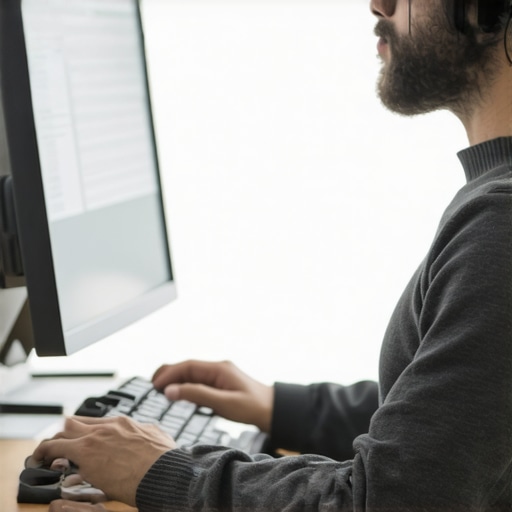
I’ll never forget that Tuesday afternoon when my neck decided to stage a full-blown rebellion. I was leaning into my monitor, trying to finish one last email, when a sharp, electric shock traveled from the base of my skull all the way down to my shoulder blade. I froze. I couldn’t look left; I couldn’t look right. For weeks, I’d been ignoring the dull ache, convinced that my morning yoga and occasional gym session would cancel out eight hours of hunching. I was making the classic mistake of treating my body like a machine that only needed repairs once a year during wellness checks rather than a living system that needs constant, gentle maintenance.
Stop Paying the Desk Tax with Your Health
Most of us are currently paying a ‘desk tax.’ We trade our physical alignment for productivity, and the interest on that debt is chronic neck pain. It’s not just about a sore muscle; it’s about how that constant strain triggers signs of physical burnout that eventually show up in your sleep quality and energy levels. When you lean your head forward just 15 degrees, the weight your neck has to support increases from about 12 pounds to 27 pounds. By 60 degrees—the common ‘slumping’ angle—that weight jumps to a staggering 60 pounds. That is like carrying a small child on your neck for eight hours a day. According to research published by Dr. Adalbert Kapandji, for every inch the head moves forward, it gains 10 pounds in weight, which the muscles in your upper back and neck must constantly work to counteract. I spent years thinking a better monitor was the answer, but the real fix came from changing how I move throughout the day and managing chronic issues remotely through consistent, small habits.
Is a standing desk actually worth the hype?
You’ve probably seen the ads for thousand-dollar ergonomic chairs and standing desks that promise to solve everything. I bought into the hype early on, thinking a piece of furniture would do the work for me. That was my biggest mistake. A standing desk is great, but if you stand with your shoulders hunched and your chin tucked into your chest, you’re just standing in a bad position instead of sitting in one. Have you ever spent a fortune on ‘ergonomic’ gear only to find your neck still throbbing by Friday afternoon? The promise I’m making you today is simple: we aren’t going to focus on expensive equipment. We are going to fix the way you inhabit your body during those long hours. We’re going to look at the micro-adjustments that save your cervical spine and how to integrate them so they become second nature, even when you’re deep in a flow state.
Reset Your Internal Compass Before Your Next Shift
To stop the cycle of pain, you have to stop thinking of your desk as a static station and start seeing it as a dynamic environment. The first and most critical move I made was the ‘Eye-Level Rule.’ I remember my home office looked like a chaotic library because I had stacked three thick biology textbooks under my monitor. It was ugly, but it forced my chin up. When your eyes are level with the top third of your screen, your cervical spine naturally stacks itself. It’s a mechanical win. If you’re struggling with the physical fallout of a poor setup, understanding lab tests can often act as a roadmap to see if chronic inflammation is making your muscles more susceptible to these strains.
Lift Your Gaze to Save Your Spine
Think of your head as a bowling ball balanced on a stick. If the ball tilts even slightly, the muscles in the ‘stick’ have to work ten times harder to keep it from falling. By raising my screen, I reduced that ‘bowling ball’ leverage. But posture isn’t just about physics; it’s about chemistry. During my worst month of neck pain, I realized I was also dealing with constant charley horses in my calves. I learned that positioning is only half the battle; if your electrolytes are depleted, your muscles can’t relax into a good posture even if you want them to. Finding the specific magnesium form that stops muscle cramps in days was the missing piece that allowed my neck muscles to finally let go of the tension they’d been holding for years. 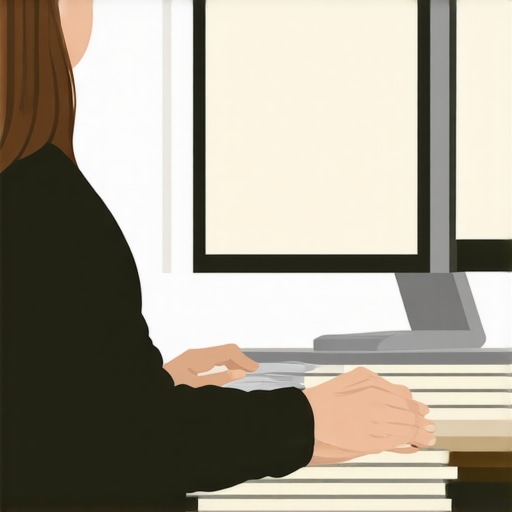
Identify the Metabolic Drain Behind Your Slouch
We often blame our chairs when the real culprit is a lack of internal fuel. If you find yourself collapsing into a ‘C-shape’ by 2 PM, it might not be a lack of willpower—it could be your biology failing you. I used to hit a wall every afternoon where my core muscles felt like wet noodles. Instead of just buying a lumbar support pillow, I looked deeper. It turns out, when your energy production stalls, your posture is the first thing to go. Checking the 7 lab markers that prove your metabolism is stalling can tell you if your afternoon slump is a structural issue or a metabolic one. If you’re unsure where to start, revolutionizing wellness how telehealth transforms personal care has made it incredibly easy to get a professional opinion on your ergonomics and blood work without even leaving the desk you’re trying to fix.
Implement the 20-20-20 Movement Rule
To keep the blood flowing and the fascia from ‘freezing’ in place, you need movement. I started setting a silent haptic alarm on my watch every twenty minutes. When it buzzed, I didn’t just look away from the screen; I performed three slow shoulder rolls and a ‘wall tuck.’ I’d stand against the nearest flat surface and try to touch the back of my head to the wall without tilting my chin up. This simple reset recalibrates your nervous system. Think of it like rebooting a computer that’s started to lag; you’re clearing the ‘physical cache’ of your muscle memory. This proactive approach is far more effective than waiting until the pain is unbearable and you’re searching for an emergency fix.If you’ve implemented the 20-20-20 rule and you’re still dragging yourself through the day like a wet noodle, it’s time to stop looking at your monitor height and start looking at your data. But here’s the contrarian truth that most clinics won’t tell you: your ‘normal’ lab results might be the very thing keeping you sick. Most people rely on standard reference ranges that are based on a statistical average of the population. The problem? That ‘average’ includes a majority of people who are already struggling with sub-clinical issues. In my journey, I learned that ‘normal’ is often just the absence of acute disease, not the presence of vitality. When you are understanding lab tests, you have to look for ‘optimal’ ranges, which are much narrower and designed for peak performance. 
Stop Settling for ‘Normal’ When You Feel Terrible
The biggest ‘oops’ factor I see is the ‘single-marker trap.’ People get their TSH checked and are told their thyroid is fine, while they continue to deal with brain fog, brittle nails, and cold hands. You have to learn how to read your thyroid panel like a specialist to see the full story, including Free T3 and T4 levels that might be scraping the bottom of the barrel while your TSH remains technically within range. It’s a massive mistake to treat a single data point as the absolute truth of your biology.
Can Virtual Care Actually Fix a Complex Metabolic Stall?
A common myth is that telehealth is only for ‘easy’ scripts like a sinus infection. I used to believe that until I realized that a virtual specialist often has more bandwidth to actually look at your long-term trends without the rush of a physical lobby. When you’re exploring the benefits of telehealth in managing chronic wellness, you’re accessing a platform built for data-heavy reviews. For instance, a basic lipid panel is often used to prescribe statins, but it fails to show the crucial detail of particle size. A study published in the Journal of Clinical Lipidology highlights that LDL-P (particle number) is a much stronger predictor of cardiovascular events than the standard LDL-C concentration. This is why I always tell people that a standard lipid panel isn’t enough to assess your real heart risk.
Don’t Ignore the Stress-Immunity Connection
Another nuance people miss is the interaction between lifestyle and preventive care. For example, did you know that your immune response to a booster can be blunted by chronic cortisol? It’s a fascinating catch-22; why high stress levels make your tetanus shot more painful and potentially less effective is a direct result of how stress hormones suppress the very system you’re trying to prime. It’s not just about getting the shot; it’s about the state of the body receiving it. Have you ever been told your labs were ‘perfect’ by a doctor, even though you felt like you were falling apart? Let me know in the comments—I’m curious to see how many of us have fallen into the ‘normal range’ trap.Maintenance isn’t a one-and-done event; it is the quiet, daily work of keeping the engine running without smoke. Once you’ve escaped the ‘normal range’ trap, the real challenge begins: how do you stay in the optimal zone without making wellness a full-time job? I’ve found that the secret lies in a tech-stack that bridges the gap between my living room and the lab. I personally rely on an integrated health dashboard that syncs my wearable sleep data with my quarterly blood results. This isn’t just about high-tech toys; it’s about context. When I see my CRP levels—which is the specific blood marker that flags silent inflammation before it becomes a problem—fluctuate, I can look back at my activity logs and see exactly what triggered the spike.
How do I maintain my health gains over the long haul?
The answer is a mix of radical consistency and the right digital infrastructure. I don’t wait for a crisis to book a check-in. Instead, I use telehealth innovations to have a ten-minute sync with my provider every three months. This keeps me accountable. We often think of health as a destination, but it’s more like a flight path that requires constant micro-adjustments. Research published in the Journal of Medical Internet Research (2023) indicates that individuals who engage with remote monitoring and digital health tools are 22% more likely to stay within their target metabolic ranges over a two-year period compared to those who rely solely on annual in-person visits. This is exactly why I advocate for a ‘low-friction’ approach. If I have to drive across town and sit in a waiting room, I’ll procrastinate. If I can do it from my laptop, I’ll stay on track. 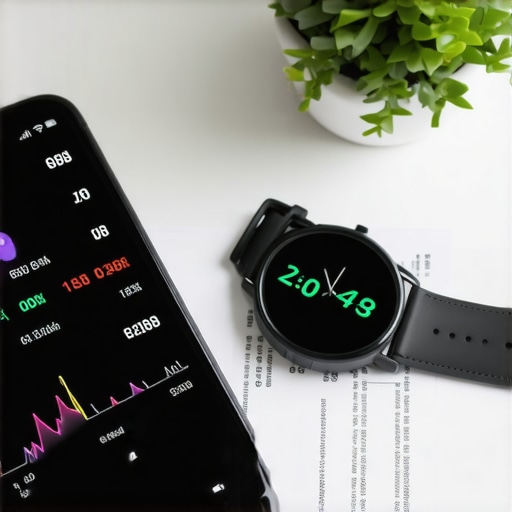
Keep Your Progress From Sliding Backwards
One tool I recommend to everyone is a simple shared digital health folder. I keep my lab history, my vaccination and lab testing strategies, and a running list of symptoms in a secure cloud drive. This allows me to see the big picture. For example, by tracking my trends, I realized that my iron levels always dipped in the winter, which explained the seasonal fatigue I’d blamed on the weather for a decade. Understanding that why regular lab tests are critical for your wellness journey isn’t about looking for disease, but about mapping your personal baseline. Looking ahead, I predict that within the next five years, we will all have ‘Digital Twins’—AI models of our own biology that can simulate how a new supplement or a specific stressor will affect us before we even try it.
Build a Virtual Safety Net with Modern Tools
Don’t let your health become an afterthought until something breaks. The most effective move you can make today is to set up your first virtual consultation to review your latest data. Whether you need to refine your supplement stack or you’re looking for personalized vaccination schedules for better disease prevention, the access is right there at your fingertips. If you’re tired of the guesswork and want a professional to help you interpret the numbers, reach out through our contact us page to start building your own personalized maintenance plan. Stop waiting for ‘normal’ and start aiming for your personal best.
The Counter-Intuitive Truths of My Health Pivot
I spent years thinking the goal of health was simply to avoid a diagnosis. I was wrong. The biggest lightbulb moment of my journey was realizing that understanding the role of lab tests in preventive wellness isn’t about looking for what’s wrong—it’s about optimizing what’s right. I learned that my body’s internal chemistry is a moving target, and relying on a single annual check-up was like trying to navigate a cross-country trip with one glance at a map. I also discovered that even my preventive efforts, like how I boost your immunity with expert vaccination tips, are far more effective when my baseline inflammation is low. If your system is already on fire from stress and poor posture, it can’t respond as robustly to the very things meant to protect it. Ultimately, moving toward telehealth insights the future of accessible healthcare services allowed me to stop being a passive patient and start being the CEO of my own biology.
My Personal Command Center for Longevity
To stay in the optimal zone, I’ve built a specific toolkit that removes the guesswork from my daily routine. First, I treat my digital health folder like a sacred document. Understanding how lab tests can detect hidden health risks early in your wellness pathway gave me the permission to ignore generic advice and focus on my specific deficiencies. I also rely on the Vital Clinic MD interface to keep my provider in the loop without the friction of travel. Instead of reactive visits, I now follow personalized vaccination schedules for better disease prevention that are tailored to my specific age and travel needs. I trust these resources because they prioritize data over trends and long-term stability over quick fixes.
Rewrite Your Biology Before Next Monday
Your health is a living, breathing project that deserves more than a ‘wait-and-see’ approach. By shifting your focus from ‘not sick’ to ‘fully optimized,’ you stop paying the price of the desk tax and start investing in a future of sustained energy. You have the tools and the technology at your fingertips to move beyond the limitations of standard reference ranges. Don’t wait for a crisis to decide you deserve to feel your best. Take the first step by looking at your data, adjusting your environment, and leaning into the modern tools that make wellness accessible. Have you ever suspected your ‘normal’ lab results were actually hiding the real cause of your fatigue? Let me know in the comments below.