
How to identify food triggers that cause adult acne breakouts

I vividly remember sitting in front of my vanity mirror at 11:00 PM, nearly in tears, staring at three new cystic bumps that had decided to migrate across my jawline just in time for a big presentation. I was thirty-two. I felt like a total fraud. How could I be an adult with a mortgage and a career, yet still be hiding behind layers of heavy concealer? I had tried every expensive serum on the shelf, but nothing worked because I was ignoring what was happening on my dinner plate. For years, I thought my ‘clean’ eating was bulletproof, but I was wrong. If you’re tired of the ‘pizza causes pimples’ myths and want to get down to the actual science of your own body, you’re in the right place. Today, we are going to build a roadmap to your clearest skin yet by pinpointing your specific dietary triggers and ending the guessing game for good.
Stop the guessing and start tracking your plate
The biggest mistake I made when I first started this journey was going ‘scorched earth.’ I cut out dairy, gluten, sugar, and joy all at once. I was miserable, and because I changed everything at the same time, I had no clue which one actually mattered. It turns out, identifying food triggers that cause your skin to flare up is a surgical process, not a sledgehammer one. You might find that your healthy diet is causing persistent brain fog along with those breakouts, which is a massive clue that your gut is struggling to process certain items. According to the American Academy of Dermatology, high-glycemic-index foods can cause a spike in insulin that triggers androgen hormones and sebum production—basically, that spike tells your pores to go into oil-production overdrive. [image_placeholder]
Is cutting out your favorite foods actually worth the hassle?
I get it. You love your morning latte and that weekend sourdough. The skepticism is real—we’ve all heard that ‘diet doesn’t affect acne’ from old-school doctors. But let’s be honest: you wouldn’t be reading this if the topical creams were doing the heavy lifting. We aren’t talking about a lifetime of deprivation; we are talking about a temporary investigation. Sometimes, you just need a few lab tests to understand preventive wellness and see if there’s an underlying sensitivity you’ve been ignoring. Have you ever noticed your skin getting angry exactly forty-eight hours after a specific meal? Tell me I’m not the only one who has lived through the ‘dairy-face’ struggle! If you’re ready to stop the cycle, virtual consultations are the best fit for chronic skin care because you can chat with an expert from your own kitchen, where the triggers actually live. We need to look at the whole picture, from the hidden link between your gut health and mood to the very ingredients in your pantry.
Build your own skin-clearing experiment
To stop the cycle of breakouts, you have to stop the guesswork. I remember one specific month where I was convinced almonds were my enemy. I cut them out for weeks, yet my skin stayed angry. It wasn’t until I took a more methodical approach that I realized my ‘healthy’ morning yogurt—specifically the concentrated whey protein—was the actual culprit. This was my lightbulb moment: you cannot fix what you do not measure. Instead of cutting everything at once, choose one category—like dairy or high-glycemic sugars—and remove it for three full weeks. This timeframe is crucial because your skin’s cellular turnover takes about 28 days.
Let your blood work do the heavy lifting
While you are tracking your meals, you need to see what is happening under the hood. It is a common mistake to dive into a restrictive diet without baseline data. For instance, you should why you should check your iron status before changing your diet because deficiencies can mimic or exacerbate skin dullness and slow healing. Think of lab tests as the GPS for your wellness journey; they tell you exactly where the roadblocks are so you don’t keep driving in circles. When I finally saw my results, I noticed 7 lab markers that prove your metabolism is stalling, which explained why my skin wasn’t regenerating as fast as it should. Your blood work provides an understanding of lab tests as your roadmap to clearer diagnosis, moving you from ‘I think this food is bad’ to ‘I know my body reacts to this.’ 
Leverage virtual experts to decode the data
You don’t have to be a scientist to figure this out. One of the most effective moves I made was how to prep for your first nutritional counseling session so I could speak to a pro who understood the gut-skin connection. They helped me realize that my ‘healthy’ smoothies were actually causing massive insulin spikes. If you are busy, remember that why virtual consultations are the best fit for chronic skin care; you can show your provider the exact labels in your pantry in real-time. This level of access is a game-changer. They can also help you determine if you need the essential lab tests you need for accurate wellness planning, ensuring your immune system isn’t constantly in ‘attack mode’ against the foods you eat. By combining a disciplined food log with professional oversight, you turn a confusing struggle into a solvable puzzle.
Let’s dig deeper into a hard truth most doctors won’t tell you: your labs are likely lying to you. We have been conditioned to believe that if a result falls within the ‘reference range,’ we are the picture of health. But in my experience, those ranges are often based on the average population—which, frankly, is quite sick. Everyone says if it’s green, you’re good, but I’ve found that being at the tail end of a ‘normal’ range is often where the real trouble starts. This is exactly why your lab results come back normal while you still feel like trash. If your ferritin is technically in range but at the very bottom, your skin isn’t going to glow, and your hair is going to thin. We need to shift the conversation from ‘normal’ to ‘optimal’ if we want to actually resolve chronic issues.
Why a “normal” lab result doesn’t mean you’re actually healthy
The ‘oops’ factor here is assuming the standard panel covers everything. Most providers won’t check the one liver enzyme most doctors ignore until it’s too late, leaving you in the dark about metabolic stress. A study published in the Journal of Clinical Medicine highlights that reference intervals are frequently derived from a population that already includes individuals with subclinical disease, meaning the bar for ‘health’ is set incredibly low. This is why why regular lab tests are critical for your wellness journey; you need a longitudinal view to see where you are trending, not just a one-time snapshot. For example, you might be over-consuming protein to build muscle, but why your high-protein diet might be stressing your kidneys is a nuance that only shows up when you look at the markers through an expert lens. 
Stop treating telehealth like a glorified pharmacy drive-thru
Another major trap is thinking that virtual care is only for getting a quick Z-Pak. In reality, managing chronic wellness via telehealth is actually more effective for skin and gut issues because it allows for consistent, data-driven follow-ups without the stress of an office waiting room. People often skip their vaccination myths review or forget that adult boosters are vital, thinking these are ‘kid-only’ concerns. Have you ever fallen into this trap where your doctor said you were ‘fine’ but you felt like garbage? Let me know in the comments. We have to stop accepting ‘average’ as our health standard. Whether it is tracking your immunity or investigating a mystery breakout, the magic happens in the nuances of the data, not just the surface-level results.
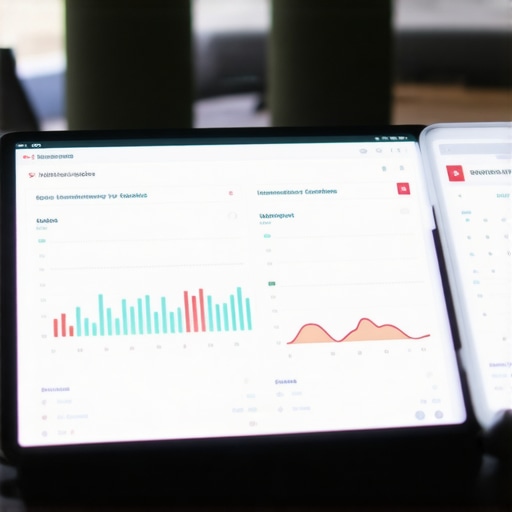
I’ve found that the real ‘secret sauce’ isn’t what you do for three weeks—it’s what you do for the next three years. Maintaining the glow after you’ve identified your triggers is where most people drop the ball. I personally use a simple digital dashboard to cross-reference my inflammatory markers with my seasonal diet changes. Why? Because your body is a dynamic system, not a static one. This is why regular lab tests are critical for your wellness journey—they catch the metabolic drift before it becomes a full-blown skin disaster. I specifically look at C-reactive protein (CRP) and fasting insulin every six months to ensure my lifestyle shifts are actually sticking. It’s not about being obsessed with numbers; it’s about being informed enough to make adjustments before your face does it for you.
Scale your results with digital precision
When I’m traveling or under heavy work stress, I don’t just cross my fingers and hope for the best. I use telehealth to transform my personal care on the fly. If I feel a flare-up coming or my energy dipping, I book a quick 10-minute check-in to adjust my supplement protocol or review my latest blood work. This prevents the ‘downward spiral’ where one bad weekend turns into a month of cystic acne. I also make sure my immune system isn’t a distraction; keeping up with expert vaccination tips ensures my body isn’t fighting off preventable viruses while I’m trying to heal my gut. Systemic inflammation is the enemy of clear skin, so don’t leave your immunity to chance.
How do I maintain these skin results over time?
The short answer is you have to stop treating wellness like a temporary project. I predict that within the next five years, we will move toward ‘predictive pathology,’ where wearable tech and AI-driven analysis warn us about hormonal spikes before a single pore gets clogged. Until that tech is on every wrist, we rely on data. A study published in Nature Medicine recently highlighted how longitudinal tracking of inflammatory proteomes can predict health shifts far more accurately than a single clinical visit. This is the level of precision we should strive for. If you are still winging it with random serums, it is time to prep for your first nutritional counseling session and get a professional to look at your specific data. Stop trying to be your own doctor and start being the informed CEO of your own health. Your skin—and your sanity—will thank you for the structure.
What Your Dermatologist Might Not Mention About Your Gut
I used to think my skin issues were just bad luck. Now I know they were sirens. One of the biggest shifts was realizing that why your lab results come back normal while you still feel like trash is usually because the ‘normal’ range is too broad for optimal health. I also learned that tracking my cycles alongside my food logs revealed hormonal patterns I’d missed for a decade—turns out, my jawline flared exactly when my insulin sensitivity dropped. Lastly, I realized that ‘clean’ eating is relative; what fuels one person might trigger systemic inflammation in another. Your body isn’t a textbook; it’s a unique laboratory that requires its own set of rules.
The Toolkit That Keeps My Pores Clear and My Brain Sharp
I trust the data more than the marketing. For my labs, I use lab tests in preventive wellness to catch inflammatory trends before they surface as a breakout. I also rely heavily on telehealth for managing chronic wellness because I need a provider who can look at my iron, insulin, and liver markers as a single, cohesive story rather than isolated numbers. Finally, I never ignore the basics: staying current with expert vaccination tips ensures my immune system isn’t constantly distracted by external threats while I’m trying to heal my gut. [image_placeholder_final]
Your Best Skin Starts with a Single Data Point
You don’t have to live in a state of ‘maybe’ anymore. Your skin isn’t a mystery to be solved with more concealer; it’s a biological output of your internal environment. When you take that first step toward better health through wellness checks, you’re choosing to be the authority on your own body. This journey to clear skin is really a journey toward self-advocacy and total vitality. Stop guessing which foods are your enemies and start using science to find your friends. Have you ever noticed your skin flare up after a stressful week or a specific meal? Let me know in the comments below!