
The 5-minute virtual move for getting your prescriptions refilled
I remember standing in my kitchen at 9:00 PM on a Sunday, staring at an empty orange bottle. My heart did a little extra thud—and not the kind my doctor likes. I’d made the classic mistake of assuming I had one more refill tucked away on the pharmacy’s server. I hadn’t. The thought of spending four hours in an urgent care waiting room, surrounded by coughing strangers, just for a thirty-second signature felt like a personal defeat. That was the night I finally stopped doing things the hard way and leaned into what I call the five-minute virtual move. I learned the hard way that getting a prescription refill on a Sunday without the ER isn’t just a dream; it’s a standard tool for anyone who values their time. Today, I want to show you exactly how to skip the commute and handle your maintenance meds from your couch without the stress or the typical healthcare runaround.
Stop Wasting Your Saturdays at the Doctor’s Office
For years, I believed that if I needed a script updated, I had to physically sit in a plastic chair and wait for my name to be called. It was a chore I’d put off until the very last second. Early in my journey, I made a massive mistake: I ran out of my maintenance meds while traveling because I didn’t think a virtual provider could help me across state lines. I ended up paying out-of-pocket for an expensive emergency clinic visit. I felt like a failure. But that failure led me to discover how how virtual care is changing wellness by putting the power back in the patient’s hands. Now, I use a quick video check-in for everything from routine adjustments to why your blood pressure meds might need a virtual tweak. It’s faster, cleaner, and honestly, way more personal than being rushed through a busy hallway.
Does a five-minute screen time session actually feel like real care?
I get the skepticism. You wonder if a doctor can really understand your needs through a smartphone. I used to worry that I was getting a ‘lite’ version of healthcare. However, the reality is that for maintenance medications, a focused, one-on-one digital conversation is often more thorough than a distracted in-person visit. According to the American Medical Association (AMA), telehealth services have proven to be a vital link in maintaining care continuity, with many patients reporting higher satisfaction levels due to the lack of travel-related stress. When you find a telehealth provider who actually listens to your symptoms, the five-minute refill becomes a moment of connection rather than a hurdle. Whether you are curious about how to manage your ADHD medication refills via telehealth or just need your annual labs reviewed, this method is the ultimate life hack for the busy person. Have you ever found yourself staring at an empty pill bottle at the worst possible time? I’d love to hear your ‘pharmacy fail’ stories and how you handled them. We’re about to dive into the exact steps to make sure that never happens to you again.
Get Your Digital Ducks in a Row
Executing a perfect virtual visit is like prepping for a road trip; you don’t just start the engine and hope for the best. First, you need to verify your gear. I’ve learned that the most effective way to handle a refill is to have your ‘health resume’ open in another tab. This means knowing exactly when your last labs were drawn and having those numbers ready to share. If you’ve ever wondered why your lab results come back normal while you still feel like trash, having your actual data ready to share with your provider allows for a much deeper dive than a simple ‘I feel tired’ ever could. When I finally stopped guessing and started bringing my own metrics to the screen, my provider was able to adjust my dosage in minutes rather than weeks. This level of preparation turns a routine check-in into a proactive health strategy.
Sync your blood work with your video call
Think of lab work as the GPS for your telehealth doctor. Without it, they’re just guessing based on your verbal directions. Before your appointment, check if you need a refresh on your panels. Why regular lab tests are critical for your wellness journey becomes obvious when you realize a doctor can’t see your internal chemistry through a webcam. Last March, I scheduled a refill for my metabolic meds but forgot to have my updated fasting insulin numbers. The provider was great, but we had to pause the whole process for three days while I went to a local draw center. Now, I always verify the one lab marker that tells you if your mediterranean diet is actually working before I even log in to the virtual waiting room. Having these results uploaded beforehand means the doctor spends the time treating you, not looking for paperwork.

Pick the Right Slot for a Better Conversation
Timing is everything in the virtual world. If you book the last slot of the day, you might get a provider who has already seen dozens of patients and is fighting ‘screen fatigue.’ I’ve found through trial and error that the best time of day to schedule your virtual appointment is usually mid-morning. Providers are alert, the technical glitches of the morning have been ironed out, and they aren’t rushing for a lunch break. I once tried to squeeze a thyroid check between two board meetings in a loud coffee shop. Big mistake. Between the background espresso machine and the spotty Wi-Fi, my doctor couldn’t hear my description of my heart palpitations properly. We ended up having to reschedule. Now, I treat that five-minute call like a high-stakes boardroom meeting—quiet room, hardwired connection, and my data prepared. Use this quiet time to ask the hard questions. If you aren’t sure where to start, learn how to spot a better telehealth provider in 3 specific questions so you don’t waste your time on a ‘script mill’ that doesn’t care about your long-term wellness.
Bridge the gap between virtual and physical care
Telehealth isn’t an isolated island; it’s a bridge to your physical health needs. You can use your video call to coordinate things that require in-person attention, like needles and boosters. For instance, you can maximize your health combining vaccinations and lab testing strategies during a single outpatient visit. I once spent a twenty-minute virtual session mapping out my entire year of preventative care. The doctor sent the orders for my blood work and my shingles booster to the same facility simultaneously. I walked in, got both taken care of, and walked out in under ten minutes because the administrative heavy lifting was already done over the screen. This hybrid approach is also essential for mental wellness. Knowing how to discuss your mental health with a virtual provider is different than a physical check-up; you have to be more descriptive of your internal state since they can’t ‘read the room’ or your body language as easily as they could in person.
Wait, did the doctor say your labs were ‘fine’ but you still feel like you’re running on 2% battery? This is where most people get stuck in the healthcare loop. Everyone tells you that as long as your numbers fall within the black-and-white lines of the report, you’re good to go. In my experience, ‘normal’ is often the enemy of ‘optimal.’ The standard reference range is based on a statistical average of everyone who walks into that lab—including people who are already quite ill. If you want to actually feel vibrant, you have to look at the nuances. For example, why your lab results come back normal while you still feel like trash often comes down to your provider not looking at the ‘sub-clinical’ trend lines. I’ve seen patients with ‘normal’ iron who were actually functionally deficient because their ferritin was at the bottom of the range.
Why is the reference range a trap for high-performers?
If you’re an athlete or a busy parent, your body’s demands are higher than the ‘average’ person. A study published in the Journal of Clinical Medicine highlights that personalized reference intervals are necessary because ‘normal’ varies wildly based on age, sex, and lifestyle. This is why understanding the role of lab tests in preventive wellness requires a provider who treats the person, not the paper. I once had a client who was told his Vitamin D was ‘fine’ at 30 ng/mL, yet he was catching every cold that went around. Once we found the most accurate way to test your vitamin D levels and optimized it to 60 ng/mL, his seasonal sickness stopped. Don’t fall into the ‘one-and-done’ vaccination trap either. Many adults assume that if they finished their childhood shots, they are protected forever. The reality is that immunity wanes. You might find that why you might need a booster even if youre fully vaccinated is a conversation worth having, especially for things like Pertussis or Tetanus. We often see people rely on vaccinations myths rather than checking their actual antibody titers.
#IMAGE_PLACE_HOLDER_C#
Watch out for the hidden ‘saboteurs’ in your morning routine
Here is the ‘oops’ factor I see every single week: the morning coffee. You might think a black coffee won’t affect your blood draw since it has no calories, but caffeine is a powerful stimulant that spikes your cortisol and can skew your metabolic markers. I’ve seen patients get panicked over high glucose or heart rate readings simply because they had an espresso 40 minutes before their appointment. In fact, why your morning coffee is sabotaging your anxiety labs is one of the most common reasons for a false positive on a stress-related test. Have you ever had a lab result come back weird just to realize you’d done something ‘innocent’ like drinking caffeine or staying up late the night before? Let me know in the comments—I’ve definitely been there. Beyond the caffeine, there’s the nuance of timing. Why your lab results change based on when you woke up is a real phenomenon; your hormones are on a circadian clock. If you draw your testosterone or cortisol at 4 PM instead of 8 AM, you aren’t getting a real picture of your health—you’re getting a snapshot of your exhaustion. This is why how virtual care is changing wellness is so powerful; it allows you to coordinate these logistics with a provider who actually has the time to explain these ‘traps’ to you before you waste a needle prick.
Build a health command center on your nightstand
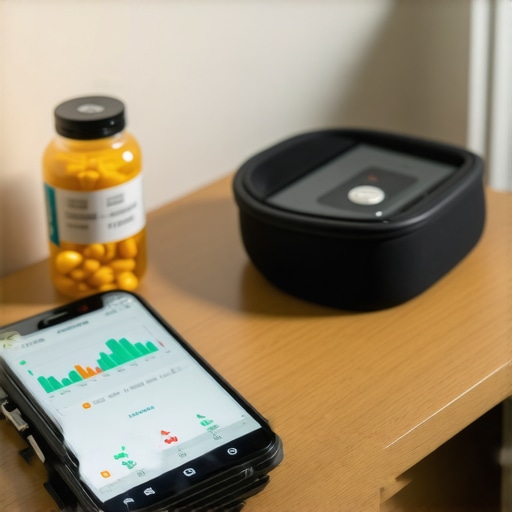
I realized early on that my five-minute virtual visits were only as good as the data I fed into them. To move from being a passive patient to an active health manager, I had to upgrade my hardware. I don’t just mean a better laptop; I mean medical-grade tools that sync with my phone. For me, that meant ditching the cheap drugstore cuff and investing in a device with Bluetooth connectivity. Learning the better way to track blood pressure at home saved me months of guesswork. I use the Omron Platinum because it exports a CSV file I can email directly to my provider before our call. When they see a thirty-day trend instead of a single, stress-induced reading, the conversation shifts from ‘let’s increase the dose’ to ‘your lifestyle changes are actually working.’ This shift is the core of leveraging virtual tools to manage long-term conditions effectively. It turns your living room into a diagnostic wing where you hold all the keys.
How do I stay on track with my wellness goals every month?
Maintenance isn’t about grand gestures; it’s about the boring, repetitive systems that prevent a crisis. I keep a digital folder of every lab I’ve had since 2021. This allows me to see if my markers are drifting toward the edge of the ‘normal’ range before they actually cross it. This is exactly how lab tests can detect hidden health risks early in your wellness pathway—by showing you the direction you’re heading, not just where you are today. I also treat my immunizations like a subscription service. Instead of waiting for a school form or a travel emergency, I worked with my provider to create personalized vaccination schedules for better disease prevention. We use a shared Google Calendar to mark exactly when my next Tetanus or Shingles booster is due. Dr. Eric Topol, founder of the Scripps Research Translational Institute, often speaks about ‘high-performance medicine’ where AI and remote monitoring allow for a ‘continuous, real-world’ view of health. By tracking your own metrics, you are essentially practicing this future-proof medicine today.
Why the doctor’s office is moving into your watch
In the next five years, I predict we won’t even have to ‘book’ appointments for routine checks. Your wearable device will flag a trending dip in your heart rate variability or a spike in your fasting glucose, and a telehealth bot will automatically trigger a lab order. We are already seeing telehealth insights the future of accessible healthcare services pointing toward a model where the provider reaches out to you before you even know you’re getting sick. This isn’t science fiction; it’s the natural evolution of the data-driven approach I’ve been using. If you want to get ahead of the curve, my one advanced tip is this: start requesting the raw data from your labs, not just the PDF summary. Most portals allow you to download a .XLS or .CSV file. Upload that into a tracking app like Cronometer or even a simple spreadsheet. Seeing your Ferritin or A1C on a line graph over three years is a religious experience—it takes the mystery out of your fatigue and gives you absolute control over your aging process. Don’t wait for your provider to suggest it; be the person who brings the graph to the screen.
Realizations That Changed How I Approach My Labs
Over the years, I’ve realized that the traditional healthcare model is often too reactive, but you have the power to change that. One of the biggest shifts in my own mindset occurred when I stopped accepting a generic ‘you’re fine’ and started asking how to get a clearer diagnosis that actually reflects how I feel. I also discovered that why your lab results come back normal while you still feel like trash is a common frustration that can be solved by looking at optimal rather than average ranges. Finally, I learned that consistency in small choices is the key; implementing the one habit that actually lowers your fasting insulin made a more significant impact on my daily energy than any temporary diet ever could.
Assemble Your Home Health Dashboard
I no longer leave my wellness to chance; instead, I use a curated set of tools to stay ahead of potential issues. First, I rely on unlocking the power of telehealth to skip the crowded waiting rooms and get direct access to providers who respect my time. #IMAGE_PLACEHOLDER_E# For tracking, I recommend using medical-grade devices that sync with your phone, such as a Bluetooth-enabled blood pressure cuff, to watch your trends over months. I also keep a secure digital record of my immunization history to ensure I am getting expert vaccination tips that are specific to my travel needs and age. Lastly, preparing a ‘health resume’ before every call ensures that how telehealth transforms personal care is fully realized in your own life.
Start Your Journey to Proactive Wellness
You don’t have to be a victim of a slow or outdated medical system. By mastering the five-minute virtual move and staying on top of your own biological data, you are reclaiming your most valuable asset: your health. Whether you are scheduling routine lab tests or seeking a specialist’s opinion from your couch, remember that you are the most important advocate in the room. Telehealth is the ultimate tool that allows you to manage your well-being with precision and ease. Have you ever challenged a ‘normal’ lab result because you knew something was off? I’d love to hear how you advocated for yourself in the comments below.