
The One Heart Marker Your Doctor Might Not Be Checking Yet

It happened during a routine checkup—my doctor glanced at my labs and casually mentioned everything looked fine. But a strange feeling crept in. Despite the reassurance, I couldn’t shake the suspicion that something was missing. That nagging doubt led me down a rabbit hole of research, uncovering a little-known heart health marker that many doctors don’t routinely check but could be vital for early detection of issues.
The Unexpected Missing Piece in Heart Wellness
Like many, I believed that standard cholesterol and blood pressure readings were enough to gauge my heart health. But what if I told you there’s a specific marker that can reveal hidden risks long before symptoms show? This discovery was a lightbulb moment for me—and it could be for you too. In fact, recent studies suggest that certain blood markers can predict cardiovascular risks more accurately than traditional tests alone. Yet, they remain underutilized in routine checkups, partly because many doctors may not be aware of their significance.
Have you ever felt that your routine labs just don’t tell the full story?
One mistake I made early on was relying solely on conventional tests without asking about these additional markers. It’s easy to trust that “normal” results mean everything’s fine, but often, that’s not the whole picture. Learning about this specific heart marker was a game-changer for me, highlighting the importance of proactive, personalized testing.
In upcoming sections, I’ll share how this overlooked marker can inform your wellness plan, and how telehealth services make it easier than ever to incorporate these vital checks into your routine. If you’ve ever wondered whether your heart health is truly optimized or if hidden risks lurk beneath the surface, keep reading. Knowing this could be the difference between peace of mind and a missed opportunity for early intervention. Want to learn how to identify these key indicators before they become serious? Let’s dive in and explore the steps to a deeper understanding of your heart health, starting with the latest insights in lab testing and telehealth innovations.
Book a Telehealth Consultation with a Specialist
Start by scheduling a virtual appointment with a cardiologist or your primary care doctor, emphasizing your interest in specific heart markers. Think of telehealth as your gateway; it’s like having a doctor’s office in your pocket, bypassing waiting rooms and travel time. During the consultation, clearly communicate what you’ve learned about overlooked tests—highlighting your desire for advanced lipid panels or hs-CRP testing—to ensure your provider understands your proactive approach. I recently used a telehealth service to discuss my concerns, which resulted in an ordered test panel that my local clinic didn’t usually offer, saving me weeks of waiting.
Identify Essential Lab Tests for Heart Risk
Next, determine which lab tests are most relevant—think of this step as assembling your health toolkit. Prioritize tests like high-sensitivity C-reactive protein (hs-CRP), lipoprotein(a), and fasting insulin, which can reveal hidden risks that traditional cholesterol screens overlook. To streamline this, I reviewed this resource to understand what each marker indicates, ensuring I request only the most impactful tests. Remember, with telehealth, your doctor can order these tests without you visiting a lab in person, making the process more accessible and efficient.
Prepare for Accurate and Convenient Blood Draws
Preparing correctly for your blood tests is crucial—imagine it as tuning your instrument before a concert. Fasted tests generally yield more accurate results; early morning appointments can help, or scheduling your fasting as advised. If veins are small or tricky, inform the clinic beforehand so they use the best technique, reducing frustrating retries. I once scheduled my blood draw during a telehealth consultation, and the technician was guided remotely to ensure optimal spot placement, avoiding my usual small veins.
Analyze Results with an Eye Toward Prevention
Once you receive your results, the real work begins—think of yourself as a detective piecing together clues. Use trusted resources like this guide to interpret your markers. Focus on the ones that suggest inflammation or genetic risk, acting proactively rather than waiting for symptoms. For example, elevated hs-CRP levels can signal underlying inflammation, prompting early lifestyle interventions. Sharing these results with a telehealth provider can help craft a tailored wellness plan, possibly including targeted diet changes or medication adjustments if necessary.
Integrate Continuous Monitoring and Follow-Up
Tracking your heart health isn’t a one-time event; think of it as cultivating a garden—regular attention keeps everything thriving. Utilize telehealth services to schedule periodic check-ins, discuss new lab results, or adjust your wellness strategies in real-time. Consider setting reminders for retesting, especially if initial results were borderline. I adopted a system where every three months, I’d consult remotely, ensuring my markers stayed within healthy ranges and catching any emerging issues early. This ongoing engagement transforms health management from reactive to proactive, empowering you to make informed decisions without disrupting your daily routine.
Many people think that telehealth is just a convenient alternative to in-person visits, but in reality, its true potential lies in proactive, personalized health management. A common misconception is that virtual care can’t offer the depth of traditional appointments, yet advanced telehealth platforms now include comprehensive lab testing and wellness tracking tools that outperform many outdated clinical practices. This misconception can lead individuals to underutilize the full capabilities of telehealth services, such as [integrating personalized vaccination schedules](https://vitalclinicmd.com/personalized-vaccination-schedules-for-better-disease-prevention) and regular lab tests, which are crucial for early detection of health risks.
Another myth revolves around vaccinations, where many assume that a standard shot is sufficient for long-term protection. However, many overlook the importance of tailored vaccination plans based on individual health profiles, travel habits, and emerging disease patterns. Experts emphasize that customizing vaccine schedules can significantly enhance disease prevention, a strategy detailed in [this resource](https://vitalclinicmd.com/revolutionizing-wellness-how-telehealth-transforms-personal-care).
When it comes to lab tests, there’s a widespread belief that they are only necessary when symptoms appear. In reality, routine testing—like [comprehensive lipid panels](https://vitalclinicmd.com/understanding-lab-tests-your-roadmap-to-clearer-diagnosis-at-322-pm)—can reveal underlying issues such as inflammation or hormonal imbalances long before signs manifest. Failure to recognize this nuance often delays intervention, increasing health risks.
Think you’re up-to-date on these topics? The truth is, many are unaware of advanced mistakes, such as relying on superficial markers or not understanding the significance of specific blood biomarkers like hs-CRP or lipoprotein(a). These subtle details can make a vast difference in preventive care. For instance, elevated hs-CRP levels are linked with higher cardiovascular risk, but many clinicians don’t routinely measure this unless specifically requested. This oversight underscores the need for patients to understand the nuances and advocate for comprehensive testing.
In my experience, embracing these advanced insights transforms health management from reactive to proactive, especially when coupled with telehealth innovations. Technologies now allow for [remote follow-ups, continuous monitoring, and personalized wellness plans](https://vitalclinicmd.com/telehealth-innovations-how-virtual-care-is-changing-wellness-in-639-am), making it easier than ever to stay ahead.
Have you ever fallen into this trap of misconceptions? Let me know in the comments. Recognizing these myths and nuances can empower you to take control of your health in smarter, more effective ways, ensuring you’re not just reacting to illness but actively preventing it.Maintaining your health journey over the years requires the right tools and consistent strategies. I personally rely on a combination of advanced telehealth platforms and at-home testing kits to keep my wellness on track. For example, I use the Everlywell at-home blood test kits regularly because they allow me to monitor key markers like inflammation and vitamin levels without the hassle of frequent clinic visits. These kits are affordable, user-friendly, and deliver lab-quality results, which I then review with my telehealth provider for personalized advice.
How do I maintain my health tools over time?
To ensure long-term success, I schedule quarterly reviews through my digital health platform, updating my testing panels as needed, and setting reminders for retesting aligned with my initial baseline. Automation tools like MyHealthApp help me track trends over months and years, making it easier to see patterns that might indicate emerging risks. Prediction suggests that integrating AI-driven analytics with continuous monitoring devices will become the standard in wellness, providing even more precise health insights. So, adopting reliable tracking tools now positions you for future advancements. Incorporate regular lab testing with telehealth consults to fine-tune your wellness strategy effectively. For example, I recently discovered a slight elevation in my inflammatory markers, thanks to routine testing, which prompted a few dietary adjustments tailored specifically for my needs. 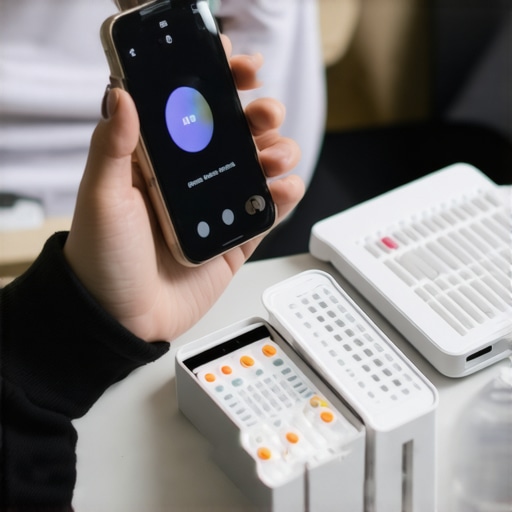
Imagery of a person using a digital health app alongside at-home test kits offers an excellent visual cue for your proactive approach. Alt text: Person reviewing health data on a smartphone with testing kits nearby. Title: Personalized Wellness Tracking with at-home tests. Staying consistent with these tools ensures that your health remains resilient against unforeseen issues and supports sustainable long-term wellness.
Reflecting on my journey through proactive health management, I’ve come to realize that some of the most impactful lessons are often the ones that challenge our assumptions. Learning the importance of overlooked blood markers taught me that routine tests might not tell the full story, especially when it comes to your heart health. The insights gained from personalized testing and telehealth consultations have empowered me to catch risks early, before symptoms emerge, saving time, stress, and potential complications. These lessons highlight the value of questioning standard practices and embracing innovative approaches to wellness.
One profound realization was that the future of health lies in individualized, data-driven strategies. By combining at-home testing kits with virtual care, I discovered a seamless way to stay ahead of potential issues. This approach doesn’t just benefit me; it’s a blueprint for anyone committed to genuine wellness. Recognizing this shift from reactive to preventive care has inspired me to advocate for broader access to advanced testing and personalized health plans, knowing they can dramatically improve quality of life.
Ultimately, the most valuable lesson I’ve learned is that health isn’t static—it’s an ongoing journey. Regularly updating your knowledge, leveraging technology, and consulting with specialists remotely creates a sustainable model for wellbeing. Every step toward understanding your unique markers deepens your connection to your body and strengthens your capacity to make informed decisions. Embracing this mindset transforms health management from a daunting chore into an empowering lifelong practice.
My Essential Toolkit for Heart Health with Telehealth
- Innovative Lab Tests: Trusted at-home kits like Everlywell allow me to monitor key markers such as hs-CRP and lipoprotein(a), uncovering risks that traditional panel might miss. These tests provide clarity and peace of mind, especially when my schedule is busy.
- Expert Telehealth Guidance: Platforms like virtual care services connect me with specialists who interpret my results and tailor wellness plans. The convenience encourages regular check-ins and proactive adjustments.
- Continuous Monitoring Tools: Wearables and apps that sync with my health profile help track trends over time. Seeing my data evolve motivates me to stay consistent and catch early warning signs.
- Reliable Educational Resources: I trust comprehensive guides to decode my results, understand risk factors, and implement lifestyle changes confidently.
Take Action and Own Your Wellness
The key to meaningful health improvements is taking that first step—whether it’s booking a telehealth consultation, requesting advanced testing, or simply reviewing your health data. Remember, your heart health isn’t determined solely by standard tests; it’s shaped by continuous awareness, early detection, and informed choices. So, why wait for symptoms to appear when you can act now? Embrace the tools, insights, and support systems available to you, and craft a wellness journey that’s tailored, sustainable, and empowering.
Have you considered exploring advanced blood markers or integrating telehealth into your routine? Share your thoughts below—I’d love to hear about your experiences or questions!