
How to get a professional counseling session on your lunch break
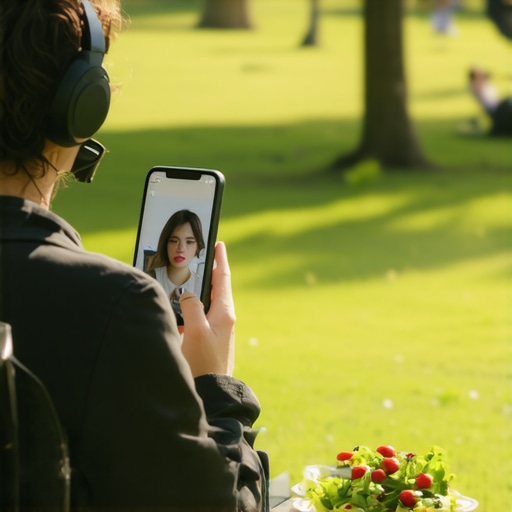
I was sitting in my car last Tuesday, tears blurring my vision as I tried to eat a lukewarm salad. I had exactly forty-two minutes before my next meeting, and the weight of the week felt like it was crushing my ribcage. For months, I’d told myself I didn’t have time for therapy. I figured I could just handle it myself with a few extra cups of coffee and some deep breathing in the breakroom. Who has three hours to commute, sit in a beige waiting room, and talk? But that afternoon, I realized that my refusal to find a gap was actually a slow-motion crash. I needed help, and I needed it between the 12:00 PM bell and the 1:00 PM check-in. This realization changed everything for me.
You Don’t Need a Half-Day Off to Talk to a Pro
[IMAGE_PLACEHOLDER]
If you’ve been white-knuckling your way through the workday, I have some good news: the “waiting room” era is officially over. When I first started looking into this, I made the classic mistake of thinking I could just power through with “self-care” podcasts. I didn’t realize that a podcast can’t talk back to you or help you process a toxic boss. I didn’t know how to spot early signs of burnout before you crash, so I waited until I was practically useless to my team and my family. I thought professional help was a luxury reserved for people with flexible schedules or those in a total crisis. It’s not. By utilizing modern telehealth, you can bridge the gap between “I’m just tired” and “I am actually okay” without ever leaving your office—or your parked car.
The trick is knowing how to discuss your mental health with a virtual provider effectively in a short, thirty-minute to one-hour window. You have to be intentional. I used to think I could just log on and see what happened, but I quickly learned that the best time of day to schedule your virtual appointment is actually when you have a clear buffer on either side to decompress. We are going to solve the logistical nightmare of scheduling today so you can finally get the support you deserve. I’ll walk you through how to find a private spot and what to say to your boss if they ask why you’re taking your lunch in your car.
Can a video call really be as good as the office?
This is the big one. Most of us fear that virtual sessions are just “Therapy Lite.” I certainly did. I worried that my therapist wouldn’t catch my body language or that the Wi-Fi would drop right when I was about to have a major breakthrough. I feared I was paying for a sub-par experience just for the sake of convenience. However, the data tells a much more encouraging story. According to a landmark study by the American Psychological Association, online therapy is just as effective as in-person sessions for most common mental health struggles, including anxiety and depression. In fact, why virtual mental health check-ins are more effective for busy parents and high-performing professionals often boils down to the “disinhibition effect”—people often feel more comfortable opening up from the safety of their own couch or car seat.
Have you ever felt like you were drowning at work but felt too guilty to take an afternoon off for your own health? I’ve been there, staring at my Outlook calendar like it was a prison sentence. I promise you, there is a way to reclaim that hour. We are going to break down the exact steps to find a provider who understands the lunch-break hustle and how to prepare so every minute counts.
Find a Clinician Who Speaks ‘Busy Professional’
The first step is filtering out the fluff. You don’t just need a doctor; you need a partner who understands that a 1:00 PM meeting is non-negotiable. When I started, I wasted weeks with a provider who was always ten minutes late. In a thirty-minute window, ten minutes is a third of your life. You need to know how to find a telehealth provider who actually listens to your symptoms rather than someone just checking boxes on a digital form. Look for platforms that prioritize efficiency and have a track record of punctuality. Recent telehealth innovations have made this easier, offering better scheduling interfaces that respect your calendar as much as you do.
Why Your Blood Work Is the Ultimate Cheat Sheet
Think of your session like a high-stakes board meeting. You wouldn’t walk in without a report, right? In the wellness world, that report is your lab work. If you’re talking about fatigue but haven’t looked at your iron or thyroid, you’re just throwing darts in the dark. I learned this the hard way when I complained about ‘burnout’ for three months, only to realize I was actually just severely vitamin D deficient. Understanding the role of lab tests in preventive wellness saves you hours of circular conversation. It gives your provider the hard data they need to make a move. If you’ve ever wondered why your lab results come back normal while you still feel like trash, it’s often because the ‘standard’ ranges don’t account for optimal performance. Bring your recent results to the screen.
Turn Your Parked Car Into a Fortress of Solitude
Privacy is the biggest hurdle for office workers. I once tried to have a session at my desk with noise-canceling headphones, but I was so tense that a coworker might see my screen that I couldn’t focus on a single word. Now, I use the ‘Car Sanctuary’ method. Step one: Park away from the main office entrance. Step two: Use a sunshade on the windshield for extra privacy. Step three: Ensure your phone is mounted at eye level. It sounds like a lot, but this small ritual signals to your brain that ‘Work Me’ is off the clock and ‘Healing Me’ is online. 
The Hard Truth About Scheduling Your Reset
Don’t book your appointment right before a big presentation. I made that mistake last June, and my brain was so fried from the session that I almost tanked my project update. The best time of day to schedule your virtual appointment is typically mid-morning or early afternoon, specifically when you have a 10-minute ‘airlock’ afterward. You need time to transition from being vulnerable back into being ‘Professional You.’ This gap is as important as the session itself. Use it to jot down notes or just stare out the window. If you don’t build in that buffer, you’re just trading one type of stress for another.
Once you’ve mastered the logistics of the ‘car sanctuary,’ we need to talk about the data that actually moves the needle. Most people treat their annual check-up like a binary switch: either you’re sick or you’re healthy. This is the biggest myth in modern medicine. In my experience, ‘normal’ lab results are often just the floor of human health, not the ceiling. If you are aiming for high performance rather than just the absence of disease, understanding the role of lab tests in preventive wellness requires a shift in perspective. You aren’t just looking for red flags; you’re looking for trends.
Stop Settling for “Normal” Blood Work
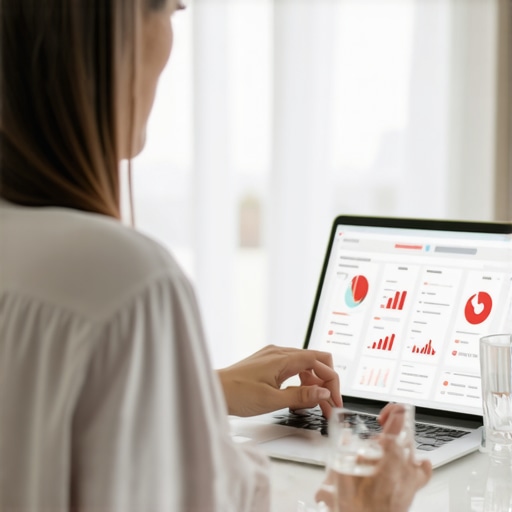
Everyone says a ‘normal’ TSH level means your thyroid is fine, but that’s a trap I see high-performers fall into every single month. Standard ranges are built on the averages of the general population—many of whom are already struggling with underlying issues. If you want to know why you’re still dragging through your afternoons, you need to look at the 3 thyroid markers your doctor probably ignored last time. A study published in the Journal of Clinical Medicine highlights that biochemical individuality means your ‘ideal’ range might be significantly tighter than the lab’s default. This is why your lab results come back normal while you still feel like trash. We need to stop chasing the average and start chasing the optimal.
The Coffee Trap and Other Lab Day Blunders
Here is a specific warning: your morning routine might be sabotaging your telehealth data before you even log on. Most patients know to fast for a lipid panel, but almost no one realizes that why your morning coffee is sabotaging your anxiety labs is due to the spike in cortisol and adrenaline that caffeine triggers. If you’re discussing stress management with your provider after a double espresso, your physiological data is essentially junk. It’s a common mistake that leads to unnecessary prescriptions. Have you ever fallen into this trap? Let me know in the comments—I definitely did during my first virtual check-in.
Why Is My TSH Fine When I’m Still Exhausted?
This is the most frequent question I get from people who have successfully transitioned to virtual care but still feel stuck. The answer usually lies in the nuance of ‘functional’ ranges. When you view your health through the lens of why wellness checks are your first step to better health at 945 am, you start to see that labs taken at different times of day tell different stories. Furthermore, immunity is not a ‘set it and forget it’ status. You might be surprised to learn why you might need a booster even if you’re fully vaccinated, as antibody levels wane at different rates for everyone. Real expertise means looking at the person, the timing, and the data as a single, moving target, rather than a static snapshot from five years ago.
Building a ‘car sanctuary’ was just the beginning of my journey toward reclaiming my time and health. To truly stop feeling like a passenger in your own biology, you have to move from being a passive patient to an active data manager. I stopped waiting for the annual call from my doctor’s office and started taking charge of my own metrics. I realized that why regular lab tests are critical for your wellness journey isn’t just about catching disease; it is about establishing a baseline for your ‘best self’ so you know exactly when you start to slip. In the world of longevity science, experts like Dr. Peter Attia advocate for ‘Medicine 3.0’—a proactive approach where we manage health risks decades before they manifest as symptoms. This shift changed how I view every telehealth check-in.
Build Your Own Wellness Tech Stack
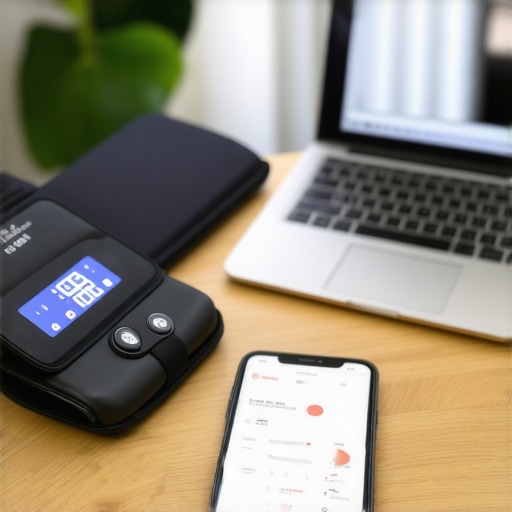
I don’t just ‘hope’ my blood pressure is low; I track it using a wireless cuff that syncs directly to my phone. I personally use the Omron Gold series because it eliminates ‘white coat hypertension’—that fake spike in pressure you get just from being in a clinical setting. It’s the better way to track blood pressure at home because it provides a rolling average that my telehealth provider can review in seconds. I also maintain a digital ‘Health Vault’ where I upload every PDF result I get. If you want to take the guesswork out of your appointments, how to order your own blood work without a doctors note is a skill you need to master. It allows you to walk into a virtual session with the data already in hand, turning a 15-minute ‘check-up’ into a high-level strategy session.
How do I keep these wellness gains from fading?
Maintenance is where most people fail because they treat health like a project with an end date. I use the ‘Quarterly Audit’ method. Every three months, I schedule a virtual deep dive to look at 7 markers in your blood work that actually predict longevity. This keeps me from drifting. It’s also the perfect time to review my immunization status. People often forget that boost your immunity with expert vaccination tips in the afternoon at 454 pm can be integrated into these sessions. I’ve learned that maximize your health combining vaccinations and lab testing strategies is the most efficient way to scale your wellness without adding more appointments to your calendar. If you can do both in one focused window, you save hours of commute and waiting room time.
The Future of Your Digital Waiting Room
Looking ahead, I predict that ‘telehealth’ will soon just be called ‘healthcare.’ We are moving toward a future where wearable data—like your sleep quality and heart rate variability—will stream directly to your clinician’s dashboard in real-time. We are already seeing telehealth insights the future of accessible healthcare services evolving to include AI-driven analysis that flags issues before you even feel them. This isn’t science fiction; it’s the logical next step for anyone tired of the reactive, ‘wait-until-it-breaks’ model of medicine. My challenge to you today: don’t wait for your next physical. Go online and check those 3 thyroid markers your doctor probably ignored last time to see where you truly stand.
The One Thing My Doctor Never Mentioned About Virtual Labs
After a year of managing my health from a laptop, I realized that the biggest barrier wasn’t the technology—it was my own mindset. I used to think of a blood draw as a reactive chore, something you do only when you’re already feeling sick. However, the real “lightbulb moment” came when I started treating my results like a quarterly performance review. I discovered that waiting for a physical symptom is actually waiting too late to optimize your energy levels. Another hard-earned lesson? You have to be your own advocate. If you don’t know how to read your own lipid panel without panic, you’ll always be at the mercy of a generic “you’re fine” phone call that doesn’t actually help you feel better. I also learned that why standard allergy panels often miss environmental triggers is because they aren’t looking at your specific workplace lifestyle—only a pro during a dedicated virtual session can help you connect those dots in real-time.
My Digital First-Aid Kit for High-Stakes Health
[IMAGE_PLACEHOLDER]
I don’t leave my wellness to chance anymore. I’ve curated a small but powerful toolkit that makes these virtual sessions twice as effective. First, the Omron Gold blood pressure cuff is my go-to for accurate, “white-coat-free” data that I can track on my phone. Second, I highly recommend the book Outlive by Peter Attia; it completely reframed my view of preventative medicine. Lastly, I rely on the resources at VitalClinicMD because they bridge the gap between complex science and a busy schedule. Whether I’m looking for why wellness checks are your first step to better health at 945 am or researching specific boosters, having a trusted digital library saves me hours of aimless Googling.
Take Back Your Noon Hour Once and for All
You don’t have to choose between your career and your health. That forty-two-minute window I had in my car wasn’t a limitation; it was an opportunity to reset. By embracing telehealth insights the future of accessible healthcare services, you are giving yourself the gift of time and clarity. Don’t let another month of “just being tired” slip by. You have the tools, the technology, and now, the strategy to turn your parked car into a command center for your longevity. Your future self will thank you for the one hour you reclaimed today to prioritize your wellness. Have you ever felt like you had to choose between a work meeting and a doctor’s appointment? Let me know how you handled it in the comments below!