
Why Your Lower Back Pain Keeps Coming Back and How Reading Osteopaths Find the Root Cause
Why Your Lower Back Pain Keeps Coming Back and How Reading Osteopaths Find the Root Cause
The Revolving Door of Back Pain
It starts with a familiar sensation – a dull ache at the base of your spine or a sudden, sharp “tweak” while bending over to pick up a grocery bag. You rest, perhaps take some over-the-counter anti-inflammatories, and use a heating pad until the discomfort subsides. You feel better for a few weeks, or maybe even a few months, only for the pain to return with frustrating predictability. This “revolving door” of back pain is one of the most common complaints we see at the Caversham Osteopathic Clinic. If you have been searching for Reading Osteopaths to break this cycle, you are not alone.
My name is Rick Weatherall, and I have been a Registered Osteopath in the Reading and Caversham community since 2003. Over the last 22 years, I have seen thousands of patients who feel stuck in a loop of temporary relief and inevitable relapse. Most of these cases fall under the category of “non-specific” lower back pain. This doesn’t mean the pain isn’t real – it certainly is – but rather that it isn’t caused by a single traumatic event like a fracture or a systemic infection. Instead, it is often the result of cumulative structural imbalances that have finally reached a breaking point. When you consult with osteopaths in Reading, our goal is to stop treating the back as an isolated part and start looking at it as the center of a complex, interconnected machine.
Why the Spine is Rarely the Only Culprit
The human body is an integrated system where no part functions in a vacuum. This is the core philosophy of osteopathy: structure governs function. When a patient arrives at our clinic, they often expect us to focus solely on the lumbar vertebrae. However, the site of the pain is rarely the actual source of the problem. If your lower back keeps “going out,” it is likely because it is overcompensating for a dysfunction elsewhere in the kinetic chain.
Imagine your body as a suspension bridge. If the cables at one end (your ankles or hips) are too tight or too loose, the central support beams (your lower back) will eventually begin to warp under the uneven stress. A stiff ankle from an old injury can change the way you walk, which forces your knee to rotate, which tilts your pelvis, and ultimately puts a shearing force on your lower spine. If you only treat the spine, the pain will return because the “cables” are still pulling it out of alignment. This is why the symptom-masking approach – relying on painkillers or temporary rest – fails in the long term. While some might search for a Chiropractor Near Me for a quick adjustment, a comprehensive osteopathic approach looks at the global mechanics of the body to ensure that once the spine is aligned, the rest of the body supports that alignment rather than fighting against it.
The “Root Cause” Checklist: What Your Body is Telling You
To find out why your pain keeps returning, we must go through a systematic checklist of potential structural triggers. Here are the most common culprits we identify in our Reading clinic:
1. Muscle Imbalances and the “Lower Crossed Syndrome”
Many of us spend hours a day sitting. This lifestyle leads to what is known as “lower crossed syndrome,” where the hip flexors become chronically tight and the gluteal muscles (your buttock muscles) become weak or “inhibited.” Because the glutes are supposed to stabilize the pelvis, their weakness forces the lower back muscles to do double the work. Over time, these back muscles fatigue and spasm, leading to recurring pain.
2. Joint Dysfunction: The SI Joint
The sacroiliac (SI) joint connects your spine to your pelvis. It is designed for stability, not massive range of motion. If this joint becomes “locked” or, conversely, too hypermobile, it creates a ripple effect of instability through the lumbar discs. Many patients who think they have a “slipped disc” actually have an SI joint dysfunction that is easily addressable through manual therapy.
3. Fascial Restrictions
Fascia is the tough, spider-web-like connective tissue that wraps around every muscle and organ. If you have had surgery, an old sports injury, or even chronic dehydration, the fascia can become restricted. Because fascia is continuous throughout the body, a restriction in the mid-back or even the thigh can “pull” on the lower back, creating a constant state of tension that won’t resolve until the fascial web is released.
4. Lifestyle Factors and the “Sitting Disease”
Research indicates that sitting increases intradiscal pressure in the lumbar spine by up to 40% compared to standing. When we sit, we often lose the natural inward curve (lordosis) of the lower back. This flattens the discs and stretches the posterior ligaments. Over years, this structural change becomes the “new normal” for your body, making you highly susceptible to injury during even minor movements.
Osteopathy vs. Chiropractic vs. Sports Massage
Patients often ask about the difference between various modalities. You might be looking for a Chiropractor Near Me to address specific spinal subluxations, or perhaps you’ve considered a sports massage near me to deal with muscle tightness. All these disciplines have their place, but osteopathy is unique in its integrative nature.
While a chiropractor focuses heavily on the nervous system and spinal alignment, and a massage therapist focuses on soft tissue, an osteopath bridges these worlds. We use high-velocity thrusts (adjustments) when necessary, but we also spend significant time on stretching, mobilization, and myofascial release. For instance, we may find that a Reading sports massage is the perfect adjunct to our treatment. By utilizing sports massage reading techniques, we can flush out metabolic waste from inflamed tissues, allowing the structural adjustments we make to “hold” much longer. If the muscles remain in a state of high tension, they will simply pull the bones back into the wrong position the moment you leave the clinic.
The Diagnostic Process: What Happens at the Clinic?
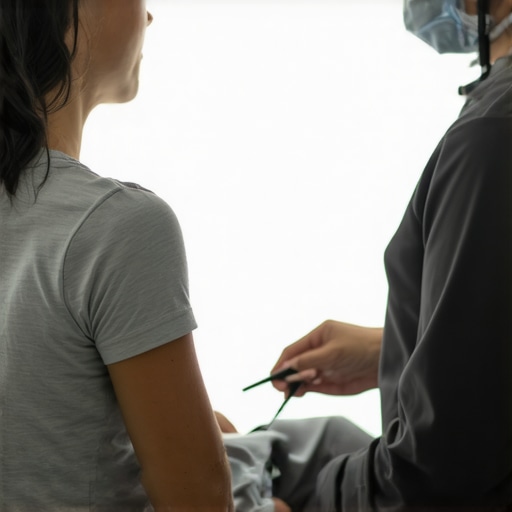
When you visit osteopaths in Reading, your first appointment isn’t just about where it hurts. We begin with a comprehensive gait analysis and postural screening. We look at how you stand, how you sit, and how you move through basic patterns like squatting or lunging. We perform orthopedic tests to rule out serious pathology and to pinpoint which specific structures – be it a ligament, a disc, or a joint capsule – are being provoked.
However, we also look at the “whole person.” Chronic pain is often influenced by factors beyond the physical structure. We may discuss your stress levels, your sleep quality, and even your nutrition. In some cases, patients come to us frustrated because their GP told them their X-rays were “normal” or their blood tests showed nothing. It is important to understand that why your ‘normal’ lab results might be missing the real cause of your discomfort; “normal” often just means “not diseased,” but it doesn’t mean “functioning optimally.” We look for the subtle functional deficits that standard imaging often misses.
Furthermore, understanding the role of lab tests in preventive wellness can be a game-changer for chronic back pain sufferers. If your body is in a state of systemic inflammation, your recovery will be sluggish, and your pain thresholds will be lower.
Integrated Wellness: Beyond the Treatment Table
If your lower back pain keeps coming back, we have to ask: is there a systemic reason your body isn’t healing? Chronic inflammation can make the nerves in your lower back “hypersensitive,” meaning they fire pain signals even when there is no new injury. This is where we look at internal health. For example, why you should request a C-reactive protein test at your next checkup is a vital question; high levels of this marker indicate systemic inflammation that could be stalling your recovery.
We also emphasize the importance of lifestyle recovery. Did you know that poor sleep can actually increase your sensitivity to back pain? Sometimes the simple fix for better sleep that your lab work might reveal (such as correcting a magnesium or Vitamin D deficiency) can do more for your chronic pain than a dozen massage sessions.
Finally, we recognize that our patients lead busy lives. While hands-on treatment in Caversham is essential for structural correction, we also guide our patients on how to manage chronic back pain using virtual care tools. This includes specific rehabilitation programs, ergonomic assessments of your home office, and movement “snacks” to break up long periods of sitting, ensuring that the progress we make in the clinic is maintained at home.
Conclusion: Don’t Settle for Managed Pain
Lower back pain should not be an accepted part of aging or a “quirk” of your body that you simply have to live with. When pain keeps returning, it is a signal from your body that the root cause has not yet been addressed. By looking at the relationship between your feet, hips, spine, and even your internal biochemistry, Reading Osteopaths can help you move from a state of “pain management” to a state of “resolution.”
With over 22 years of experience at the Caversham Osteopathic Clinic, I am committed to helping our local community regain their mobility and confidence. Whether you need structural realignment, a specialized caversham massage for maintenance, or a deep dive into your functional health, we are here to help. Stop the cycle of recurring pain and start your journey toward a stronger, more resilient back today.