
How to talk to a therapist about social anxiety from home
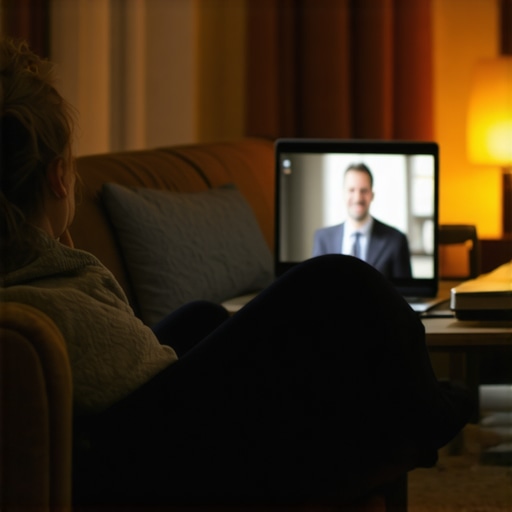
I once spent forty-five minutes idling in a parking lot, my heart drumming against my ribs, just trying to summon the courage to walk into a therapist’s office. I didn’t make it. The irony wasn’t lost on me: I was too socially anxious to get help for my social anxiety. That was the moment I realized the traditional way of doing things—the fluorescent lights, the judge-y feeling of a waiting room, the awkward small talk with staff—was actually keeping me sick. Transitioning to home-based care wasn’t just a convenience; it was my lifeline. Today, I want to show you exactly how to bridge that gap without the panic attacks, so you can finally get the support you deserve.
The day I traded the waiting room for my living room
My biggest mistake early on was believing the lie that real therapy only happens in a sterile office. I felt like a failure because I couldn’t handle the commute or the physical presence of a stranger. But once I learned how to discuss your mental health with a virtual provider, the walls I’d built started to crumble. It turns out, being in a safe space—my space—allowed me to be more honest than I ever was in person. We’re going to tackle the logistics of opening up from your couch and why virtual therapy is more effective for social anxiety for people like us.
Does virtual therapy actually hold up under pressure?
It’s a fair question. You might worry that a screen creates a barrier, or that your therapist won’t get you. I felt that too. However, research published in the Journal of Affective Disorders found that internet-delivered cognitive behavioral therapy is just as effective as face-to-face treatment for social anxiety disorder, often resulting in higher participation rates simply because the barrier to entry is lower. Have you ever skipped a doctor’s visit just because the thought of the waiting room felt like too much? You aren’t alone. Modern telehealth insights show that removing the physical friction is often the most important step in the entire healing journey. Setting yourself up for success starts with choosing a provider who understands that your home is your sanctuary, not just a place where you hide. [image placeholder]
Turn your corner of the world into a healing zone
Setting up for a virtual visit is like prepping for a first date with yourself. You want the lighting right, not for vanity, but because your provider needs to see your micro-expressions. I used to sit in a dark room thinking I was hiding, but all I was doing was making it harder for my therapist to read the room. Now, I sit facing a window. That small shift—moving from shadow to light—changed how I felt about being ‘seen.’ Think of your therapy space like a pilot’s cockpit; everything needs to be within reach so you can focus on the flight, not the controls. Comfort is your currency here. If you are fidgeting because your chair is stiff, you aren’t focused on the session.
Pick a time when the world isn’t screaming at you
You have to be ruthless about your ‘do not disturb’ settings. There is nothing that kills a breakthrough faster than a Discord notification or a delivery driver ringing the bell. In my early days, I tried to take a session during my lunch break at work. I was so worried about someone walking in that I barely spoke. I learned the hard way that the best time of day to schedule your virtual appointment is when you have a 15-minute buffer on either side. Treating the session with the same weight as an in-person visit means you should how to prep for your first nutritional counseling session or mental health check-in by writing down your top three ‘non-negotiable’ feelings. If you don’t name them in the first ten minutes, you’ll spend the whole hour dancing around them.

The physical blueprint behind the mental struggle
Many people think virtual care means the physical body is ignored. That’s a dangerous myth. During one of my worst months, my provider looked at my pale complexion through the webcam and paused. They didn’t just ask about my thoughts; they ordered a panel. Seeing the data in understanding lab tests: your roadmap to clearer diagnosis helped me realize my brain wasn’t just ‘broken.’ It was starving for nutrients. It turned out the specific vitamin deficiency that mimics clinical depression was playing a massive role in my social withdrawal. Your home is your sanctuary, but your bloodwork is the manual for your health. Integrating these diagnostics into your virtual plan ensures you aren’t just treating symptoms, but solving the root cause.
Spot the right provider in three minutes or less
Not every clinician is built for the screen. Some treat it like a phone call they’re trying to escape. You need someone who is ‘webcam literate.’ When you’re looking, you should know how to spot a better telehealth provider in 3 specific questions. Do they maintain eye contact? Do they use a secure platform? Do they value the integration of physical data like why regular lab tests are critical for your wellness journey? I once worked with a doctor who refused to look at my previous bloodwork because it was from another state. I eventually found a provider who used telehealth insights to bridge the gap, reviewing my records digitally and explaining how my high cortisol was affecting my sleep. That’s the level of care you deserve. Virtual care is not a ‘lite’ version of medicine; when done correctly, it is a more comprehensive, data-driven approach to your total wellbeing.
Virtual care isn’t just about the convenience of the screen; it’s about the data you bring to it and how you interpret that data from the comfort of your couch. But here is where most people trip up: they treat their lab results like a pass/fail grade. Most patients believe that if their results don’t have a red ‘H’ or ‘L’ next to them, everything is perfect. I used to be one of them until I realized that ‘normal’ is just a statistical average of the general population—many of whom aren’t actually healthy. By understanding the role of lab tests in preventive wellness, you start to see that the goal isn’t just to be ‘not sick,’ but to be thriving in the optimal zone.
Stop Settling for Results That are Just ‘Fine’
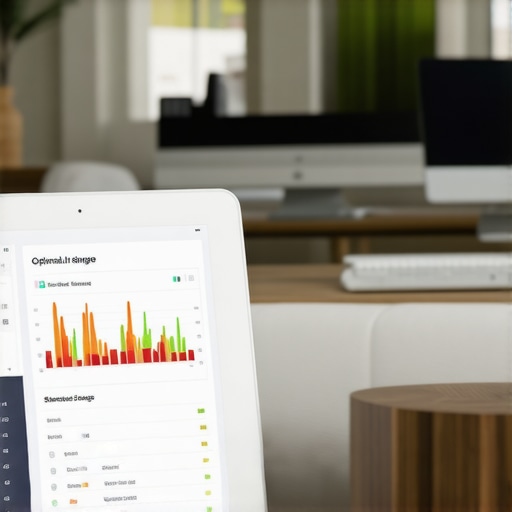
The biggest myth in modern wellness is that a standard blood panel tells the whole story. It doesn’t. Standard reference ranges are often too broad to catch early-stage metabolic shifts. When you look at how lab tests can detect hidden health risks early in your wellness pathway, you begin to see patterns rather than isolated numbers. For instance, your fasting glucose might be ‘normal’ at 98, but it’s trending toward a danger zone that a proactive virtual provider would catch long before it becomes a diagnosis. We are revolutionizing wellness how telehealth transforms personal care by moving away from these reactive snapshots and toward a continuous, data-driven conversation about your vitality.
Your Morning Brew is Messing Up Your Results
Here is the ‘oops’ factor nobody tells you: your morning routine is likely sabotaging your data. I once had a client whose anxiety markers were through the roof, and we were nearly ready to adjust her medication until we realized she was having a double espresso thirty minutes before her blood draw. Why your morning coffee is sabotaging your anxiety labs is simple—caffeine spikes cortisol and can temporarily alter glucose and lipid levels. Similarly, the sneaky factor that ruins your cholesterol panel accuracy is often just a lack of proper hydration or even a stressful commute to the lab. When you’re doing virtual care, you have the luxury of time to prep your body correctly, ensuring the data we’re looking at is your true baseline, not a caffeine-induced spike.
Why do your results look perfect while you still feel exhausted?
This is the question that drives most of my deep-dive sessions. The reality is that many labs only test for the bare minimum. According to research published by the American Association for Clinical Chemistry, reference intervals are often based on a ‘healthy’ population that may not reflect your specific age, gender, or lifestyle needs. This is exactly why your lab results come back normal while you still feel like trash. You might be missing a nuance in your thyroid panel or a subclinical vitamin deficiency that standard tests ignore. We should also be maximizing your health combining vaccinations and lab testing strategies to ensure your body is actually responding to care, rather than just ticking boxes on a form. Don’t let a ‘normal’ lab report gaslight you into thinking your symptoms aren’t real. Have you ever fallen into the ‘normal labs’ trap where your doctor said you were fine but you felt terrible? Let me know in the comments.
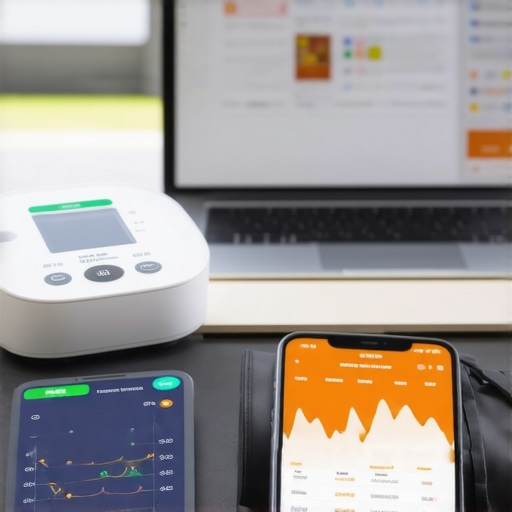
Once you stop settling for ‘normal,’ you need the right tools to actually measure ‘optimal.’ I’ve turned my home into a mini-diagnostic hub, but not with expensive gadgets that gather dust; I focus on high-fidelity data. I swear by my Welch Allyn ProBP 2000 because accuracy isn’t optional when you’re managing health from a bedroom. I combine this with the the 10-minute trick for lower blood pressure readings at home to ensure that environmental stress isn’t tainting my numbers. I also use a dedicated HIPAA-compliant digital vault to store every PDF of my bloodwork. This allows me to track the multi-year trend of my markers, like my ApoB and fasting insulin, rather than just looking at a single point in time. When you start understanding the role of lab tests in preventive wellness from a bird’s eye view, you stop reacting to bad news and start predicting your own health trajectory.
The hardware that keeps my health data honest
Authority in your own health journey comes from the quality of your inputs. I personally use a smart scale that measures segmental body composition, not because I’m obsessed with the number, but because I want to see if my lean muscle mass is staying consistent as I age. This data is the bridge that makes telehealth innovations how virtual care is changing wellness in 639 am so powerful; I am no longer just a face on a screen, but a collection of high-resolution data points that my provider can use to make real-time adjustments to my protocol. According to a 2023 report in The Lancet Digital Health, patients who actively engage with their own longitudinal health data through remote monitoring show a 22% higher adherence to long-term wellness protocols compared to those using traditional clinical models. This isn’t just about ‘checking in’; it’s about owning the narrative of your biology.
How do I keep this momentum going without burning out?
The secret to long-term results is automation and ‘batching.’ I schedule my labs quarterly like clockwork. This includes looking for 7 markers in your blood work that actually predict longevity, ensuring I’m not just avoiding disease but actively moving toward a longer healthspan. This data-driven mindset even applies to how I handle immunity. I don’t just get a shot because the calendar says so; I look at the essential lab tests you need for accurate vaccination planning to see if my antibody titers are actually low. It’s part of building personalized vaccination schedules for better disease prevention that actually fit my specific immune profile, not a generic public health guideline designed for the ‘average’ person. If you’re feeling overwhelmed, my best tip is to start with one specific marker—like your Vitamin D or Ferritin—and track it until it hits your optimal zone before adding more variables.
Your mirror might be your next doctor
I predict that within the next decade, the very concept of ‘going’ to a doctor will feel as antiquated as using a rotary phone. We are moving toward a future where your home’s sensors and wearable tech will run passive diagnostics in the background. Your smart mirror might detect early signs of jaundice or skin irregularities, while your sleep tracker identifies subclinical inflammation before you ever feel a ‘slump.’ This integration will make our current virtual visits look like the Stone Age. If you’re ready to stop guessing and start knowing, I highly recommend you contact us to see how a data-first approach can change your life. Start by picking one tool—a high-quality blood pressure cuff or a specific lab panel—and commit to tracking it for six months. You’ll be amazed at how quickly the ‘mystery’ of your health vanishes when you have the data to back it up.
The Truth About Those Green Checkmarks on Your Results
The hardest lesson I’ve learned is that a lab report full of ‘normal’ values can be a mask for underlying issues. For years, I ignored my fatigue because my doctor said I was fine, but once I started tracking my own trends, I realized I was hovering at the very bottom of the acceptable range for key nutrients. You have to remember that reference ranges are often averages, not ideals. I stopped looking at my results as a pass/fail test and started seeing them as a GPS. Now, I use understanding the role of lab tests in preventive wellness to catch metabolic shifts before they become symptoms. It’s also vital to realize that your environment impacts your data; for example, the sneaky factor that ruins your cholesterol panel accuracy is often just a high-stress morning, which is why testing from a relaxed home state is such a game-changer. My lightbulb moment was realizing that why your lab results come back normal while you still feel like trash is usually because the standard panels are too narrow to catch subclinical deficiencies.
What’s Actually in My Digital First Aid Kit
I don’t believe in cluttering my life with gadgets, but I do believe in high-fidelity data. My essential toolkit starts with a reliable way to monitor my vitals without the ‘white coat syndrome’ of a clinic. I’ve found that the 10-minute trick for lower blood pressure readings at home combined with a clinical-grade cuff provides much more accurate data than a random reading in a doctor’s office. I also keep a digital folder of every lab I’ve ever taken, which allows me to see 7 markers in your blood work that actually predict longevity across several years. This longitudinal view is the only way to truly advocate for yourself. Finally, I rely on a direct line to my providers through secure telehealth platforms, which is why telehealth innovations how virtual care is changing wellness in 639 am is my primary resource for staying consistent without the burnout of travel.
Take Back the Control You Never Knew You Lost
The journey from being too anxious to enter a clinic to owning my health data from my couch has been the most empowering shift of my life. You don’t have to wait for a crisis to start caring about your biology. By revolutionizing wellness how telehealth transforms personal care, we are finally putting the patient—not the system—at the center of the experience. It starts with one small step: booking a virtual consultation or ordering a baseline lab panel to see where you actually stand. Your health isn’t a mystery meant to be solved by a stranger in a white coat once a year; it’s a daily conversation between you and your body. If you’re ready to see the full picture of your health, don’t hesitate to contact us and begin your own path to data-driven wellness. Have you ever felt like your doctor was just checking boxes while you were still struggling? Let me know your story in the comments below.