
The 10-minute trick for lower blood pressure readings at home
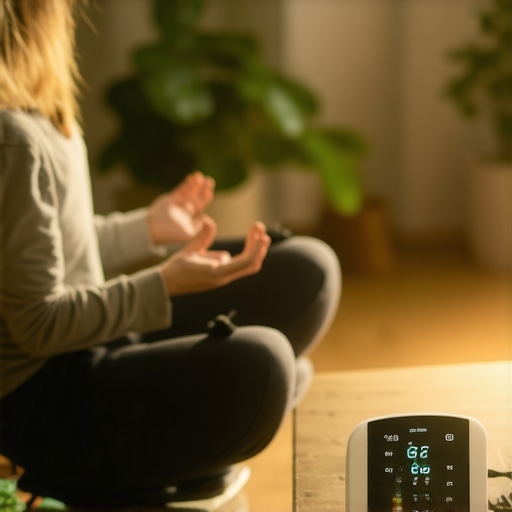
I remember sitting on the edge of my sofa, the digital cuff squeezing my arm like a vice. My heart was thumping. I looked down, and the screen flashed 155/95. I panicked. I’m a healthy person, right? Why was my body failing the test? That moment of pure anxiety actually pushed the numbers even higher. It was a vicious cycle I had to break. I realized I was doing everything wrong—checking it right after a stressful work call or when I was still vibrating from my third espresso. It turns out, I didn’t need a higher dose of meds; I needed to learn how to actually sit still. It’s a common story. We treat our health like a to-do list item to be checked off as fast as possible. But the body doesn’t work that way. When I first started tracking my numbers, I’d rush through it between chores. Big mistake. I spent weeks worrying about a problem that didn’t exist, all because I didn’t understand the ‘pre-game’ ritual of monitoring.
Stop Chasing the Wrong Numbers at Home
For a long time, I thought blood pressure was a static number, like your height. I was wrong. It’s fluid. It reacts to everything. Early on, my biggest mistake was thinking that a quick ‘check-in’ while the kids were screaming in the next room would give me a real result. It doesn’t. You’re just measuring your stress level, not your cardiovascular health. If you’ve ever felt that spike of dread when the Velcro tightens, you probably know that lowering blood pressure naturally before your physical starts with how you behave in the ten minutes leading up to the beep. It’s about creating a buffer zone between the world and your heart. Sometimes, your lab results come back normal while you still feel like trash, or vice versa, because the snapshot we take is blurred by the chaos of daily life. We need a clear, high-definition picture of what is happening inside. That’s why I’m sharing this specific routine. It’s not just ‘relaxing’; it’s a clinical necessity that ensures your data is actually useful. If the data is wrong, the treatment will be wrong too.
Does a Ten-Minute Break Actually Change Anything?
You might think ten minutes is a luxury you don’t have, or that it’s just ‘woo-woo’ fluff. But the physiology is real. According to the American Heart Association, failing to sit quietly before a reading is one of the most common mistakes patients make. In fact, just having a full bladder or crossing your legs can artificially inflate your systolic reading by up to 10 to 15 points. That is the difference between a ‘healthy’ check-up and a situation where your blood pressure meds might need a virtual tweak. Even something as small as your morning coffee sabotaging your anxiety labs can throw the whole day off. Have you ever had a doctor tell you your pressure was high, only for it to be fine ten minutes later? That’s what we’re tackling today. We are going to ensure that when you sit down to measure, you’re seeing the real you, not the version of you that just finished answering twenty emails. It’s time to stop the ‘White Coat Hypertension’ at home once and for all. It took me a month of bad readings to realize I was self-sabotaging. Don’t be like me. Before we dive into the step-by-step, I want to know: have you ever seen a number on that screen that made your heart skip a beat out of pure fear?
Build a Solid Foundation for Your Reading
Getting an accurate reading isn’t about the machine; it’s about the environment you create. Think of your body like a high-performance engine that needs to cool down before you check the oil levels. If you’ve just run up the stairs, wrestled with the dog, or finished a heated phone call, your internal “temperature” is way too high for a baseline. Start by emptying your bladder. It sounds like a minor detail, but a full bladder puts measurable pressure on your kidneys and can bump your systolic number up by 10 to 15 points. I once ignored this and spent an entire afternoon worrying about a “hypertensive crisis” that was actually just a full bladder. 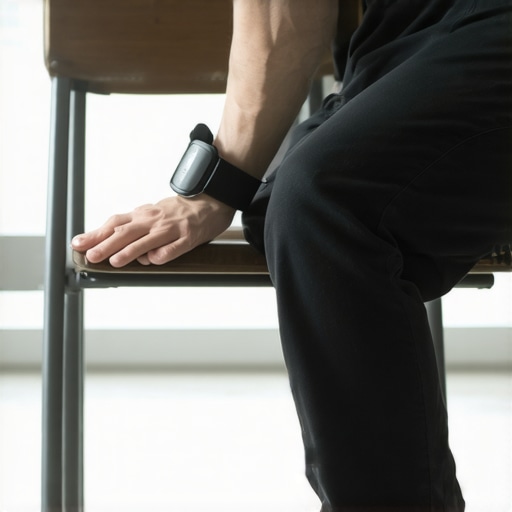
Get the Logistics Right Before You Sit
Positioning is everything. You aren’t just sitting; you’re calibrating a sensitive instrument. Sit in a chair with a firm back—no lounging on the sofa or slouching over a coffee table. Keep your feet flat on the floor and your back supported. Crossing your legs at the knees or ankles is a major “no-no” because it constricts blood flow and sends a false spike to the monitor. Just like the sneaky factor that ruins your cholesterol panel accuracy, these tiny postural errors create significant “noise” in your health data. I tested this myself last month: I took a reading while slumped on the couch with my legs crossed and hit 148/92. I moved to the dining chair, sat up straight, waited five minutes, and watched it drop to 128/82. Same person, different posture, massive difference in perceived risk.
Master the Art of the Pre-Reading Pause
Once you’re positioned, slide the cuff onto your bare arm. Don’t wrap it over a sweater or even a thin t-shirt sleeve, as the fabric bunching up can interfere with the sensor’s ability to “hear” your pulse. Now comes the part most of us fail: do absolutely nothing for five to ten minutes. No phone scrolling, no podcast, no checking your smartwatch for notifications. This is your “clinical quiet time.” If your brain is busy processing information, your heart rate and blood pressure won’t settle. This is similar to how understanding lab tests requires a controlled baseline to be truly effective. During this time, I use simple “box breathing”—inhale for four seconds, hold for four, exhale for four. It acts as a physiological reset button for your nervous system.
Why Precision Trumps Speed Every Time
We often rush through these checks because we want the “bad news” over with, but that haste is exactly what creates the false bad news. When your numbers remain high even after following this strict ritual, it becomes a valuable diagnostic tool. It might suggest that certain lab markers that prove your metabolism is stalling are actually the underlying cause. By being precise at home, you give your care team better ammunition. Utilizing telehealth insights to share these calm, home-monitored numbers provides a much more accurate picture of your cardiovascular health than a single, high-stress reading taken in a cold, fluorescent-lit clinic. Accuracy isn’t a gift; it’s a habit you cultivate every time you sit down to measure.Most people think a ‘normal’ lab result means they have a clean bill of health. In my experience, that is the most dangerous assumption you can make. We have been conditioned to believe that as long as our numbers fall within the black-and-white ‘reference range’ on the paper, we are fine. But here is the contrarian truth: those ranges are often based on a statistical average of the general population—many of whom are already dealing with underlying metabolic issues. If you want to actually thrive, you have to look for optimal levels, not just ‘not-sick’ levels. This is exactly why your lab results come back normal while you still feel like trash. You are being compared to a failing curve.
Stop Settling for Average Reference Ranges
For years, I chased symptoms while my doctors pointed to ‘normal’ thyroid panels. It wasn’t until I looked at the 3 thyroid markers your doctor probably ignored last time that I realized my TSH was ‘normal’ only because the range is incredibly broad. Expert organizations like the Endocrine Society have noted that even common supplements can throw these sensitive tests into a tailspin. For example, if you take a high-dose Biotin supplement for your hair or nails, it can falsely suppress your TSH levels, making it look like you have hyperthyroidism when you don’t. This is a classic ‘oops’ factor that most patients—and many providers—miss during a standard check-up. 
Does Your A1c Really Tell the Whole Story?
Another sophisticated trap is the over-reliance on A1c for blood sugar health. While it is a great three-month average, it can hide massive daily spikes that are damaging your blood vessels. This is why the fasting insulin test matters more than a1c for weight loss and metabolic health. If your insulin is sky-high just to keep your blood sugar ‘normal,’ you are still on the road to burnout. By the time your A1c moves, the damage has often been done for years. This is where telehealth insights become invaluable; you can review these nuanced markers with a specialist who isn’t rushing you out of a physical exam room in fifteen minutes.
Avoid the Late-Week Testing Trap
One major mistake I see people make is scheduling their blood draws on a Friday afternoon after a stressful week of poor sleep and high caffeine. Your cortisol and inflammatory markers will be skewed, giving you a ‘false’ baseline. For the most accurate results, you need to be in a rested, fasted state. This precision is what allows you to find those 7 markers in your blood work that actually predict longevity rather than just survival. We have to move past the ‘wait and see’ model of medicine. Whether it is updating your records or why you might need a booster even if youre fully vaccinated, the nuance is where the real health happens. Have you ever fallen into this trap where a doctor told you everything was fine but your body was screaming otherwise? Let me know in the comments.I’ve found that the real magic happens in the gaps between your doctor’s visits. If you only look at your health once a year, you’re flying blind. I personally swear by the Omron Gold Wireless Blood Pressure Monitor because it syncs directly to my phone, preventing me from forgetting the high readings I don’t want to see. This kind of consistency is the foundation of why regular lab tests are critical for your wellness journey. It turns data into a story rather than a scary snapshot. When I started using a Continuous Glucose Monitor (CGM) like the Dexcom G7, even as a non-diabetic, I realized my healthy morning oatmeal was spiking my sugar to levels usually seen in a metabolic crisis. That data allowed me to pivot long before I ever saw it on a standard blood draw. Integrating these tools with telehealth insights means I can send my data to a specialist who actually has time to review it. Instead of a hurried ten-minute slot, we have a data-driven conversation. This is especially useful for things like why you should get a shingles shot even if you feel great or managing personalized vaccination schedules for better disease prevention. You aren’t just a patient anymore; you’re the CEO of your own biology.
The Gear That Actually Matters for Long-Term Health
I also track my recovery with an Oura Ring. Most people use it for sleep, but I use it to watch my Heart Rate Variability (HRV). If my HRV is tanking, I know my body isn’t ready for a heavy workout, which protects my heart from unnecessary stress. This proactive stance is far superior to waiting for lab markers that prove your metabolism is stalling to show up. It gives you the power to change your trajectory in real-time.
How do I maintain this level of precision over the long haul?
Maintenance isn’t about perfection; it’s about course correction. I use a simple monthly audit. On the first Sunday of every month, I review my trends. If my resting heart rate is creeping up, I don’t panic—I adjust my sleep or hydration. This prevents the need for drastic interventions later. A study published in the Journal of Medical Internet Research suggests that patients who engage with their health data through mobile tools see significantly better long-term outcomes than those who rely solely on infrequent office visits. It’s the difference between reactive and proactive living. Looking ahead, I predict that within five years, our wearable devices will be so integrated with our biochemistry that your phone will alert you to a nutrient deficiency or an incoming infection before you even feel a symptom. We are moving toward a world where the role of lab tests in preventive wellness is continuous rather than episodic. For now, take control by learning how to read your own lipid panel without panic. Start with one tool—maybe it’s a better BP cuff or an app to track your symptoms. Don’t wait for your next annual physical to find out how you are doing; find out today. 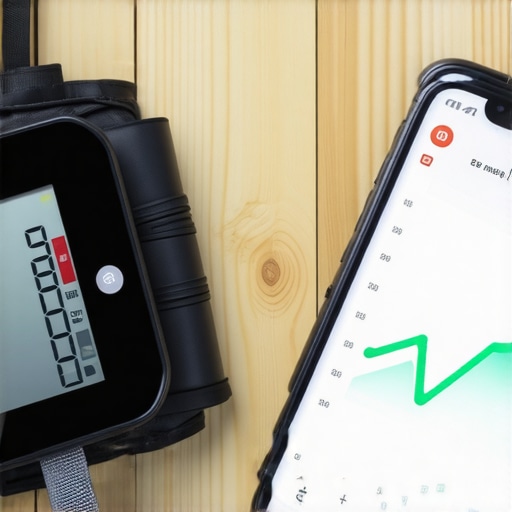
The Hard Truth About Those Normal Results in a Fifteen-Minute Slot
One of the most vital lessons I’ve learned is that ‘normal’ on a lab report often just means you aren’t in immediate danger, not that you are thriving. I spent years feeling exhausted while being told my markers were fine, which is exactly why your lab results come back normal while you still feel like trash. You have to look for the patterns in the data. Another ‘lightbulb moment’ for me was realizing how much my behavior the morning of a test influenced the outcome. Just as we discussed with blood pressure, the sneaky factor that ruins your cholesterol panel accuracy is often just a lack of proper preparation. Finally, remember that your doctor is a partner, not a mind reader. If you don’t bring your home-tracked data to the table, they are only seeing a tiny, often distorted, slice of your life.
Tools I Use to Stay Ahead of the Curve
I don’t believe in buying every gadget on the market, but three tools have fundamentally changed how I view my biology. First, the Omron Gold wireless cuff is essential because it removes the ‘human error’ of manual logging. Second, I highly recommend the book ‘The Blood Code’ by Dr. Richard Maurer, which is a fantastic guide for anyone learning how to read your own lipid panel without panic. Lastly, utilizing a high-quality health tracking app that integrates with telehealth insights allows you to share real-time trends with specialists who can help you make sense of the noise. These tools shift the power back into your hands.
Your Path to Becoming the CEO of Your Biology
Taking control of your health is the ultimate act of self-care. When you master the nuances of your own wellness, lab tests, vaccinations, and telehealth options, you stop being a passive passenger in your own body. It starts with small, consistent steps, like sitting in silence for ten minutes before a reading or questioning a ‘normal’ lab result that doesn’t match how you feel. Understanding why wellness checks are your first step to better health at 945 am—or any time of day—comes down to one thing: preparation. You deserve to have a clear, accurate picture of your internal world. Have you ever felt like your doctor missed a key detail because you were too rushed during your physical? Let me know in the comments below.