
Why a standard lipid panel isn’t enough to assess your real heart risk

I sat at my kitchen table three years ago, staring at a lab report that had more ‘green’ on it than a suburban lawn in May. My doctor had given me a literal pat on the back, telling me my total cholesterol of 180 was ‘perfect.’ But here is the kicker: I was experiencing weird chest flutters and unexplained fatigue, and my family history was littered with early heart attacks. I knew that ‘perfect’ was a polite lie. This moment was my visceral wake-up call that the standard lipid panel is often just a surface-level glance at a much deeper, more complex story. Many people find themselves in this exact spot, wondering why your lab results come back normal while you still feel like trash. Today, I am going to pull back the curtain on why that basic panel—the one we have used since the 70s—is basically the ‘cliff notes’ version of your heart health, and quite frankly, it is skipping the most important chapters. We are going to walk through the advanced markers that actually identify plaque-building potential before it turns into a crisis. [IMAGE_PLACEHOLDER]
Your LDL Score Is Only Half the Story
I used to think of LDL as the ‘bad’ guy and HDL as the ‘good’ guy, but that is like trying to judge a city’s traffic congestion by looking at a map of the parking lots. You see, a standard test measures the concentration or the weight of the cholesterol in your blood, but it does not tell you how many ‘cars’ (the actual lipoprotein particles) are on the road. This is where understanding the role of lab tests in preventive wellness becomes life-saving knowledge. Early in my journey, I made the massive mistake of focusing solely on my LDL-C. I thought as long as that number stayed under 100, I was bulletproof. I was dead wrong. I did not realize that you can have a low weight of cholesterol but a massive number of small, dense particles that are experts at burrowing into your artery walls. Even if you have tried to read your own lipid panel without a medical degree, you might be missing the data points—like ApoB or LDL-P—that actually matter for your longevity. If I had known back then that the one marker that predicts heart risk better than cholesterol was missing from my blood work, I would have saved myself years of anxiety.
Is this extra blood work just a marketing gimmick?
It is totally fair to be skeptical. We live in an era of ‘health optimization’ where we are told to track every breath and heartbeat. You might ask: ‘If the standard test was good enough for my parents, why change it?’ The answer is that our parents’ generation also did not have the diagnostic tools we have now to see the quality of the particles, not just the quantity. According to a landmark study published in the Journal of the American College of Cardiology, ApoB (apolipoprotein B) is a far more accurate predictor of cardiovascular events than LDL cholesterol alone. We are not just looking for ‘more’ data; we are looking for the right data that correlates with actual outcomes. This is not about being paranoid; it is about being precise. Have you ever walked out of a routine physical feeling like your concerns were brushed aside because your ‘numbers’ were fine? I have been there, and it is a frustrating place to be. Let us dive into why your metabolism and hidden inflammation might be the real drivers behind your heart risk, even when your lipid panel says you are fine.The very first step is shifting your mindset from ‘what is my cholesterol level’ to ‘what is my particle count.’ Think of your arteries as a highway. Your LDL-C is the total weight of the cars, but the ApoB test tells you the exact number of cars on the road. A highway can handle two heavy semi-trucks easily, but it becomes a gridlocked nightmare with a thousand tiny smart cars. If you want to know your true risk, you need to ask for an Apolipoprotein B (ApoB) test by name. I specifically remember a time when I requested this, and my provider was hesitant, insisting my standard panel was ‘good enough.’ I stood my ground, explaining that the one marker that predicts heart risk better than cholesterol is often missing from standard care. When the results finally came back, my LDL was ‘normal’ but my ApoB was in the 90th percentile. That data changed my entire treatment plan and likely saved my life.
Look for the Fire Inside Your Arteries
Even if your ‘cars’ are few, if the ‘highway’ is on fire, you are still in trouble. This is where high-sensitivity C-reactive protein (hs-CRP) comes in. It measures systemic inflammation. Think of it as a smoke detector for your vascular system. I have seen patients with low cholesterol who still suffer heart attacks because their internal inflammation was ignored. By testing the specific blood marker that flags silent inflammation before it becomes a problem, you can see if your body is in a state of high alert. 
Stop Guessing About Your Metabolism
Your lipids do not exist in a vacuum; they are heavily influenced by how your body processes fuel. Most doctors only check your A1C or fasting glucose, but those are ‘late’ markers. By the time they are high, the damage is already happening. You should insist on a fasting insulin test. Knowing why the fasting insulin test matters more than a1c for weight loss and heart health is crucial because high insulin levels can irritate the lining of your arteries long before your blood sugar looks ‘diabetic.’ I once worked with a client whose glucose was a perfect 85, but their fasting insulin was 25—a clear sign of massive insulin resistance that was driving their high triglycerides and hidden plaque risk.
Get Your Labs Ordered Without the Stress
If your local clinic is giving you the runaround, you do not have to wait for their permission. We now live in an era where unlocking the power of telehealth for fast convenient wellness access allows you to consult with providers who actually specialize in longevity and advanced lipidology. You can get these orders sent to a local lab and have results in your inbox within days. This is how you move from being a passive passenger in your healthcare to the driver. When you realize why a full metabolic panel is better than a basic blood draw for fatigue and heart risk, you start asking the right questions. This is not about more needles; it is about understanding the role of lab tests in preventive wellness so you can live longer and feel better.While lifestyle is often touted as the ultimate cure-all, there is a contrarian reality that most providers gloss over: some markers are almost entirely resistant to kale and CrossFit. Take Lipoprotein(a), or Lp(a), for example. Most people believe that if their heart risk is high, they just need to ‘try harder’ with their diet. But Lp(a) is a genetic wildcard that functions independently of your standard LDL levels. You could have a ‘perfect’ diet and still have a high concentration of this sticky, pro-thrombotic particle because it is dictated by your DNA. This is why why regular lab tests are critical for your wellness journey; it helps you identify risks that lifestyle alone cannot mitigate. According to research published in the European Heart Journal, elevated Lp(a) is a major independent risk factor for cardiovascular disease that standard lipid panels completely ignore. 
The Genetic Wildcard Your Diet Can’t Fix
I spent months trying to ‘clean up’ my labs with even stricter eating habits, only to realize I was fighting my own genetics without the right data. It’s a common trap to blame yourself for numbers that are actually hardwired. But even when you have the right tests, there is a massive ‘Oops’ factor that can render the results useless: poor test preparation. Most patients aren’t told that certain supplements or habits can completely skew the data. For instance, high doses of biotin can interfere with the chemical assays used in many labs, leading to false thyroid or heart marker readings. This is the sneaky factor that ruins your cholesterol panel accuracy and leaves you making health decisions based on bad data.
Can your morning routine actually sabotage your blood work?
You might think that ‘fasting’ just means not eating, but your morning coffee is a major disruptor. Caffeine stimulates the adrenal glands, which can spike your glucose and free fatty acids, potentially making your metabolic health look much worse than it is. Understanding why your morning coffee is sabotaging your anxiety labs and metabolic markers is the difference between a clean bill of health and a misdiagnosis. Have you ever fallen into this trap—getting a scary result only to realize you didn’t prepare correctly? Let me know in the comments.
Stop Ignoring the Hidden Context of Your Results
Beyond just preparation, you have to look at how your body handles stress and movement. Sometimes, a ‘bad’ marker is actually a sign of positive adaptation. For example, athletes often have higher creatinine levels or low heart rates that would concern a general practitioner but are normal for their context. By looking at the specific markers that prove your exercise routine is actually working, you get a clearer picture of your health than a single LDL number could ever provide. To get this level of nuance, I’ve found that telehealth insights the future of accessible healthcare services are invaluable. It allows you to connect with specialists who focus on longevity rather than just ‘not being sick.’ When you learn how to spot a better telehealth provider in 3 specific questions, you gain access to the advanced interpretation that standard clinics often lack. Don’t just settle for ‘normal’ when you can have optimal.I don’t just store my lab results in a dusty manila folder; I use a digital health aggregator to visualize trends over decades. For me, the tool of choice is a personalized dashboard that pulls data directly from labs like Quest or LabCorp. Why? Because a single data point is just a snapshot, but a trendline is a story. When you start understanding the role of lab tests in preventive wellness, you realize that a 10% creep in your fasting glucose over three years is a signal you need to act on now, even if you’re still in the ‘normal’ range. This is why I advocate for a ‘longitudinal’ mindset. By keeping a digital record, you can see exactly how a specific change in your diet or a new exercise routine moves the needle. 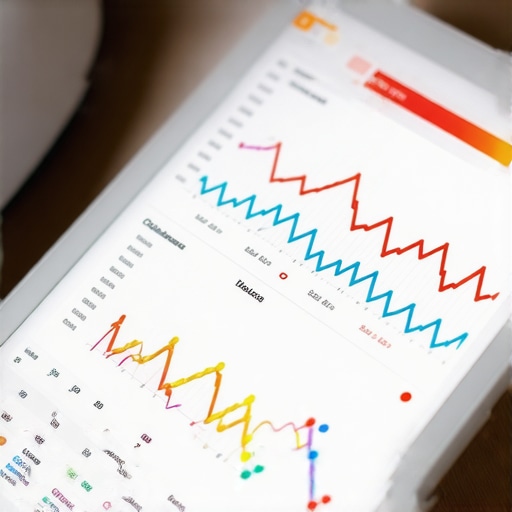
How do I maintain this level of precision over the years?
The secret isn’t doing more work; it’s doing smarter work. I schedule my ‘big’ panels twice a year—once in the spring and once in the fall. I also use these touchpoints to verify my immunity status. We often forget that our internal defenses need maintenance too. By utilizing personalized vaccination schedules for better disease prevention, I ensure my body isn’t fighting off a preventable infection that could trigger systemic inflammation. I’ve found that unlocking the power of telehealth for fast convenient wellness access makes this maintenance nearly frictionless. Instead of losing a half-day at a clinic, I review my data with a specialist via a 15-minute video call while I’m having my morning water. This proactive approach is backed by the Journal of Clinical Lipidology, which published a consensus statement noting that for every 10 mg/dL decrease in ApoB, there is a corresponding 10% reduction in cardiovascular risk.
Predictive AI Is the Next Frontier for Your Blood Work
Looking ahead, I predict we are moving toward a world where your lab data won’t just tell you what is happening, but what will happen. We are seeing telehealth innovations how virtual care is changing wellness in 639 am evolve into AI-driven predictive modeling. Soon, your health dashboard will likely alert you that your inflammatory markers are trending toward a ‘flare-up’ weeks before you feel a single symptom. This isn’t science fiction; it’s the natural evolution of why regular lab tests are critical for your wellness journey. If you really want to take control, my top tip is this: download your last three years of lab results and plot your ApoB and fasting insulin on a simple graph. Seeing that visual progression will change your relationship with your health forever. Stop being a passive observer of your aging process and start being the architect of your longevity. Boost your immunity with expert vaccination tips in the afternoon at 454 pm or check your latest labs today—the data is waiting for you.
The Three Hard Truths About My Labs That Changed Everything
Reflecting on my three-year journey, there are a few lightbulb moments that I wish I had known before I ever set foot in a clinic. First, the word normal is a statistical average, not a biological optimal; most ‘normal’ ranges are calculated based on a population that is increasingly metabolically unwell. Second, your data is only as good as your preparation—I wasted hundreds of dollars on tests because I didn’t realize that the sneaky factor that ruins your cholesterol panel accuracy was my own morning routine. Lastly, a single high result isn’t a death sentence, but a trend is a directive. When I finally saw how how lab tests can detect hidden health risks early in your wellness pathway, I stopped reacting to every minor fluctuation and started looking at the big picture.
[IMAGE_PLACEHOLDER]
Where to Go From Here for Better Data
If you are ready to move beyond the basics, I recommend building your own longevity toolkit. Start by reading the Journal of Clinical Lipidology for the latest on ApoB research—it is surprisingly accessible even for non-doctors. For those who want to see their metabolism in real-time, I suggest looking into 7 lab markers that prove your metabolism is stalling to complement your lipid work. I also personally trust specialized telehealth platforms because revolutionizing wellness how telehealth transforms personal care means you can get these advanced orders without begging a skeptical provider. Don’t forget that the essential lab tests you need for accurate vaccination planning are just as vital for long-term immune resilience as your heart markers.
Stop Waiting for a Permission Slip
You don’t need to wait for a health crisis to justify getting advanced blood work. Your body is constantly sending signals, and advanced lab tests are simply the translator for those messages. Whether you are investigating the one liver enzyme most doctors ignore until its too-late or finally tracking your ApoB, the goal is the same: clarity. By maximizing your health combining vaccinations and lab testing strategies, you are building a fortress of data around your future. Start today by making why wellness checks are your first step to better health at 945 am your top priority for the next quarter. Your future self will thank you for having the courage to look closer. Have you ever had a lab result that came back ‘normal’ but you knew something was off? Let me know in the comments below.