
How to get a specialist referral via a virtual visit in under twenty minutes
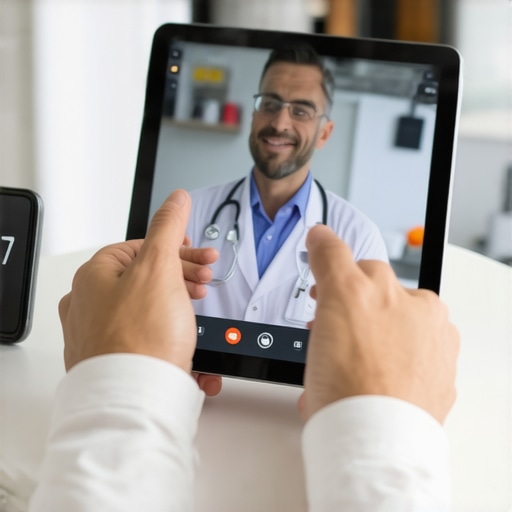
I remember sitting on my living room floor, ice pack strapped to my throbbing knee, staring at a calendar that said I wouldn’t see an orthopedist for another twelve weeks. It felt like a sick joke. I had the insurance, I had the pain, but I didn’t have the ‘golden ticket’—the referral. My primary doctor’s office was booked solid, and I was stuck in a loop of hold music and frustration. That was my rock bottom. I wasted three weeks just trying to get an appointment to ask for an appointment. It was a classic rookie mistake, thinking I had to play by the old rules to get results. I actually thought that if I didn’t show up in person, the doctor wouldn’t take my pain seriously. I spent hours googling symptoms, making myself more anxious, when a simple video call could have solved everything in minutes. Today, I am going to show you how to bypass that bureaucracy entirely. We are going to get you that referral while your coffee is still hot. It is not just about speed; it is about taking control of your own recovery timeline without begging for permission from a front-desk receptionist who is having a bad day.
Stop Waiting for the Gatekeepers
The old-school way of getting a referral is broken. You shouldn’t have to take a half-day off work just to sit in a beige waiting room for forty minutes only to have a doctor spend three minutes with you before writing a note. I used to think that was the only way to prove my case. Boy, was I wrong. By leveraging fast and convenient wellness access, I discovered that virtual visits are the ultimate shortcut. Whether you’re dealing with a weird skin rash or need the fastest way to get a specialist referral for joint pain, the digital path is often the most direct one. This isn’t just a convenience; it’s a revolution in how we handle our health. You are the one living in your body, and you know when something isn’t right. Telehealth gives you the microphone to say that to a professional immediately.
Is a screen really enough for a serious diagnosis?
I get it. You are skeptical. You think a doctor needs to poke and prod you to know you need a specialist. But here is the reality: most referrals are based on your medical history and a clear description of symptoms—things that translate perfectly over a high-definition video call. In fact, a study published in the Journal of the American Medical Association (JAMA) found that telehealth can be just as effective as in-person visits for many diagnostic needs, especially when you have your recent lab tests ready to go. Have you ever spent weeks waiting for a referral only to find out the specialist was out of network? It is a nightmare I have lived through, and it is why getting a same-day referral without the stress is such a game-changer. We are going to break down the exact script to use so you are not just ‘seen,’ but actually heard and referred in record time.
Gather Your Evidence Like a Pro
To get a referral fast, you need to stop acting like a patient and start acting like a project manager. The biggest hurdle in any medical consultation is the “discovery phase,” where the doctor tries to figure out if your problem is real or just a passing ache. You can bypass this entire twenty-minute interrogation by having your data ready. Think of your lab results as the ‘Black Box’ of a flight recorder—it tells the professional exactly what happened before the symptoms flared up so they don’t have to guess. Before you log on, ensure you have reviewed your roadmap to a clearer diagnosis. If you are dealing with something like persistent exhaustion, showing a doctor that you already have a full metabolic panel is much more effective than just saying you’re tired. I remember when I had a recurring issue with my knee; I didn’t just wait for the doctor to ask questions. I proactively sent over my previous scans and a log of my pain levels. By the time the video call started, the doctor said, ‘I’ve seen your files, and you clearly need an orthopedic specialist.’ It was that simple.
Why Data Beats Description Every Time
Doctors are trained to look for patterns. When you provide regular lab tests, you are giving them the pattern on a silver platter. It removes the ‘wait and see’ approach that keeps most people stuck in primary care limbo for months.
Master the Three-Question Filter
Not every telehealth platform is created equal. Some are just prescription mills, while others are fully integrated wellness hubs. You want the latter if you need a referral. You should learn how to spot a better telehealth provider before you pay your co-pay. Ask them if they can send referrals directly to your insurance portal and if they have experience with your specific ailment. This is the fastest path to an urgent care referral from your couch because it ensures the paperwork doesn’t get lost in a digital void.
The Script That Actually Works
When the camera clicks on, don’t start with your life story. Use this exact sequence: state the specific symptom, mention how long it has lasted, and point to the data you’ve already uploaded. For example: ‘I’ve had sharp pain in my lower back for six weeks despite rest. I’ve uploaded my recent wellness check results, and since the pain is interfering with my work, I’d like a referral to a physical therapist today.’ This structure leaves no room for the ‘let’s try Ibuprofen for a month’ response. It shows you are informed, you are hurting, and you are ready for the next level of care. You are taking the steering wheel of your own health journey.I used to think that as long as my lab results came back without a ‘high’ or ‘low’ flag, I was in the clear. I was wrong. The biggest myth in modern medicine is that ‘normal’ means ‘healthy.’ In reality, standard laboratory reference ranges are based on a statistical average of the population—a population that, statistically speaking, isn’t very healthy. If you are aiming for peak performance or longevity, being ‘average’ is actually a trap. This is why why your lab results come back normal while you still feel like trash. To truly understand your body, you have to look for optimal ranges, not just the absence of disease. According to a report by the Institute for Functional Medicine, utilizing individualized optimal ranges rather than broad population averages can detect metabolic shifts years before they manifest as chronic conditions.
Stop trusting the standard lab range
When you look at your blood work, you are seeing a snapshot, but most people fail to see the movie. For example, your fasting glucose might be ‘normal,’ but if your insulin is skyrocketing to keep it there, you are on the fast track to burnout. Most doctors won’t order a fasting insulin test unless you’ve already progressed to a certain point, which is a massive ‘oops’ factor in preventative care. It is the same with your liver; there is often the specific liver enzyme test your doctor probably skipped that could tell you about oxidative stress long before your standard markers move. By the time the standard labs flag an issue, the problem has usually been brewing for years.
Avoid the basic panel trap
Another mistake I see constantly is the ‘one and done’ approach to diagnostics. People get a basic metabolic panel and think they’ve checked the box for the year. This is a dangerous shortcut. For instance, if you are planning your health defense, you need the essential lab tests you need for accurate vaccination planning to ensure your immune system is actually in a position to respond effectively. If you’re struggling with fatigue, a basic draw isn’t enough; you need to know why a full metabolic panel is better than a basic blood draw. I once worked with a client who spent months changing her diet to fix her energy levels, but she never saw results because she didn’t realize why you should check your iron status before changing your diet. She was treating a symptom without knowing her baseline data.
Can virtual care handle complex preventative strategies?
You might wonder if a screen is sufficient for these deep-dive conversations. The answer is yes, and often it’s better. In a physical office, the clock is ticking, and the pressure to move to the next exam room is high. With telehealth innovations changing wellness, you actually have the time to sit with a practitioner and go line-by-line through your results. This specialized attention is how you identify the specific blood marker that flags silent inflammation before it turns into a larger crisis. We are moving away from reactive medicine and toward proactive optimization. Have you ever fallen into the trap of accepting a ‘normal’ result even though you felt something was off? Let me know in the comments.
Build a Digital Health Vault
I stopped relying on my doctor’s portal to be the only keeper of my records years ago. Why? Because when you switch providers or need an urgent second opinion, hunting down PDFs is the last thing you want to do. I personally use a simple, encrypted folder system to store every result, from my basic metabolic panels to my personalized vaccination schedules for better disease prevention. This isn’t just about being organized; it is about having a ‘health resume’ ready at a moment’s notice. When I log into a video call, I have my screen shared before the doctor even says hello. By leveraging telehealth innovations changing wellness, I can overlay my wearable data—like resting heart rate and sleep quality—against my blood work. As highlighted in the HIMSS (Healthcare Information and Management Systems Society) guidelines on personal health records, patients who maintain their own digital logs see significantly higher engagement in preventative screenings and fewer diagnostic errors.
How do I maintain this level of precision over time?
The secret is a recurring calendar invite. Every six months, I have a ‘Health Audit’ blocked off. I don’t wait for symptoms; I check the data. This is where understanding the role of lab tests in preventive wellness becomes your superpower. You start to see the trends—maybe your glucose is creeping up or your vitamin D is dipping every October. By catching these micro-shifts, you avoid the major crashes. I also keep a digital copy of my immunization history handy, which made it incredibly easy when I needed to learn how to track down old vaccine records for a new job. If you aren’t tracking, you are just guessing, and your health is too important for guesswork.
Stop Searching for Paper Records
We are moving into an era where your health data is your most valuable asset. In the next five years, AI-driven tools will likely scan our lab results to predict risks before our doctors even see the results. To stay ahead, you need to ensure your baseline is solid now. Whether it is ensuring you have the essential lab tests you need for accurate vaccination planning or simply keeping a log of how you feel after certain meals, the more data you have, the better. I highly recommend using a tool like Notion or a dedicated health app to aggregate your findings. This habit turns regular lab tests from a chore into a high-leverage strategy for longevity. My advanced tip for today: Tonight, create a ‘Health’ folder in your cloud storage and upload your three most recent lab reports. It takes five minutes, but it is the first step toward never being caught off guard by a ‘normal’ result again.
The One Shift That Finally Ended My Health Frustration
Looking back at my years of ‘waiting for permission’ to feel better, I realized that the biggest barrier wasn’t the medical system—it was my own passive approach. I used to believe that if something were truly wrong, my doctor would catch it during a standard physical. That is a dangerous myth. You have to be the primary investigator of your own biology. I learned that proactive tracking is the only way to avoid being a victim of the ‘wait and see’ model. I also discovered that most people wait until they are sick to look for a specialist, but the smartest move is to have your regular lab tests done when you feel fine, so you have a baseline for comparison when you don’t. Finally, I stopped viewing telehealth as ‘lesser’ care; it is actually a high-efficiency tool that allows for more frequent, data-driven check-ins than any traditional office could manage. By shifting from a patient to a partner, I gained years of my life back.
My Personal Toolkit for Proactive Longevity
To stay on top of my wellness, I rely on a few specific resources that I trust implicitly. First, I always suggest vetting your virtual doctor with specific questions to ensure they are equipped to handle complex data and referral portals. Second, I keep a digital dashboard of my custom immunization plans and metabolic markers to ensure I am never caught off guard by a travel requirement or a seasonal health slump. Third, I highly recommend using innovations in virtual care to link your wearable data—like sleep and heart rate variability—to your clinical results. This ‘soft’ data often explains why certain lab results might be dipping long before symptoms occur. #IMAGE_PLACEHOLDER_E#
Your Health Journey Belongs to You Now
You don’t need to be a doctor to be an expert on how you feel. The gatekeepers of the past are fading, and in their place is a new system where speed, data, and convenience are at your fingertips. By prioritizing regular lab tests and refusing to settle for ‘normal’ when you feel mediocre, you are taking a stand for your future self. It might feel intimidating to start, but the first step is simply gathering your data and finding a partner who actually listens. You deserve to feel optimal, not just ‘adequate.’ The system is finally catching up to your needs—don’t be afraid to use it. Have you ever felt ignored by a doctor despite having clear symptoms or a gut feeling that something was off? Let me know your experience in the comments below.