
Why your morning smoothie might be causing your 3 PM slump

I was sitting at my kitchen island last Tuesday, feeling incredibly smug. My blender was still warm, and I had just downed twenty-four ounces of what I called ‘Liquid Gold’—kale, three bananas, a handful of dates, and a splash of orange juice. I felt like a wellness icon. Fast forward three hours, and I was staring at my laptop screen with the cognitive ability of a goldfish. My eyelids felt like lead weights, and my brain was wrapped in a thick, fuzzy fog. This was my daily reality until I realized my ‘healthy’ routine was actually a high-speed insulin roller coaster. I made the mistake early on of thinking that as long as an ingredient grew in the dirt, it was perfect fuel. I couldn’t have been more wrong. Today, we are going to look at why your blender is secretly a sugar-delivery system and how you can reclaim your focus without giving up your morning ritual. I am going to show you exactly how to pivot so you can finally stop the afternoon crash for good and feel as energized at 4 PM as you do at 8 AM.
Stop Blaming the Office Coffee for Your Afternoon Fog
For the longest time, I thought I just needed more caffeine. I’d hit that wall and run straight for the espresso machine, never realizing that I was treating the symptom of a problem I had created at 7 AM. When you pulverize fruit, you’re essentially doing the work your teeth and digestive system were meant to do, but you’re doing it too well. I didn’t realize I was feeding the hidden cause of your constant sugar cravings by dumping pure glucose and fructose into my bloodstream without enough ‘brakes.’ According to research from the Harvard T.H. Chan School of Public Health, liquids are cleared from the stomach much faster than solids, and the rapid sugar absorption from fruit-heavy smoothies can lead to significant spikes in blood glucose. Have you ever felt that sudden, heavy-eyed exhaustion right around mid-afternoon, even after eating what you thought was a ‘perfect’ meal? I’d love to hear your story in the comments.
Is my blender actually my biggest health enemy?
It’s a fair question to be skeptical about. We’ve been told for decades that more fruit is always better, but it’s all about the delivery mechanism and the balance of macronutrients. If you aren’t careful, you’re just drinking a soda with better marketing. I spent months wondering why your lab results come back normal while you still feel like trash, only to find out that my fasting insulin was the real culprit.
How Your Blood Sugar Does Backflips Before Lunch
To fix this, you have to understand the ‘crash’ isn’t just about being tired; it’s a physiological response to a massive drop in glucose. When your body sees that rush of smoothie sugar, it overreacts with insulin. Before you know it, you’re looking at 3 moves to stabilize your blood sugar before your next wellness check because your current routine is unsustainable. We need to talk about the ‘Protein-Fat-Fiber’ trifecta that keeps your energy stable while still letting you enjoy your morning drink.
Stop the Sugar Flood with the PFF Method
To turn your morning drink from a metabolic hazard into a steady fuel source, you have to adopt the PFF framework: Protein, Fat, and Fiber. Think of your bloodstream like a narrow highway. When you drink a fruit-only smoothie, it’s like ten thousand cars trying to merge at once. The resulting traffic jam is the spike, and the subsequent empty road is the crash. By adding the right components, you are essentially adding a smart traffic controller who lets cars through one by one. I remember the first time I tried to fix my morning sludge; I made a huge mess by throwing in half a cup of hemp seeds and two scoops of pea protein without enough liquid. It was like drinking wet cement, but that day, for the first time in years, I didn’t need a nap at 3 PM. My brain stayed sharp because my glucose wasn’t doing a 100-meter dash. This transition is essential for those wondering why your healthy diet is causing persistent brain fog.
Add a Heavy Protein Anchor Early
Protein is the most critical ‘brake’ you can add to your blender. It requires more energy to digest and significantly slows the gastric emptying process. I usually aim for at least 20 to 30 grams. If you skip this, your body has nothing to hold onto, and the fruit sugars hit your liver with the force of a tidal wave. This is a primary reason why the fasting insulin test matters more than a1c for weight loss; if your insulin is constantly screaming to keep up with protein-less sugar hits, you will never tap into your fat stores for energy. I prefer grass-fed whey or a high-quality collagen, but even Greek yogurt works if you can handle dairy.
Slow Everything Down with Healthy Fats
Fat is the secret weapon for satiety. While protein slows the sugar, fat tells your brain that you are actually full. When I started adding a tablespoon of almond butter or a quarter of an avocado to my morning ritual, my ‘hangry’ episodes at 11 AM vanished. This isn’t just about calories; it’s about signaling. Stabilizing these levels is actually one of the 3 ways to lower blood pressure naturally before your physical, as chronic insulin spikes can lead to systemic inflammation and vascular tension. If you are unsure where your metabolic health stands, why regular lab tests are critical for your wellness journey becomes clear once you see how much your diet influences your internal markers.
Use Fiber as Your Biological Dam
The fiber found in whole fruit is partially destroyed by the blades of your blender. You need to add ‘structural’ fiber back in to create a gel-like matrix in your gut. I use two tablespoons of ground flaxseeds or chia seeds. This acts as a physical barrier, further slowing the absorption of glucose. This is the one habit that actually lowers your fasting insulin over time because it prevents the ‘all-at-once’ sugar delivery. If you’ve been doing the ‘healthy’ thing and still feel like trash, understanding the role of lab tests in preventive wellness can help you identify if you’ve already developed some level of insulin resistance. You might discover that why your annual physical is missing your real health risks is because your doctor isn’t looking at these post-meal fluctuations.
Let’s dig deeper into why simply adding protein to your smoothie isn’t always the end of the metabolic story. We are conditioned to believe that if we aren’t ‘diabetic’ according to a standard lab, we are perfectly healthy. That’s a dangerous myth. I spent years assuming my annual check-up was the gold standard for my well-being, but the truth is, a standard A1C test is a lagging indicator. It is like checking your gas tank only after your engine has already stalled on the highway. Research from the Journal of Clinical Endocrinology & Metabolism highlights that fasting insulin levels often begin to rise ten to fifteen years before a patient’s glucose levels hit the pre-diabetic range. If you are only looking at the surface, you are missing the entire foundation of your health.
Stop Waiting for Your A1C to Fail You
In my experience, relying solely on A1C is a massive mistake. Everyone says that as long as your sugar is below 100, you are fine, but in my experience, how much insulin your body had to pump out to keep it there is the real story. This is why the fasting insulin test matters more than a1c for weight loss. If your pancreas is working overtime, your metabolism is already stalling, even if your glucose looks perfect. This disconnect is why your annual physical is missing your real health risks. You might be checking all the standard boxes while your metabolic engine is silently overheating.
Why Your Morning Coffee Ruined Your Lab Data
Here is a specific ‘oops’ factor most people ignore: the morning of the lab itself. I used to think a quick black coffee wouldn’t hurt before my blood draw, but caffeine can trigger a cortisol release that transiently spikes your glucose. This is a common trap that leads to skewed data. Furthermore, why your lab results change based on when you woke up is a nuance most doctors forget to mention. If you had a stressful commute or a poor night’s sleep, your markers for inflammation and sugar metabolism will be artificially inflated. Have you ever fallen into this trap? Let me know in the comments.
Why is my metabolism still stalling if my tests are ‘normal’?
The frustration of having ‘normal’ labs while feeling like trash is something I hear about constantly. It usually happens because the reference ranges on your lab report are based on a ‘population average’—and the average person isn’t exactly a picture of metabolic vitality. To get a real picture, you need to look at 7 markers in your blood work that actually predict longevity, rather than just basic screening tools. This is where unlocking the power of telehealth for fast convenient wellness access becomes a game changer. It allows you to consult with providers who understand the role of lab tests in preventive wellness and can order more nuanced panels that your local clinic might skip. By identifying these issues early, you can take wellness checks that are your first step to better health and finally stop guessing about your internal data. Don’t settle for ‘average’ when you can optimize for excellence.
I used to be a ‘once-a-year’ doctor visitor, treating my health like an annual chore rather than a high-performance system. If you really want to scale your health and avoid that mid-afternoon slump forever, you have to move from guessing to measuring. For me, the ultimate game-changer wasn’t a magic pill; it was the data provided by a Continuous Glucose Monitor (CGM).
Stop guessing and start wearing your data
Seeing exactly how my body reacted to my ‘Liquid Gold’ smoothie in real-time changed my entire perspective. Seeing a glucose spike hit 160 mg/dL after what I thought was a healthy breakfast was the wake-up call I needed. Getting these tools used to be a bureaucratic nightmare, but telehealth innovations are changing wellness by making advanced monitoring accessible to those of us who aren’t diabetic but want to optimize. I personally recommend using an app that overlays your food logs with your glucose curves; it turns your metabolism into a science experiment where you are the lead researcher. 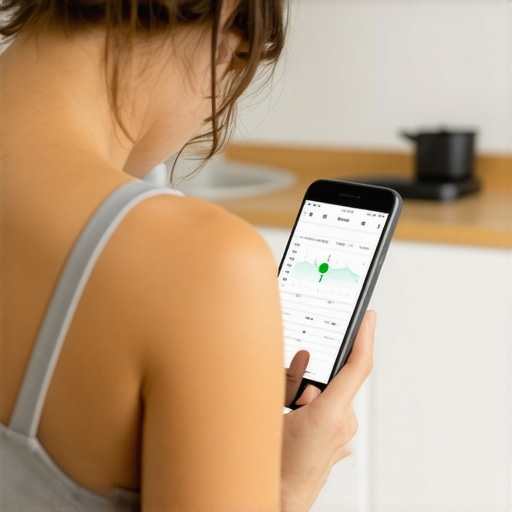
Keep the momentum going from your couch
The biggest hurdle to long-term wellness is friction. If I have to drive across town and sit in a waiting room for 45 minutes just to discuss a routine blood draw, I am far less likely to stay consistent. This is why I have shifted almost entirely to a virtual model. Unlocking the power of telehealth has allowed me to get a 5-minute virtual move for getting prescriptions refilled or discussing the most accurate way to test your vitamin D levels without losing my entire morning. According to a 2023 report in The Lancet Digital Health, patients using remote monitoring tools and virtual consultations showed significantly higher engagement and better long-term glycemic control compared to traditional care models. It’s about removing the ‘excuse factor’ from your health maintenance.
Will AI manage your breakfast by 2030?
I truly believe the next frontier is predictive health. We are moving toward a world where your wearables won’t just tell you that you slept poorly, but will connect with your digital health record to suggest maximizing your health by combining vaccinations and lab testing strategies based on your current inflammatory markers. We are already seeing telehealth insights into the future of accessible healthcare where AI analyzes your blood work trends over years, catching metabolic drifts before they manifest as chronic fatigue.
How do I maintain this metabolic edge long-term?
Consistency beats intensity every single time. My maintenance strategy is simple: I schedule a wellness check as the first step to better health every quarter rather than once a year. I use these sessions to review my 7 markers in your blood work that actually predict longevity and adjust my protein-to-fiber ratios. If my fasting insulin starts creeping up, I know I’ve been getting lazy with my smoothie ‘brakes.’ If you want to take this seriously, my advanced tip is this: don’t wait for a doctor to suggest labs. You can order your own blood work without a doctor’s note and bring that data to your next virtual consultation. Take the driver’s seat in your own biology.
The Hardest Lesson I Learned About Chasing Wellness Trends
When I started this journey, I thought ‘more is more.’ More kale, more fruit, more supplements. But I quickly learned that even the most expensive organic ingredients can trigger a metabolic meltdown if they aren’t balanced correctly. The real breakthrough came when I stopped following generic advice and started looking at my own biological data. I realized that understanding the role of lab tests in preventive wellness is the only way to cut through the marketing noise and find what actually works for your body.
I also discovered that the clock matters just as much as the kitchen scale. I used to be frustrated by inconsistent data until I learned why your lab results change based on when you woke up. It taught me that my body is a dynamic system, not a static machine. Finally, I stopped viewing my health as a yearly event and started seeing it as a daily practice of small, intentional ‘brakes’ on my blood sugar spikes.
My Personal Toolkit for Blood Sugar Mastery
If you want to move beyond the blender and master your energy, these are the resources I personally rely on. First, a Continuous Glucose Monitor (CGM) is non-negotiable for anyone serious about metabolic health. It provides a real-time feedback loop that no textbook can match. Second, I use modern virtual care platforms to bridge the gap between my data and actionable advice. Exploring telehealth insights into the future of accessible healthcare has made it much easier to stay consistent without the friction of traditional clinic visits.
For nutrition, I always keep a high-quality, unflavored grass-fed whey or collagen on hand to ensure my smoothies never lack a ‘heavy protein anchor.’ I also highly recommend the book ‘The Glucose Revolution’ by Jessie Inchauspé; it was a total lightbulb moment for me regarding food sequencing. Lastly, I schedule regular screenings because why wellness checks are your first step to better health is about catching metabolic drift before it becomes a problem.
Take Back Your Afternoons and Your Health
You don’t have to live in a state of ‘mid-day sludge.’ By using the PFF method and verifying your progress with real data, you can finally stop the afternoon crash for good and reclaim your focus. It’s about being the CEO of your own biology rather than a passive observer. Don’t wait for your energy to hit zero before you decide to investigate what’s happening under the hood. Start small, add your protein, and consider how modern tools can simplify your path. Have you ever tried a ‘healthy’ morning habit only to find it made you feel more exhausted by noon? Let me know in the comments below!