
Why every expectant mother needs a Tdap booster during the third trimester

I remember sitting in my OB’s office at 28 weeks, staring at a list of ‘must-dos’ that was longer than my grocery receipt. Between picking out a car seat and trying to find a way to sleep that didn’t involve seven pillows, the last thing I wanted to talk about was another shot. I actually rolled my eyes. I thought, ‘I had this shot ten years ago, isn’t that enough?’ It wasn’t until my doctor explained that I wasn’t just getting it for me, but literally ‘shipping’ antibodies across the placenta like a high-priority package, that the lightbulb finally went off. I’d almost made the huge mistake of thinking my old immunity was sufficient, potentially leaving my little one vulnerable during those first few weeks of life. Today, we’re going to talk about why that third-trimester Tdap booster is the most selfless thing you can do for your baby before they even arrive.
Your Baby Needs These Antibodies Before Their First Breath
Pregnancy is exhausting. By the time you hit the third trimester, you’re likely dealing with swollen ankles and the realization that you can’t see your own feet anymore. I’ve found that specialized prenatal adjustments can help with the physical strain, but the internal protection is just as vital. When you get the Tdap vaccine between 27 and 36 weeks, your body creates protective antibodies and passes them to your baby. This provides them with ‘passive immunity.’ It’s a temporary shield that guards them against whooping cough (pertussis) until they are old enough to start their own personalized vaccination schedules for better disease prevention at two months old. Think of it as an early inheritance of health.
Is one more needle really worth the hassle right now?
I get the skepticism. You’re already a human pincushion with all the blood work and glucose tests. But here is the reality: whooping cough is a minor annoyance for us, but it can be life-threatening for a newborn. According to the Centers for Disease Control and Prevention, about 69% of pertussis deaths occur in babies less than 2 months old—the exact window before they can get their own shots. That statistic stopped me in my tracks. It’s why you want to make sure your newborn needs protection before the grandparents visit for the holidays. Have you ever felt like the pregnancy ‘to-do’ list was just a bit too much to handle? I promise that checking this one off is easier than you think, and the peace of mind is priceless. We’re going to dive into exactly how this works and how to make the process as smooth as possible.
Time Your Shot to Maximize the Shield
Getting the Tdap vaccine isn’t just about ticking a box; it’s about timing the ‘delivery’ of those antibodies so your baby gets the highest concentration possible. The sweet spot is between 27 and 36 weeks of pregnancy. I like to think of this window as the peak shipping season. If you get the shot too early, the levels might dip before birth; too late, and your body doesn’t have enough time to package those antibodies up and send them across the placenta. By hitting that window, you are essentially pre-loading your baby’s immune system. If you’re feeling overwhelmed by the logistics, remember that unlocking the power of telehealth for fast convenient wellness access can help you quickly consult with a provider about the best day to schedule your visit. I’ve found that maximize your health combining vaccinations and lab testing strategies allows you to group these needs together, saving you multiple trips to the clinic when you’re already exhausted.
Why Your Old Records Aren’t Enough
Many moms-to-be ask me, ‘But I had a tetanus shot three years ago, why again?’ The ‘p’ in Tdap stands for pertussis (whooping cough), and while your tetanus protection lasts a long time, the pertussis component fades much faster. More importantly, getting it during each pregnancy is the only way to ensure that specific, fresh batch of antibodies reaches the baby. It’s a different goal than your standard adult booster. Understanding why adult tetanus boosters are more important than you think helps clarify the difference between your long-term safety and the immediate, passive immunity your newborn requires. I remember back in my second trimester with my youngest, I was convinced I was ‘up to date’ because of a playground scrape the year before. I had to use the 5-minute virtual move for getting your prescriptions refilled just to coordinate my records and realize that my previous shot didn’t have the high-level pertussis protection my baby needed right then. It was a messy realization, but a quick video call cleared the confusion in minutes.
Get the Whole Village on Board
The protection doesn’t stop with you. Since newborns are most at risk before their own two-month shots, anyone who will be ‘cocooning’ the baby—grandparents, partners, or nannies—should also be current on their Tdap. This creates a circle of safety around the crib. It is vital to ensure your newborn needs protection before the grandparents visit for the holidays, as visitors can unknowingly carry the bacteria. If family members are unsure of their status, how to track down old vaccine records is a great resource to share with them. If they can’t find records, a simple understanding the role of lab tests in preventive wellness can sometimes help determine if a booster is necessary. Managing these ‘village’ requirements early prevents the stress of having to turn away a relative who hasn’t been vaccinated when they show up to hold the baby for the first time.The biggest misconception I see is the ‘immunity is a bucket’ theory. People think that once you have the antibodies, you’re good for a decade. But when it comes to pertussis, it’s more like a leaky faucet. By the time your second or third pregnancy rolls around, your levels have dropped significantly. More importantly, the goal isn’t just to keep you from coughing; it’s to flood the baby’s system at the exact moment their tiny bodies are most receptive. Boost your immunity with expert vaccination tips by understanding that maternal antibody levels peak about two weeks after the shot. If you wait until week 38, you’ve missed the peak transfer window. According to the American College of Obstetricians and Gynecologists, the optimal timing is specifically 27–36 weeks of gestation to maximize this passive transfer.
Why does my doctor insist on a repeat dose if I just had a booster last year?
It feels redundant, right? But here is the nuance: while your own protection against tetanus might last ten years, the specific antibodies for pertussis that are small enough to cross the placenta actually peak and then wane quite quickly. If you got the shot a year ago, you have enough for yourself, but you don’t have that high-velocity ‘overflow’ needed to saturate the baby’s blood. It is a biological ‘supply and demand’ issue. I’ve seen moms try to skip this because they hate needles, but ignoring the vaccinations myths busted can lead to real risks. 
The Sneaky Trap of Natural Protection
Some people believe that having had whooping cough as a child provides better protection than the vaccine. This is a dangerous ‘oops’ factor. Natural immunity to pertussis is notoriously short-lived—often lasting only 4 to 20 years—whereas the vaccine-induced antibodies are designed for that immediate, high-concentration handoff. If you’re curious about your current status, understanding the role of lab tests in preventive wellness can help, but for Tdap, the recommendation stays the same regardless of your history. If you’re managing multiple health concerns, telehealth innovations how virtual care is changing wellness make it easier than ever to get a second opinion on your specific timing. Don’t let a previous ‘all-clear’ on your records keep you from this critical step. Have you ever fallen into this trap of thinking you were already ‘up to date’? Let me know in the comments.I’ve learned the hard way that a paper card tucked into a random kitchen drawer is a recipe for disaster when you need to prove immunity on the fly. After the rush of the third-trimester Tdap, you realize this is just the beginning of a lifelong journey of health management. To keep the momentum going, I transitioned my entire family to a ‘Digital First’ mindset for medical records. This isn’t just about being tech-savvy; it is about survival when you are juggling a newborn and a toddler’s school requirements.
Ditch the Paper and Go Digital
My favorite tool for this is surprisingly simple: a dedicated, encrypted folder in my cloud storage specifically for medical PDFs. Every time we leave a clinic or finish a session where I learned expert vaccination tips, I scan the document immediately. I use a mobile scanning app that automatically converts photos to searchable PDFs. This makes finding the secret to getting your childs immunization record for camp as easy as typing ‘Tdap’ into a search bar. According to research published in the Journal of the American Medical Informatics Association (JAMIA), patients who actively use digital health portals are significantly more likely to stay compliant with preventive screenings and vaccination schedules compared to those who rely on traditional paper records.
How do I keep these health records updated over time?
Consistency is your best friend here. I’ve set a recurring calendar alert for every six months to review our family portal. This is when I check if we are due for wellness checks that are your first step to better health. During these mini-reviews, I also look at any recent results to see if we need understanding lab tests as a roadmap to clearer diagnosis. If something looks off or a record is missing, I don’t wait for the next annual physical; I use the 5-minute virtual move for getting your chronic prescriptions refilled or to request record updates from my provider. 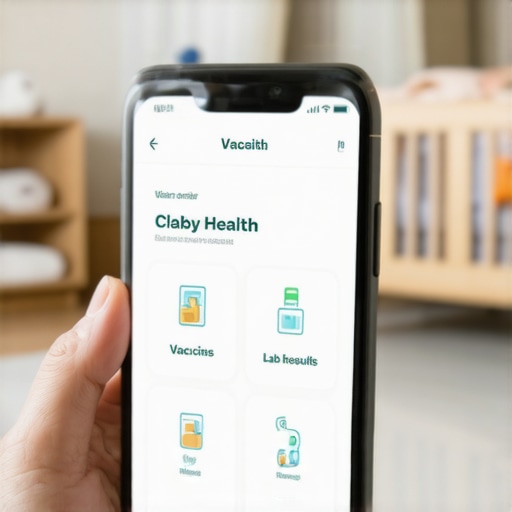
Why My Phone Is My Best Health Advocate
Looking toward the future, I see health management becoming even more integrated into our daily tech. We are moving toward a world of ‘interoperability’ where your lab results from one clinic will automatically populate your wellness app. This is the core of telehealth insights and the future of accessible healthcare services. I personally use a health tracking app that syncs with my doctor’s portal, allowing me to see personalized vaccination schedules for better disease prevention in real-time. It eliminates the guesswork of ‘Did I get that shot in 2022 or 2023?’ and replaces it with data-driven peace of mind. My best tip? Download your clinic’s specific app today and spend ten minutes tagging your most recent records; it will save you hours of stress the next time you’re asked for proof of immunity at a moment’s notice.
What Nobody Tells You About the 28-Week Panic
Reflecting on my own journey, there are a few things I wish I’d realized before the third-trimester fatigue set in. First, the Tdap booster isn’t a ‘maybe’—it’s an insurance policy for those first 60 days of life. Second, you don’t have to navigate this alone. By unlocking the power of telehealth for fast convenient wellness access, you can get your questions answered without leaving your couch. Finally, remember that your body is a high-efficiency antibody factory right now; don’t let that production go to waste by missing the 27-to-36-week window.
The Digital Tools That Saved My Sanity as a New Mom
I’ve found that staying organized is the only way to combat ‘mom brain.’ I highly recommend using a mobile scanning app to digitize every piece of paper you get from the OB. Store these in a secure cloud folder so you can access your childs school immunization history instantly whenever it’s requested. I also rely on patient portals to keep an eye on the role of lab tests in preventive wellness. Having these records at your fingertips reduces the stress of last-minute paperwork searches during those sleepless newborn weeks.
Giving Your Baby the Best Head Start Possible
Choosing to get vaccinated during pregnancy is a powerful act of love. It’s about more than just medicine; it’s about creating a safe environment for your little one to thrive. As you prepare for your baby’s arrival, remember that personalized vaccination schedules for better disease prevention start with the protection you provide today. You’re doing a great job, and this one small step makes a world of difference for your newborn’s future health.
Did you find it easy to coordinate your Tdap booster, or was it a struggle to fit it into your third-trimester schedule? Let me know in the comments below!