
The simple blood test that predicts your risk of a future fracture
I’ll never forget the sound of my kitchen floor hitting my hip three years ago. It wasn’t a major fall, just a silly slip on a stray ice cube, but for a split second, I felt absolutely fragile. That was my ‘lightbulb moment.’ I realized I had been treating my skeleton like a structural beam that never needed maintenance. I was wrong, and honestly, I was lucky I didn’t end up in a cast or worse. Most of us wait until a break happens to care about bone density, but I’ve learned there’s a much smarter, more proactive way to play this game. Today, I want to show you how a simple blood test can basically act as an early warning system for your bones, so you aren’t left guessing while you walk around on ‘eggshell’ ankles. [image]
Why I Stopped Ignoring My Bone Health Before It Was Too Late
For years, I made the classic mistake of thinking that as long as I took a random supplement I bought on sale, I was ‘covered.’ I thought bone health was a problem for ‘future me,’ someone much older and much less active. But why a targeted blood test is better than guessing with generic multivitamins became painfully clear when my results finally came back. My bone turnover was way too high. Essentially, my body was clearing out old bone faster than it could build new stuff, and I had absolutely no idea because, on the outside, I felt ‘fine.’ This is where understanding the role of lab tests in preventive wellness becomes a total game-changer for anyone who plans on staying mobile into their 80s. Instead of waiting for a DEXA scan every two years—which only tells you the damage is already done—you can see what’s happening in your blood right now. It is like checking the tire pressure before a long road trip instead of waiting for the tire to blow out on the highway.
Is a simple blood test actually worth the hype?
You might be skeptical. I certainly was. Can a tiny vial of blood really tell you if you’re going to snap a wrist in five years? It felt a bit like science fiction. But the answer lies in bone turnover markers like CTX and P1NP, which measure the biological activity of your bone cells. According to the International Osteoporosis Foundation, one in three women and one in five men over the age of 50 will experience an osteoporotic fracture in their lifetime. That is a staggering and frankly terrifying statistic, but it’s also a preventable one if you have the right data in your hands early enough. If you’ve been feeling like your health routine is just a series of guesses based on what you read on social media, understanding lab tests as your roadmap can stop the panic and give you a real plan. Have you ever worried that you’re doing all the ‘right things’ but still feel like you’re missing a critical piece of the health puzzle? Let me know, because I’ve been exactly where you are, and the clarity I got from this one test changed everything about how I approach my longevity and daily movement. It turned my fear into a focused strategy.
How to Stop Guessing and Start Measuring Your Bone Quality
To move from being a passive observer of your health to an active manager, you have to look at the data points that traditional checkups often skip. Most people think a standard physical covers everything, but why regular lab tests are critical for your wellness journey becomes obvious when you realize that bone loss is a silent process. It does not hurt, it does not itch, and it does not show up in the mirror. To get ahead of it, you need to request specific bone turnover markers (BTMs). These are not your standard calcium levels—which, ironically, stay normal even while your bones are thinning because your body will literally rob your skeleton to keep your blood calcium stable. Instead, you want to see the biochemical evidence of bone being built and bone being broken down.
Why the CTX Marker is Your Skeleton’s Early Warning System
Think of your bone health like a bank account. You have deposits (bone formation) and withdrawals (bone resorption). The C-terminal telopeptide (CTX) is the most reliable marker for measuring the ‘withdrawals.’ If this number is high, it means your body is dissolving bone faster than it should. When I first saw my own CTX levels, they were spiked, indicating that my high-stress lifestyle and poor sleep were causing a constant ‘drain’ on my skeletal bank account. I realized then that how lab tests can detect hidden health risks early in your wellness pathway is the only way to catch this before it turns into osteopenia. 
Balance the Equation with P1NP and Nutrient Tracking
On the other side of the ledger is P1NP, which measures how much new bone your body is actually making. If your CTX is high and your P1NP is low, you are in a ‘bone-losing’ state. It is a simple math problem that requires more than just drinking milk. Sometimes the issue is not what you are eating, but what you are actually absorbing. I had to use the lab test that reveals if your gut is actually absorbing nutrients to find out that my ‘healthy’ diet was being wasted because of low-grade gut inflammation. Once you have these two numbers—CTX and P1NP—you have a baseline. You no longer have to wonder if your heavy lifting or your Vitamin D supplement is actually working; the blood work provides the proof.
Use Virtual Care to Cut Through the Bureaucracy
One of the biggest hurdles I faced was actually getting a doctor to order these tests without me already having a broken bone. This is where telehealth insights and the future of accessible healthcare services changed the game for me. Instead of begging a busy primary care physician for a ‘non-standard’ test, I used a virtual consultation to speak with a provider who understood preventive markers. We reviewed my history, ordered the labs, and had a follow-up call to adjust my routine all from my living room. This efficiency is why unlocking the power of telehealth for fast, convenient wellness access is essential for anyone who values their time as much as their health. It turns a month-long ordeal of appointments into a streamlined process of data and action.The biggest lie I bought into for years was the ‘Calcium Myth.’ We’ve been conditioned to believe that as long as we drink our milk and our blood calcium levels look ‘normal’ on a basic lab report, our bones are made of steel. In reality, your body prioritizes blood calcium above almost everything else because it is vital for your heart and muscles to function. If you aren’t consuming enough or absorbing it properly, your body becomes a biological looter—it steals calcium from your hip and spine to keep the blood levels steady. This is why why regular lab tests are critical for your wellness journey; a standard ‘normal’ result might actually be masking a skeleton in crisis. Furthermore, people often overlook how chronic stress plays a role in bone degradation. If you don’t know how to interpret a high cortisol result without the panic, you might miss the fact that elevated stress hormones literally signal your body to stop building new bone tissue. It is a survival mechanism that backfires in our modern, high-stress world.
Is a standard physical actually enough to prevent a fracture?
The short answer is no. Most doctors won’t order a DEXA scan until you’re 65 or have already suffered a fracture. But relying on bone density alone is like looking at a building’s blueprints after the foundation has already cracked. You need to see the active construction site. This is where many people fall into a dangerous trap: they assume that a good DEXA score today means they are safe for the next decade. However, research published in the Journal of Clinical Endocrinology & Metabolism highlights that bone turnover markers (BTMs) can predict fracture risk independently of bone mineral density. If you only look at the density, you’re seeing the past; if you look at the blood markers, you’re seeing the future of your skeletal strength.
The absorption trap that wastes your money
I used to be the person with twelve different supplement bottles on my nightstand, thinking more was better. But why a targeted blood test is better than guessing with generic multivitamins became obvious when I realized my Vitamin D levels were tanking despite my expensive ‘high-dose’ pills. I wasn’t actually absorbing them. I had to use the lab test that reveals if your gut is actually absorbing nutrients to find out that low-grade gut inflammation was the real bottleneck. Taking more pills didn’t help; fixing the underlying absorption issue did. 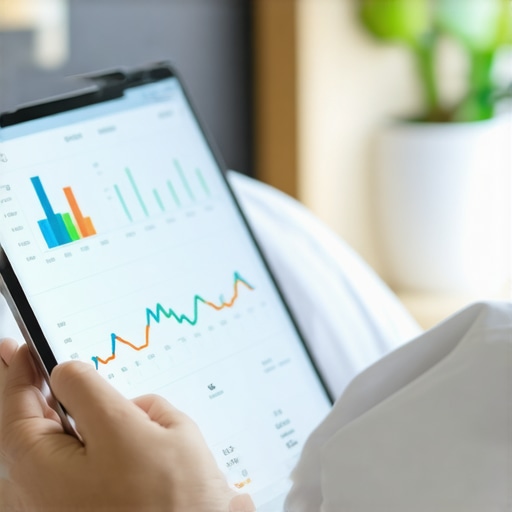
Get the right data without the gatekeepers
One advanced mistake I see often is people waiting for their primary care physician to ‘validate’ their desire for preventive testing. Many traditional systems are built on ‘sick care,’ not ‘well care.’ If you want to dive into these nuances, telehealth insights and the future of accessible healthcare services offer a way around the gatekeepers. You can work with specialists who understand that understanding the role of lab tests in preventive wellness is about performance and longevity, not just avoiding a diagnosis. Have you ever fallen into this trap of thinking ‘normal’ labs meant you were perfectly healthy? Let me know in the comments.Once I realized that my skeleton wasn’t just a static frame but a living, breathing organ, I stopped treating my health like a hobby and started treating it like a high-performance engine. I didn’t just need ‘better food’; I needed better data. I started using specific tracking tools to bridge the gap between how I felt and what was actually happening inside my marrow. For instance, I use the Cronometer app not just for calories, but specifically to monitor my calcium-to-phosphorus ratio. If your phosphorus intake from processed foods is too high, it can interfere with how your body utilizes calcium, essentially neutralizing your efforts. I also switched to using a smart scale that measures more than just weight—I look for trends in my lean muscle mass, as muscle pull is the primary signal that tells your bones to stay dense. I’ve found that why wellness checks are your first step to better health is a philosophy that requires these daily touchpoints, not just a once-a-year visit to a clinic.
The Exact Routine I Use to Protect My Progress
Every six months, I schedule what I call a ‘Bio-Audit.’ This isn’t a standard physical; it’s a targeted deep dive. I coordinate my lab work so that I am checking my bone turnover markers at the same time I’m looking at my metabolic health. I’ve realized that maximize your health by combining vaccinations and lab testing strategies is the most efficient way to stay on top of my preventive care. For example, when I go in for my seasonal flu shot, I have my labs drawn simultaneously to check my inflammatory markers like hs-CRP. Chronic inflammation is a known ‘bone-melter,’ so keeping those levels low is just as important as lifting weights. 
How can I keep my bones strong as I get older?
Maintaining skeletal integrity isn’t a one-and-done deal; it’s about scaling your habits as your biology changes. I’ve moved away from the ‘hope for the best’ model and leaned heavily into telehealth innovations and how virtual care is changing wellness to keep my specialists in the loop without the travel time. This allows me to adjust my protocol in real-time. If my stress levels spike, I work with my provider via video to check if I need to adjust my Vitamin D or K2 dosage. According to the American Society for Bone and Mineral Research (ASBMR), even a 10% increase in peak bone mass can delay the onset of osteoporosis by 13 years. That is a massive return on investment for simply staying curious about your data. In the near future, I suspect we will see wearable biosensors that track bone resorption markers through sweat, giving us a literal ‘dashboard’ for our skeletons. For now, the best tool we have is the synergy between professional oversight and personal data. If you really want to level up, I challenge you to try this one advanced tip: request the essential lab tests you need for accurate wellness planning that include a full Vitamin D panel and a PTH (Parathyroid Hormone) test. This duo tells you exactly if your body is in ‘building’ mode or ‘robbing’ mode. This level of oversight is why exploring the benefits of telehealth in managing chronic wellness has become my preferred way to stay ahead of the aging curve.
The Hardest Truths About Skeletal Strength That No One Mentions
After years of navigating this journey, I realized that bone health is far more dynamic than a simple ‘calcium in, bone out’ equation. Here is the insider wisdom I had to learn the hard way: First, a normal blood calcium level is often a sign your body is stealing from your bones, not that they are healthy. Second, your gut health is the gatekeeper; if your digestion is off, even the most expensive supplements are just passing through. This is why the lab test that reveals if your gut is actually absorbing nutrients is a mandatory prerequisite for any bone-building protocol. Finally, I learned that bone turnover happens every single day, which means every meal, workout, and hour of sleep counts toward your future mobility. Using understanding the role of lab tests in preventive wellness as my guide, I stopped guessing and started checking the math on my own biology.
Reliable Tools to Stop Guessing About Your Bone Density
If you want to move beyond the ‘wait and see’ approach, you need a toolkit that provides real-time feedback. I personally rely on these specific resources to keep my skeleton strong:
- Cronometer: I use this app specifically to track my calcium-to-phosphorus ratio to ensure my diet isn’t accidentally leaching minerals from my frame.
- Direct-to-Consumer Labs: When my insurance wouldn’t cover preventive markers, I used telehealth insights and the future of accessible healthcare services to order my own CTX and P1NP tests without the red tape.
- Resistance Training Logs: I track my strength progress religiously because muscle pull is the primary mechanical signal for bone formation.
#IMAGE_PLACEHOLDER_E#
By shifting your focus to these active metrics, why wellness checks are your first step to better health becomes a proactive reality instead of just a standard medical suggestion.
Your Move Toward a Fracture-Free Life
You do not have to wait for a fall to start caring about the foundation of your body. By using bone turnover markers and leveraging telehealth innovations and how virtual care is changing wellness, you can see exactly how your lifestyle choices are affecting your skeleton in real-time. It is about trading the fear of aging for the confidence of data. You are the architect of your own longevity, and it is never too late to reinforce your foundation and ensure you stay mobile for decades to come. Have you ever asked your healthcare provider for specialized bone turnover markers like CTX, or do you usually stick to the standard physical? Let me know in the comments below!