
How a virtual therapist can help you manage social anxiety without leaving home
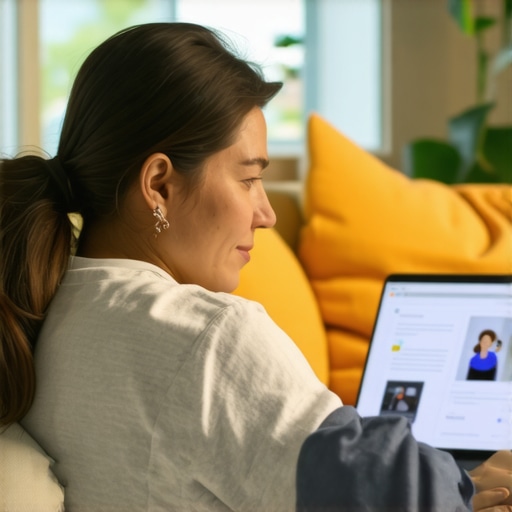
I spent twenty minutes sitting in my car outside a local diner, gripping the steering wheel until my knuckles turned white. All I had to do was walk in, find my friend, and sit down. Instead, I started the engine and drove home. I felt like a total failure, trapped by a brain that saw a simple brunch as a life-or-death threat. That was the day I realized that if I couldn’t even make it through the front door of a restaurant, I certainly wasn’t going to make it into a traditional therapist’s office across town. Today, I’m going to show you why the “traditional” way of seeking help might be the very thing holding you back and how a virtual session can give you the control you’ve been missing.
Your Couch is the New Front Line Against Social Fear
I’ll be the first to admit I made a massive mistake early on. I assumed that telehealth innovations were strictly for people with the flu or those needing a quick prescription refill. I thought “real” therapy required a physical commute and a beige waiting room. But for someone with social anxiety, that commute is a gauntlet of triggers. [IMAGE_PLACEHOLDER] By the time I would have reached an office, my cortisol would be through the roof. Modern virtual care eliminates the “pre-session panic” that usually ruins the actual work and lets you focus on healing instead of survival.
Can a Screen Really Replace a Human Connection?
It’s the question everyone asks, and I was the biggest skeptic. I worried that staring at a laptop would feel like a business meeting rather than a healing session. However, the data tells a different story. Research from the Journal of Anxiety Disorders has shown that internet-delivered cognitive behavioral therapy is just as effective as in-person treatment for social anxiety. For me, being in my own space meant I didn’t have to worry about who was looking at me in the hallway or if I was parked correctly. I could actually focus on talking to a therapist about social anxiety without the static of external stressors. If you’ve ever felt that paralyzing dread at the thought of a face-to-face meeting, video therapy works better because it meets you exactly where you are—mentally and physically. Have you ever avoided getting help simply because the thought of the waiting room was too much to handle? Let’s talk about how to break that cycle from the safety of your own home.
Build Your Mental Health Fortress at Home
Setting the stage for a virtual session starts with the physical environment. Think of your laptop or phone as a bridge. If the bridge is shaky, you won’t want to cross it. I once tried to have a breakthrough session while sitting in a busy park, thinking I was being ‘brave.’ Instead, I spent forty minutes tracking every passerby with my eyes like a hawk. It was a complete mess. Now, I close the curtains, put on my favorite hoodie, and ensure my Wi-Fi is rock solid before I even log in. This isn’t just about comfort; it’s about reducing the cognitive load so your brain has the bandwidth to process the actual therapy. If you’re short on time, learning how to get a professional counseling session on your lunch break can be a game-changer, provided you find a sanctuary where you won’t be overheard or interrupted.
Check Your Biological Engine Room
We often treat mental health as something that only happens between the ears, but your body is the hardware that runs the software. Sometimes what we think is purely social anxiety is actually exacerbated by physical imbalances that a conversation alone can’t fix. I’ve seen so many people try to talk their way out of a panic attack that was actually being fueled by a thyroid spike or a severe vitamin deficiency. This is where understanding the role of lab tests in preventive wellness becomes your secret weapon. You can get your blood work done at a local lab and review those results with your provider on-screen. For example, looking for the hidden lab markers that show the first signs of physical burnout can explain why your social battery is draining in minutes rather than hours. Addressing these physical gaps makes the mental work ten times more effective because you aren’t fighting your own biology while trying to learn new coping skills.
Remove the Friction of Maintenance
The final piece of the puzzle is removing the logistical friction that usually makes us want to quit. Nothing kills the momentum of a good session like having to drive across town just to update a script or sit in a lobby for an hour for a five-minute check-in. When you embrace virtual platforms, you can use the 5-minute virtual move for getting your prescriptions refilled. This keeps the focus entirely on your personal growth, not on the exhausting logistics of the traditional healthcare machine. By streamlining these administrative tasks, you’re not just ‘seeing a doctor’—you’re actively redesigning your life around health rather than around the paralyzing fear of the next waiting room encounter. It’s about taking the power back, one click at a time.
Most people treat virtual care as a digital version of a walk-in clinic—a place for quick fixes and sinus infections. But if you’re looking to truly conquer social anxiety and burnout, that’s a rookie mistake. The real expertise lies in moving beyond simple symptom management and into biological optimization. I’ve seen so many people settle for ‘normal’ lab results while still feeling like they are vibrating with tension. The contrarian truth is that the standard reference ranges on your blood work are often based on a broad average of the population, including people who aren’t necessarily healthy. This is why a full metabolic panel is better than a basic blood draw for fatigue and anxiety. If you only look at the surface, you miss the subclinical markers that drive social panic. For example, a study published in the Journal of Clinical Endocrinology & Metabolism highlights how even TSH levels at the high end of the ‘normal’ range can be linked to increased anxiety symptoms. This is why understanding lab tests: your roadmap to clearer diagnosis is about more than just checking boxes; it is about finding your personal optimal zone. 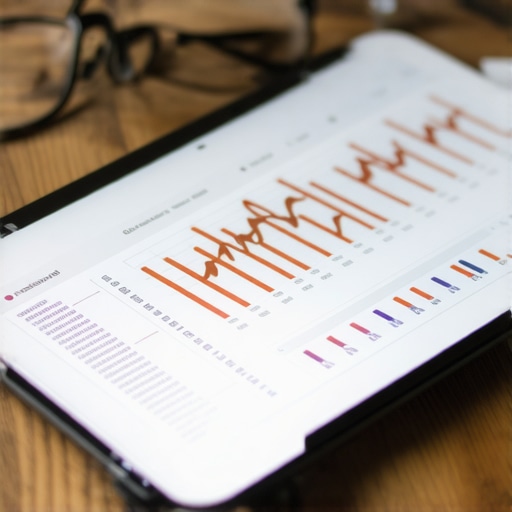 Here is a specific warning—the ‘Biotin Trap’—that most people miss. If you are taking high-dose hair and nail supplements, you might be accidentally sabotaging your own data. This is why your vitamin B12 results might be misleading if you take certain supplements, as these ingredients can interfere with the assays used to measure thyroid and cardiac markers. You might think you’re being healthy, but you’re actually masking the very issues you’re trying to solve.
Does Your Body Still Remember Your Childhood Vaccines?
We often view immunity as a ‘set it and forget it’ feature of our youth, but for an adult managing chronic stress, immunity is a moving target. Another common myth is that once you’ve had your childhood shots, you are protected for life. In reality, why adult tetanus boosters are more important than you think often comes down to the fact that our protection wanes exactly when we need it most. When your body is constantly in a state of high alert due to social anxiety, your immune system is already under pressure. By using telehealth insights: the future of accessible healthcare services, you can review your immunization history and coordinate new tests without the stress of a physical office visit. It’s about maximizing your health by combining vaccinations and lab testing strategies to ensure your ‘fortress’ is protected from every angle. Have you ever fallen into the trap of assuming ‘normal’ labs meant everything was perfect, only to find out later you were subclinically deficient? Let me know in the comments.
Invest in Gear That Actually Protects Your Peace
You wouldn’t try to run a marathon in flip-flops, so don’t try to reconstruct your mental health using a five-dollar pair of earbuds from a gas station. I personally use the Sony WH-1000XM5 headphones because the active noise cancellation creates a literal vacuum of silence that forces my brain to stay present during my sessions. When I can hear my therapist’s breathing and every subtle shift in their tone, the digital gap vanishes. This is about scaling your success and ensuring you aren’t distracted by a neighbor’s lawnmower or a distant siren. I also started using a dedicated Ethernet adapter for my tablet; Wi-Fi jitter is a subtle stressor that can spike your cortisol mid-session without you even realizing it. By stabilizing the tech, you’re telling your nervous system that the environment is safe. This level of intentionality is why regular lab tests are critical for your wellness journey because they provide the hard data to back up how you’re feeling mentally.
How can I keep this momentum going for years?
The secret to long-term results isn’t about one giant leap; it’s about the ‘Biological Audit.’ Every six months, I treat myself like a high-performance vehicle. I log into my portal and look at the 7 markers in your blood work that actually predict longevity to see if my stress management is actually moving the needle on my systemic inflammation. This isn’t just for ‘sick’ people; it’s for anyone exploring the benefits of telehealth in managing chronic wellness who wants to avoid hitting a wall. If your labs show your iron is dipping or your glucose is creeping up, you can adjust your personalized vaccination schedules for better disease prevention before a minor issue becomes a major setback. It’s much easier to pivot when you have a digital map of your own physiology rather than a stack of papers in a dusty folder.
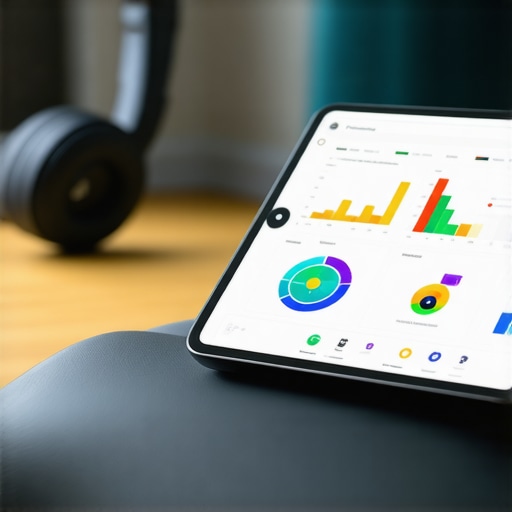
The Future of Your Health Is a Dashboard Not a Filing Cabinet
We are moving toward a world where ‘predictive wellness’ is the standard. A 2023 report from the Healthcare Information and Management Systems Society (HIMSS) emphasizes that the shift toward ‘patient-mediated data’—where you own and control your health records—is the key to reducing clinician burnout and improving patient outcomes. I predict that within five years, your wearable device will automatically flag lab work needs before you even feel a physical symptom. This is why unlocking the power of telehealth for fast convenient wellness access is so vital right now; it gets you ahead of the curve. Whether you are trying to how to track down old vaccine records for a new job or you’re just tired of feeling ‘fine’ when you could feel ‘optimal,’ the tools are already in your hands. My challenge to you is simple: Don’t wait for your next ‘crash’ to look at your data. Take the initiative and schedule a virtual consultation this week and ask for a full metabolic panel to establish your true baseline. It’s time to stop guessing and start knowing exactly what your body needs to thrive.
The Unspoken Breakthroughs I Found Behind a Screen
Looking back at my journey, there are a few things I wish I had known before I spent years white-knuckling my way through social interactions. First, I realized that seeking help isn’t about fixing a ‘broken’ personality; it is about calibrating a sensitive system. When I stopped viewing my anxiety as a character flaw and started seeing it as a biological signal, everything changed. By revolutionizing wellness through virtual platforms, I was finally able to lower the stakes enough to actually listen to what my body was saying.
Another major lightbulb moment was realizing that ‘wellness’ is a proactive state, not just the absence of a panic attack. I used to think I only needed a doctor when I was in a crisis. Now, I understand that why wellness checks are your first step to better health is because they catch the physiological ‘noise’—like a slightly high A1C or a dipping iron level—before it amplifies my social dread. I also stopped fearing the needles once I saw how how lab tests can detect hidden health risks early. It turns out, it is much easier to be brave in a social setting when your physical foundation is rock solid.
What Actually Lives in My Wellness Dashboard
I don’t leave my mental health to chance anymore. I’ve built a specific routine that keeps me from sliding back into that car-steering-wheel-gripping version of myself. Here are the three pillars I rely on: I use a high-quality noise-canceling headset for every session to ensure total immersion. I keep a digital folder of my immunization history because staying updated on things like boosters is part of my overall ‘fortress’ strategy—especially since vaccinations myths busted show that adult immunity is a critical part of long-term resilience. Finally, I use a dedicated health portal to track my markers. Seeing my inflammation levels drop over time is more motivating than any ‘inspirational’ quote could ever be.
Step Into Your Most Optimized Self
The journey from the diner parking lot to a life of controlled, confident social engagement wasn’t a straight line, but it was made possible by the very technology I once doubted. You don’t have to wait for the ‘perfect’ time or the ‘right’ amount of courage to start. By utilizing telehealth innovations, you can begin the work of biological and mental optimization from the one place you feel safest. Your couch isn’t just a place to hide; it’s the new headquarters for your transformation. Have you ever felt that a traditional waiting room was the biggest barrier to getting the help you actually needed? Let me know your thoughts in the comments below.