
Why video therapy works better for busy parents managing anxiety
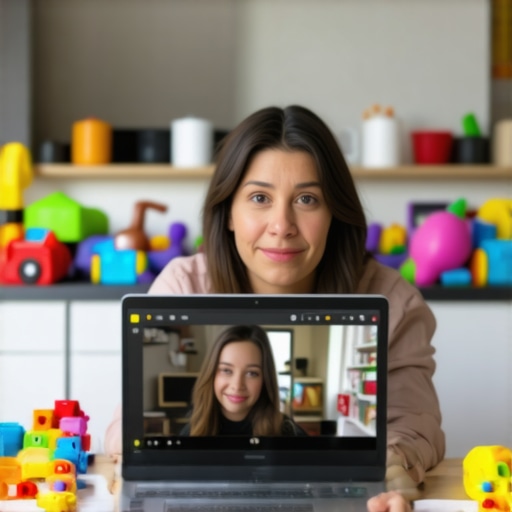
I remember sitting in my minivan three years ago, white-knuckling the steering wheel while my toddler screamed about a dropped goldfish cracker in the back. I was fifteen minutes late for my therapy session—a session I desperately needed because my anxiety was hitting a fever pitch. By the time I finally crawled into the waiting room, sweat-soaked and shaking, I was too stressed to actually talk about my stress. That was the moment I realized the traditional way was broken for people like us. I made the mistake early on of thinking that if I didn’t ‘show up’ physically, I wasn’t doing the work. I was wrong. Today, I’m going to show you why shifting to the screen isn’t just a backup plan; it is the superior choice for managing the chaos of parenthood.
Stop Fighting Traffic to Talk About Your Stress
It sounds counterintuitive, right? We’ve been told for decades that healing only happens in a neutral, quiet office. But let’s be real: for a parent, getting to that office is a Herculean task. I spent more time worrying about the babysitter’s schedule or if I could get my prescriptions refilled on the way home than I did on my actual mental health. When you switch to video visits, the ‘room’ comes to you. You can talk to a therapist about social anxiety from home without the pre-appointment panic. It’s about reclaiming those two hours you’d usually lose to commuting and parking.
Can a screen really replace a real human connection?
This was my biggest fear. I thought I’d feel disconnected, like I was just watching a YouTube video. But the reality is quite the opposite. Research from the American Psychological Association (APA) shows that telehealth is just as effective as in-person sessions for most people. In fact, for many of us, being in our own space allows us to open up faster. You’re in your ‘safe zone,’ not a clinical office that smells like stale coffee. If you have ever cancelled a session because the logistics of leaving the house felt more stressful than the anxiety itself, have you considered that your environment might be the missing piece of the puzzle?
Your Living Room is the Ultimate Safe Space
There’s something powerful about processing a panic attack in the very room where they usually happen. When I started using virtual care, I could point to the corner where I felt overwhelmed and work through it in real-time. It’s the same logic behind why some people prefer to manage chronic migraines without leaving their bedroom or why it is so much easier to get a professional counseling session on your lunch break. You don’t have to ‘perform’ wellness when you are in your pajamas. By removing the barrier of the commute, you actually increase your consistency, and consistency is the only way anxiety starts to lose its grip.
Set Up Your Private Sanctuary in Minutes
You don’t need a professional studio to make virtual care work; you just need a door that locks and a halfway decent Wi-Fi signal. Think of your setup like a ‘wellness cockpit.’ When I first transitioned to telehealth, I tried to take a call in the middle of the playroom while my kids were napping. Predictably, a toddler woke up, found a marker, and the session ended with me scrubbing blue ink off a beige rug. Now, I treat it like a sacred ritual. I find a corner, grab my headphones to ensure total privacy, and use the best techniques to talk to a therapist about social anxiety from home without the fear of being overheard.
Ditch the Waiting Room for Laboratory Insights
One of the biggest hurdles to staying healthy as a busy parent is the ‘logistics tax’ of getting blood work done. We often think that virtual care is just for talking, but it’s actually a gateway to better data. You can discuss your symptoms via video and have your provider order specific panels that you can complete at a local lab on your own terms. I recently used this to figure out why I was dragging every afternoon. I learned that a full metabolic panel is better than a basic blood draw for fatigue because it looks at the whole engine, not just the oil levels. Understanding these lab tests can detect hidden health risks before they become full-blown crises, allowing you to stay ahead of the burnout curve.
Fast-Track Your Prescriptions and Proactive Care
Analogies help here: if your mental health is a garden, therapy is the weeding, but sometimes you need the right fertilizer to help things grow. If you are on a maintenance medication, the traditional ‘office visit for a refill’ is a relic of the past. Using a digital platform is often the fastest virtual move for getting your chronic prescriptions refilled. I remember a Tuesday last month when I realized I was down to my last two pills of my anxiety medication. In the old days, that would have meant a frantic series of phone calls and a half-day off work. Instead, I hopped on a quick video call during my lunch break, and the script was at my pharmacy before I finished my sandwich.
Keep the Whole Family Protected Without the Panic
Wellness isn’t just about the ‘now’; it’s about building a shield for the future. This includes staying on top of your own boosters and your children’s needs. You can use virtual visits to review personalized vaccination schedules to ensure your family is protected against whatever is going around. I used to feel so guilty for forgetting my own shots until my provider explained that adult tetanus boosters are more important than you think, especially if you spend your weekends fixing up the backyard or playing at the park. It’s about integrating these small, proactive steps into a lifestyle that actually fits your schedule, rather than trying to bend your life to fit a rigid medical system.I spent years thinking that if my lab results came back in the ‘normal’ range, I was the picture of health. I would glance at the portal, see no red flags, and go right back to my high-stress life. But here is the contrarian truth: ‘normal’ is often just the average of a very sick population. If you want to actually thrive—not just survive the toddler years—you have to stop settling for the bare minimum. You need to understand that regular lab tests are critical for your wellness journey because they provide a baseline for when you feel great, not just when you’re crashing. Have you ever fallen into the trap of ignoring your health because a basic test said you were ‘fine’? Let me know in the comments.
Stop Settling for ‘Normal’ Lab Results
The biggest mistake I see parents make is assuming a standard CBC or basic metabolic panel tells the whole story. It’s like looking at the gas gauge of your car but ignoring the ‘check engine’ light. For instance, many doctors won’t check for the specific blood marker that flags silent inflammation unless you specifically ask. This inflammation is often the hidden culprit behind that ‘brain fog’ we all blame on lack of sleep. By using virtual care to review your results, you can actually take the time to dig into what ‘optimal’ looks like for your specific body.
Why is your standard lipid panel only giving you half the story?
Most of us are told to watch our total cholesterol, but research published in the Journal of the American College of Cardiology suggests that LDL particle size and count are far more predictive of heart health than the standard number. I learned the hard way that a standard lipid panel isn’t enough to assess your real heart risk. You might have ‘normal’ total cholesterol but still have high-risk markers like ApoB. This is where advanced diagnostics come in. Understanding the one marker that predicts heart risk better than cholesterol can change your entire approach to preventive care.
The Adult Vaccine Trap You Need to Avoid
We are so diligent about our kids’ shots, but we often treat our own immunity like a ‘set it and forget it’ system. This is the ‘Oops’ factor: assuming your childhood vaccines protect you forever. They don’t. For example, vaccination myths busted in recent years show that many adults are walking around with zero protection against whooping cough or tetanus because they skipped their ten-year boosters. If you are starting a new role or volunteering at school, you’ll need to know how to track down old vaccine records fast. Telehealth makes this process seamless because you can discuss your history and get orders for titers—tests that prove you’re actually immune—without the waiting room drama.
Turn Your Data into a Real Action Plan
Data without a plan is just noise. This is why wellness checks are your first step to better health. When you combine the convenience of virtual visits with the deep insights of the role of lab tests in preventive wellness, you stop guessing. You start knowing. You move from reactive ‘sick care’ to proactive ‘health care.’ This shift is what finally allowed me to stop white-knuckling my way through the day and start feeling like a person again, not just a stressed-out chauffeur for my kids.Maintaining a proactive wellness routine isn’t about being perfect; it’s about being prepared. I realized that my success with virtual care was tied directly to the tools I had at my fingertips. You need a ‘Go-Bag’ for health. For me, that’s a high-quality blood pressure monitor—I use the Omron Gold because it syncs directly to my phone—and a digital thermometer that stores my kids’ history. When you have the data ready, you can perform the 10-minute trick for lower blood pressure readings at home before your provider even logs on. This level of preparation turns a twenty-minute video call into a high-impact diagnostic session. It is the difference between guessing and understanding the role of lab tests in preventive wellness.
How do I keep this momentum going for the long haul?
The secret to long-term results is automation. I used to spend hours hunting for old records, but now I use a dedicated ‘Health’ folder in my cloud storage. Every time I get a lab result or a shot, I snap a photo and tag it. This is especially vital when you need to boost your immunity with expert vaccination tips or track seasonal trends. Consistency isn’t about willpower; it’s about reducing the friction of the system. As digital health expert Dr. Eric Topol highlights in his seminal book The Patient Will See You Now, we are moving toward an era of individualized medicine where the patient is finally the center of the universe. I predict that in five years, the traditional ‘annual physical’ will be largely replaced by continuous, passive monitoring that alerts your doctor only when your specific biological baseline shifts.
The Future of Medicine is Already in Your Pocket
We are living through a massive shift in how care is delivered. Telehealth innovations and how virtual care is changing wellness are just the beginning of this transformation. Soon, your smartphone will act as a personal diagnostic hub, checking your vitals and scanning for issues before you even feel a physical symptom. But you don’t have to wait for the future to start winning today. You can use wellness checks as your first step to better health right now. By integrating the power of telehealth for fast, convenient wellness access, you’re not just saving time; you’re building a longitudinal record of your health that is far more valuable than any single, isolated office visit. If you want to truly scale your wellness, my advanced tip is this: Don’t wait for your doctor to suggest a follow-up. Open your calendar right now and schedule a virtual ‘data review’ for six months from today. Treat it as a non-negotiable strategy session for your body. If you’re ready to stop the cycle of reactive health, regular lab tests are critical for your wellness journey, so get that next panel on the books today.
Hard-Won Truths from My Years in the Minivan Trenches
Reflecting on my shift from traditional clinics to virtual care, I’ve realized that the convenience of digital health isn’t just about saving time; it’s about preserving your mental bandwidth. I used to think I had to be physically present for every checkup, but I was just exhausting myself and my family. One lightbulb moment came when I realized that preventive care isn’t a chore; it is an insurance policy for my sanity. By combining vaccinations and lab testing strategies, I stopped playing defense and started playing offense with my health. Another hard truth? Most ’emergency’ pediatric runs could have been avoided with a ten-minute video chat at 8 PM. It’s about learning how lab tests can detect hidden health risks before they turn into a full-blown family crisis. Finally, I learned that my patient portal is more than just a place to check a box; it’s a living history that empowers me to advocate for myself effectively.
Build Your Own Digital Health War Room
If you want to make this work long-term, you need the right tools in your corner. I don’t just rely on apps; I rely on evidence and high-quality equipment. I highly recommend keeping a copy of Deep Medicine by Eric Topol on your nightstand to understand the shift toward individualized care. For daily use, I trust my Omron Gold blood pressure cuff and a reliable pulse oximeter. These tools aren’t just gadgets; they provide the hard data that makes telehealth insights the future of accessible healthcare. I also keep a digital folder of my family’s immunization status because vaccination myths busted in recent years remind us that being informed is our best defense against seasonal outbreaks. These resources helped me move from a panicked, reactive parent to a prepared, proactive leader of my household.
#IMAGE_PLACEHOLDER_E#
Start Your Journey Without the Waiting Room Stress
The transition to virtual care might feel intimidating at first, but remember that you are finally in control of your time and your data. You don’t have to navigate the medical system on its rigid terms anymore. You can unlock the power of telehealth for fast, convenient wellness access starting today. Your personal wellness is the foundation upon which your entire family stands. Don’t let the friction of traffic or the clinical smell of a waiting room stop you from being the healthiest version of yourself. Have you ever postponed a doctor’s visit because the logistics of childcare felt impossible? Let me know below.